<?xml version="1.0" encoding="utf-8" ?><rdf:RDF
            xmlns="http://purl.org/rss/1.0/"
            xmlns:rdf="http://www.w3.org/1999/02/22-rdf-syntax-ns#"
            xmlns:dc="http://purl.org/dc/elements/1.1/"
            xmlns:content="http://purl.org/rss/1.0/modules/content/"
            xml:lang="en-us">
        
        <channel rdf:about="https://www.tablinstore.info/">
            <title>tablinstore</title>
            <link>https://www.tablinstore.info/</link>
            <description>We specialize in Japanese tea ceremony pottery and Sakai Takayuki knives.</description>
            <subject>231</subject>
            <items>
                <rdf:Seq>
        <rdf:li rdf:resource="https://www.tablinstore.info/product/3357" />
                <rdf:li rdf:resource="https://www.tablinstore.info/product/1385" />
                <rdf:li rdf:resource="https://www.tablinstore.info/product/4555" />
                <rdf:li rdf:resource="https://www.tablinstore.info/product/4550" />
                <rdf:li rdf:resource="https://www.tablinstore.info/product/4549" />
                <rdf:li rdf:resource="https://www.tablinstore.info/product/2279" />
                <rdf:li rdf:resource="https://www.tablinstore.info/product/4556" />
                <rdf:li rdf:resource="https://www.tablinstore.info/product/944" />
                <rdf:li rdf:resource="https://www.tablinstore.info/product/3764" />
                <rdf:li rdf:resource="https://www.tablinstore.info/product/1259" />
                <rdf:li rdf:resource="https://www.tablinstore.info/product/482" />
                <rdf:li rdf:resource="https://www.tablinstore.info/product/404" />
                <rdf:li rdf:resource="https://www.tablinstore.info/product/4337" />
                <rdf:li rdf:resource="https://www.tablinstore.info/product/1666" />
                <rdf:li rdf:resource="https://www.tablinstore.info/product/945" />
                <rdf:li rdf:resource="https://www.tablinstore.info/product/4952" />
                <rdf:li rdf:resource="https://www.tablinstore.info/product/2917" />
                <rdf:li rdf:resource="https://www.tablinstore.info/product/4400" />
                <rdf:li rdf:resource="https://www.tablinstore.info/product/866" />
                <rdf:li rdf:resource="https://www.tablinstore.info/product/4601" />
                <rdf:li rdf:resource="https://www.tablinstore.info/product/4472" />
                <rdf:li rdf:resource="https://www.tablinstore.info/product/4384" />
                <rdf:li rdf:resource="https://www.tablinstore.info/product/3222" />
                <rdf:li rdf:resource="https://www.tablinstore.info/product/3297" />
                <rdf:li rdf:resource="https://www.tablinstore.info/product/1084" />
                <rdf:li rdf:resource="https://www.tablinstore.info/product/3539" />
                <rdf:li rdf:resource="https://www.tablinstore.info/product/4182" />
                <rdf:li rdf:resource="https://www.tablinstore.info/product/3849" />
                <rdf:li rdf:resource="https://www.tablinstore.info/product/3702" />
                <rdf:li rdf:resource="https://www.tablinstore.info/product/3453" />
                <rdf:li rdf:resource="https://www.tablinstore.info/product/721" />
                <rdf:li rdf:resource="https://www.tablinstore.info/product/3492" />
                <rdf:li rdf:resource="https://www.tablinstore.info/product/3279" />
                <rdf:li rdf:resource="https://www.tablinstore.info/product/2359" />
                <rdf:li rdf:resource="https://www.tablinstore.info/product/1646" />
                <rdf:li rdf:resource="https://www.tablinstore.info/product/1645" />
                <rdf:li rdf:resource="https://www.tablinstore.info/product/1644" />
                <rdf:li rdf:resource="https://www.tablinstore.info/product/4332" />
                <rdf:li rdf:resource="https://www.tablinstore.info/product/4106" />
                <rdf:li rdf:resource="https://www.tablinstore.info/product/3290" />
                <rdf:li rdf:resource="https://www.tablinstore.info/product/3289" />
                <rdf:li rdf:resource="https://www.tablinstore.info/product/3288" />
                <rdf:li rdf:resource="https://www.tablinstore.info/product/3286" />
                <rdf:li rdf:resource="https://www.tablinstore.info/product/3285" />
                <rdf:li rdf:resource="https://www.tablinstore.info/product/3284" />
                <rdf:li rdf:resource="https://www.tablinstore.info/product/3283" />
                <rdf:li rdf:resource="https://www.tablinstore.info/product/3282" />
                <rdf:li rdf:resource="https://www.tablinstore.info/product/3281" />
                <rdf:li rdf:resource="https://www.tablinstore.info/product/3280" />
                <rdf:li rdf:resource="https://www.tablinstore.info/product/3121" />
                <rdf:li rdf:resource="https://www.tablinstore.info/product/3119" />
                <rdf:li rdf:resource="https://www.tablinstore.info/product/3113" />
                <rdf:li rdf:resource="https://www.tablinstore.info/product/999" />
                <rdf:li rdf:resource="https://www.tablinstore.info/product/5191" />
                <rdf:li rdf:resource="https://www.tablinstore.info/product/5183" />
                <rdf:li rdf:resource="https://www.tablinstore.info/product/4653" />
                <rdf:li rdf:resource="https://www.tablinstore.info/product/4613" />
                <rdf:li rdf:resource="https://www.tablinstore.info/product/3098" />
                <rdf:li rdf:resource="https://www.tablinstore.info/product/3094" />
                <rdf:li rdf:resource="https://www.tablinstore.info/product/3093" />
                <rdf:li rdf:resource="https://www.tablinstore.info/product/3092" />
                <rdf:li rdf:resource="https://www.tablinstore.info/product/3087" />
                <rdf:li rdf:resource="https://www.tablinstore.info/product/3084" />
                <rdf:li rdf:resource="https://www.tablinstore.info/product/1630" />
                <rdf:li rdf:resource="https://www.tablinstore.info/product/995" />
                <rdf:li rdf:resource="https://www.tablinstore.info/product/3095" />
                <rdf:li rdf:resource="https://www.tablinstore.info/product/4487" />
                <rdf:li rdf:resource="https://www.tablinstore.info/product/5210" />
                <rdf:li rdf:resource="https://www.tablinstore.info/product/1808" />
                <rdf:li rdf:resource="https://www.tablinstore.info/product/3851" />
                <rdf:li rdf:resource="https://www.tablinstore.info/product/3850" />
                <rdf:li rdf:resource="https://www.tablinstore.info/product/2992" />
                <rdf:li rdf:resource="https://www.tablinstore.info/product/1449" />
                <rdf:li rdf:resource="https://www.tablinstore.info/product/5116" />
                <rdf:li rdf:resource="https://www.tablinstore.info/product/2354" />
                <rdf:li rdf:resource="https://www.tablinstore.info/product/382" />
                <rdf:li rdf:resource="https://www.tablinstore.info/product/3421" />
                <rdf:li rdf:resource="https://www.tablinstore.info/product/876" />
                <rdf:li rdf:resource="https://www.tablinstore.info/product/2331" />
                <rdf:li rdf:resource="https://www.tablinstore.info/product/731" />
                <rdf:li rdf:resource="https://www.tablinstore.info/product/2317" />
                <rdf:li rdf:resource="https://www.tablinstore.info/product/4386" />
                <rdf:li rdf:resource="https://www.tablinstore.info/product/865" />
                <rdf:li rdf:resource="https://www.tablinstore.info/product/867" />
                <rdf:li rdf:resource="https://www.tablinstore.info/product/984" />
                <rdf:li rdf:resource="https://www.tablinstore.info/product/3887" />
                <rdf:li rdf:resource="https://www.tablinstore.info/product/862" />
                <rdf:li rdf:resource="https://www.tablinstore.info/product/864" />
                <rdf:li rdf:resource="https://www.tablinstore.info/product/2580" />
                <rdf:li rdf:resource="https://www.tablinstore.info/product/3997" />
                <rdf:li rdf:resource="https://www.tablinstore.info/product/1080" />
                <rdf:li rdf:resource="https://www.tablinstore.info/product/1079" />
                <rdf:li rdf:resource="https://www.tablinstore.info/product/1078" />
                <rdf:li rdf:resource="https://www.tablinstore.info/product/1077" />
                <rdf:li rdf:resource="https://www.tablinstore.info/product/1076" />
                <rdf:li rdf:resource="https://www.tablinstore.info/product/1075" />
                <rdf:li rdf:resource="https://www.tablinstore.info/product/1074" />
                <rdf:li rdf:resource="https://www.tablinstore.info/product/1073" />
                <rdf:li rdf:resource="https://www.tablinstore.info/product/1072" />
                <rdf:li rdf:resource="https://www.tablinstore.info/product/3224" />
                
                </rdf:Seq>
            </items>
        
            <dc:language>en-us</dc:language>
            <dc:creator>tablinstore</dc:creator>
            <dc:date>2026-05-11T13:26:52+09:00</dc:date>
        </channel>
        
                <item rdf:about="https://www.tablinstore.info/product/3357">
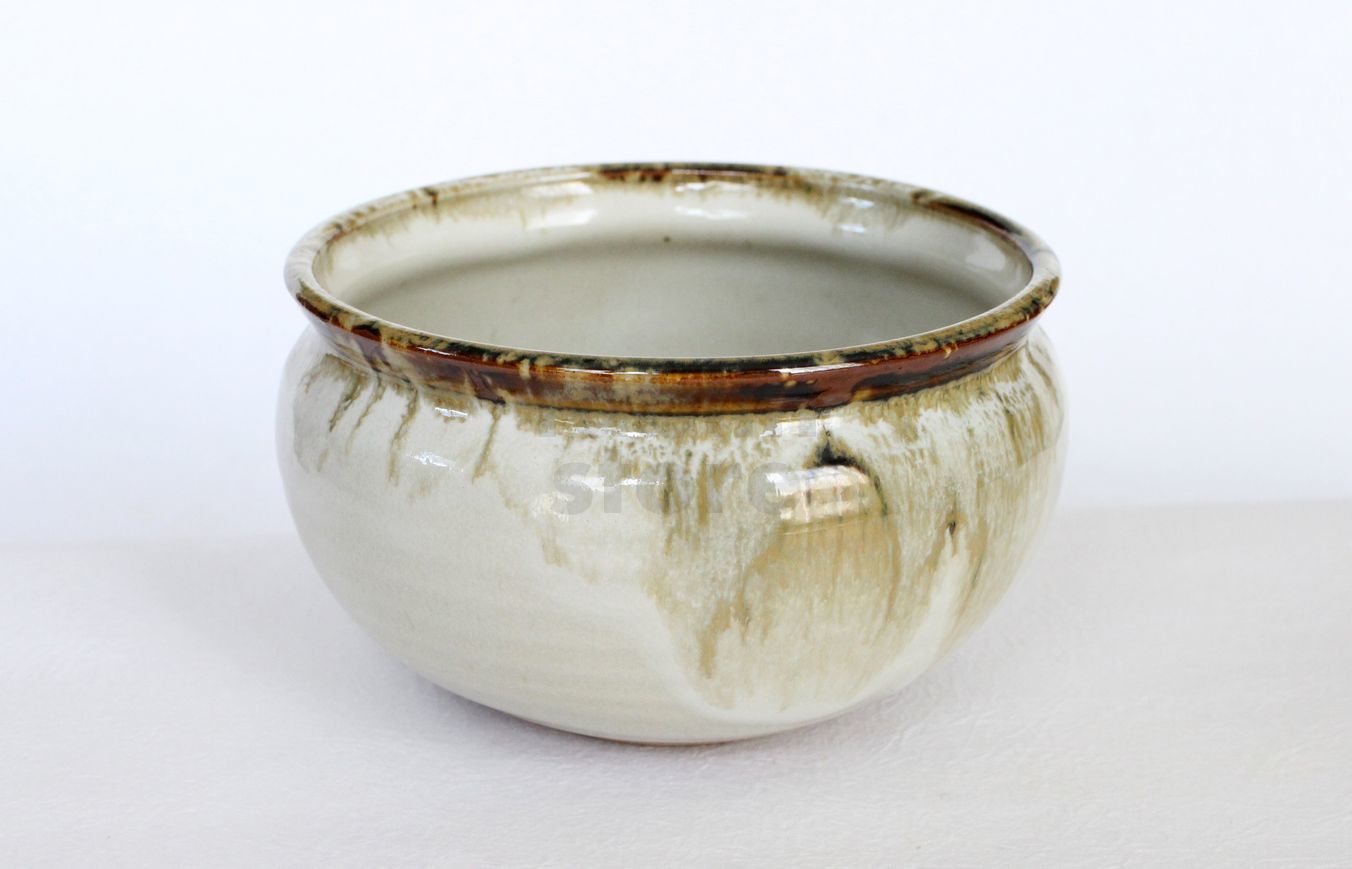
                    <title>Kiyomizu porcelain Japanese tea ceremony kensui tea bowl Sahei karatsu pottery</title>
                    <link>https://www.tablinstore.info/product/3357</link>
                    <description>Kiyomizu porcelain Japanese tea ceremony kensui tea bowl Sahei karatsu pottery    

The posture an…</description>
                    <content:encoded><![CDATA[<p><a href="https://www.tablinstore.info/product/3357" target="_blank"><img src="https://www.tablinstore.info/data/tablin/product/IMG_1471.JPG" width="250" border="0" alt="Kiyomizu porcelain Japanese tea ceremony kensui tea bowl Sahei karatsu pottery" hspace="5" align="left"/></a><b>Kiyomizu porcelain Japanese tea ceremony kensui tea bowl Sahei karatsu pottery    </b><br />
<br />
The posture and color is very beautiful <br />
Kiyomizu - yaki (ware) is well known as one of the production centers of Japanese pottery. <br />
<br />
This pottery is made by Sahei who is one the most famous pottery artist in Japan. <br />
<br />
About Kensui<br />
Kensui is a container used for discarding hot water and water during the procedures in a tea ceremony. It can be made of various materials such as metal or ceramics, or it can be a wooden circular box.<br />
<br />
<br />
--- About Kiyomizu kyoto ware ---<br />
Although this craft dates back to before the Heian period (794-1185), the making of pottery began in earnest when the capital of Heian-kyo (now Kyoto) was founded in 794. Since that time Kyoto has been the home to many famous potters and the birthplace of many fine pieces of work. Famous potters such as Ninsei and Kenzan were at work in the 17th century and then in the 19th century, the potter Eisen successfully fired porcelain, while such masters as Mokubei, Hozen and Ninami were remarkably active during the same century. Great advances were then made from toward the end of the 19th century with the introduction of various techniques from around the world, when German ceramists were invited to come to Kyoto.<br />
<br />
The sheer beauty and craftsmanship of some pieces over which so much trouble is taken have a strong traditional feel, while other pieces are invested with a freshness that finds favor in contemporary life. Each piece has its place within the scheme of things and manages to maintain its own unique ambience. The range of pottery and porcelain now made in Kyoto is almost beyond comprehension, but mainly consists of good quality tableware for use at home and in the best Japanese style restaurants. Many pieces are still made for use in association with the tea ceremony.</p>]]></content:encoded>
                    <dc:subject>Tea ceremony Chanoyu</dc:subject>
                    <dc:creator>tablinstore</dc:creator>
                    <dc:format>79.00</dc:format>
                    <dc:date>2026-05-11T13:26:52+09:00</dc:date>
                    <dc:type>shop</dc:type>
                </item>
                
                <item rdf:about="https://www.tablinstore.info/product/1385">
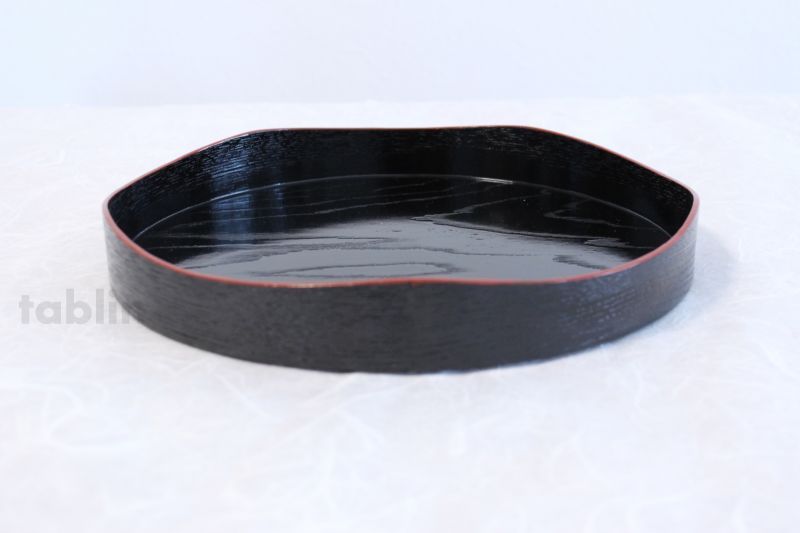
                    <title>Japanese tea ceremony Yamamichi-bon lacquered wood tray</title>
                    <link>https://www.tablinstore.info/product/1385</link>
                    <description>Japanese tea ceremony Yamamichi-bon lacquered wood tray</description>
                    <content:encoded><![CDATA[<p><a href="https://www.tablinstore.info/product/1385" target="_blank"><img src="https://www.tablinstore.info/data/tablin/product/20141215_380b4b.jpg" width="250" border="0" alt="Japanese tea ceremony Yamamichi-bon lacquered wood tray" hspace="5" align="left"/></a>Japanese tea ceremony Yamamichi-bon lacquered wood tray<br />
<br />
</p>]]></content:encoded>
                    <dc:subject>Tea ceremony Chanoyu</dc:subject>
                    <dc:creator>tablinstore</dc:creator>
                    <dc:format>89.00</dc:format>
                    <dc:date>2026-05-11T13:26:16+09:00</dc:date>
                    <dc:type>shop</dc:type>
                </item>
                
                <item rdf:about="https://www.tablinstore.info/product/4555">
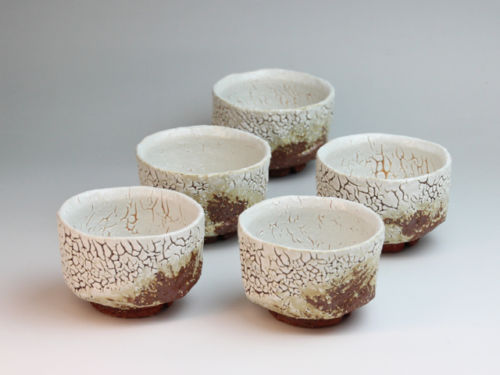
                    <title>Hagi ware Japanese pottery yunomi sencha bowl tea cups Kairagi 240ml set of 5</title>
                    <link>https://www.tablinstore.info/product/4555</link>
                    <description>Hagi ware Japanese pottery yunomi sencha bowl tea cups Kairagi 240ml set of 5

The posture and col…</description>
                    <content:encoded><![CDATA[<p><a href="https://www.tablinstore.info/product/4555" target="_blank"><img src="https://www.tablinstore.info/data/tablin/product/20170613_123f10.jpg" width="250" border="0" alt="Hagi ware Japanese pottery yunomi sencha bowl tea cups Kairagi 240ml set of 5" hspace="5" align="left"/></a><b>Hagi ware Japanese pottery yunomi sencha bowl tea cups Kairagi 240ml set of 5</b><br />
<br />
The posture and color is very beautiful. <br />
Hagi - yaki (ware) is well known as one of the production centers of Japanese pottery.<br />
This tea cup is made by Kashun Mukuhara who is one of the most famous potter in Hagi.<br />
<br />
-- About Hagi yaki ware--<br />
<br />
The origins of Hagi yaki ware go back about 400 years. It was brought to Japan by potters returning from Korea. There was a decisive battle in 1600 in which the Lord Mori, who was protecting the Korean potters, was defeated, and subsequently moved his castle to Hagi. At this point, a kiln was opened in Hagi, and this was the starting point of Hagi yaki ware. In later times, the style was changed and diversified. One of the features of Hagi yaki ware is the feeling of softness and warmth of the soil in the finished product. It has been used mainly for tea ceremony implements, and the art has been improved and developed. Now, Hagi yaki ware is highly valued as one of the world's greatest types of earthenware.<br />
<br />
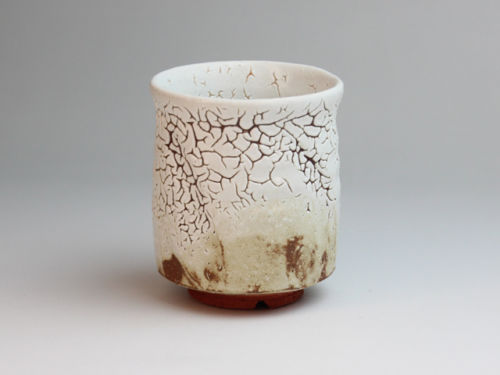
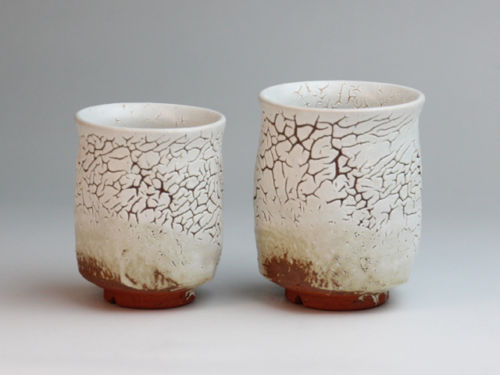
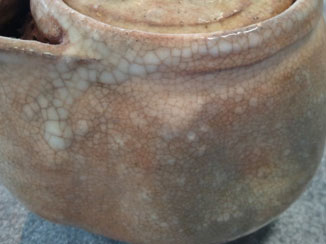
Another feature of Hagi ware is that it contains cracks, known as 'Kannyu', in its foundation. This gives it different properties of ventilation and water permeability to porcelain. Part of the charm of Hagi ware is the incrustation of tea into the cracks through use, resulting in subtle changes of pattern and color. This is the reason that Hagi ware is respected, and the respect is demonstrated in ancient sayings originating from the world of tea earthenware such as, 'one Raku, two Hagi, three Karatsu', and 'The seven changes of Hagi'. Another element of the charm of Hagi yaki ware is that it gives a feeling of amorousness combined with simplicity. Moreover, the shade will change gradually through use. Enjoy this transformation, and feel the softness and warmth in your hand.<br />
<br />
<br />
<p><img src="https://www.tablinstore.info/data/tablin/product/20130604_f8bfc5.jpg" /></p><br />
 - Sample Kannyu - It add an extra touch when you use it for a long time.</p>]]></content:encoded>
                    <dc:subject>Yunomi, tea cup</dc:subject>
                    <dc:creator>tablinstore</dc:creator>
                    <dc:format>385.00</dc:format>
                    <dc:date>2026-05-06T10:38:57+09:00</dc:date>
                    <dc:type>shop</dc:type>
                </item>
                
                <item rdf:about="https://www.tablinstore.info/product/4550">
                    <title>Hagi ware Japanese pottery tea cups yunomi white kairagi Kashun 320 ml</title>
                    <link>https://www.tablinstore.info/product/4550</link>
                    <description>Hagi ware Japanese pottery tea cups yunomi white kairagi Kashun 320 ml

The posture and color is v…</description>
                    <content:encoded><![CDATA[<p><a href="https://www.tablinstore.info/product/4550" target="_blank"><img src="https://www.tablinstore.info/data/tablin/product/20170613_62d457.jpg" width="250" border="0" alt="Hagi ware Japanese pottery tea cups yunomi white kairagi Kashun 320 ml" hspace="5" align="left"/></a><b>Hagi ware Japanese pottery tea cups yunomi white kairagi Kashun 320 ml</b><br />
<br />
The posture and color is very beautiful. <br />
Hagi - yaki (ware) is well known as one of the production centers of Japanese pottery.<br />
This tea cup is made by Kashun Mukuhara who is one of the most famous potter in Hagi.<br />
<br />
-- About Hagi yaki ware--<br />
<br />
The origins of Hagi yaki ware go back about 400 years. It was brought to Japan by potters returning from Korea. There was a decisive battle in 1600 in which the Lord Mori, who was protecting the Korean potters, was defeated, and subsequently moved his castle to Hagi. At this point, a kiln was opened in Hagi, and this was the starting point of Hagi yaki ware. In later times, the style was changed and diversified. One of the features of Hagi yaki ware is the feeling of softness and warmth of the soil in the finished product. It has been used mainly for tea ceremony implements, and the art has been improved and developed. Now, Hagi yaki ware is highly valued as one of the world's greatest types of earthenware.<br />
<br />
Another feature of Hagi ware is that it contains cracks, known as 'Kannyu', in its foundation. This gives it different properties of ventilation and water permeability to porcelain. Part of the charm of Hagi ware is the incrustation of tea into the cracks through use, resulting in subtle changes of pattern and color. This is the reason that Hagi ware is respected, and the respect is demonstrated in ancient sayings originating from the world of tea earthenware such as, 'one Raku, two Hagi, three Karatsu', and 'The seven changes of Hagi'. Another element of the charm of Hagi yaki ware is that it gives a feeling of amorousness combined with simplicity. Moreover, the shade will change gradually through use. Enjoy this transformation, and feel the softness and warmth in your hand.<br />
<br />
<br />
<p><img src="https://www.tablinstore.info/data/tablin/product/20130604_f8bfc5.jpg" /></p><br />
 - Sample Kannyu - It add an extra touch when you use it for a long time.</p>]]></content:encoded>
                    <dc:subject>Yunomi, tea cup</dc:subject>
                    <dc:creator>tablinstore</dc:creator>
                    <dc:format>91.00</dc:format>
                    <dc:date>2026-05-06T10:38:38+09:00</dc:date>
                    <dc:type>shop</dc:type>
                </item>
                
                <item rdf:about="https://www.tablinstore.info/product/4549">
                    <title>Hagi ware Japanese pottery tea cups yunomi white kairagi Kashun set of 2</title>
                    <link>https://www.tablinstore.info/product/4549</link>
                    <description>Hagi ware Japanese pottery tea cups yunomi white kairagi Kashun set of 2

The posture and color is…</description>
                    <content:encoded><![CDATA[<p><a href="https://www.tablinstore.info/product/4549" target="_blank"><img src="https://www.tablinstore.info/data/tablin/product/20170613_ce8411.jpg" width="250" border="0" alt="Hagi ware Japanese pottery tea cups yunomi white kairagi Kashun set of 2" hspace="5" align="left"/></a><b>Hagi ware Japanese pottery tea cups yunomi white kairagi Kashun set of 2</b><br />
<br />
The posture and color is very beautiful. <br />
Hagi - yaki (ware) is well known as one of the production centers of Japanese pottery.<br />
This tea cup is made by Kashun Mukuhara who is one of the most famous potter in Hagi.<br />
<br />
-- About Hagi yaki ware--<br />
<br />
The origins of Hagi yaki ware go back about 400 years. It was brought to Japan by potters returning from Korea. There was a decisive battle in 1600 in which the Lord Mori, who was protecting the Korean potters, was defeated, and subsequently moved his castle to Hagi. At this point, a kiln was opened in Hagi, and this was the starting point of Hagi yaki ware. In later times, the style was changed and diversified. One of the features of Hagi yaki ware is the feeling of softness and warmth of the soil in the finished product. It has been used mainly for tea ceremony implements, and the art has been improved and developed. Now, Hagi yaki ware is highly valued as one of the world's greatest types of earthenware.<br />
<br />
Another feature of Hagi ware is that it contains cracks, known as 'Kannyu', in its foundation. This gives it different properties of ventilation and water permeability to porcelain. Part of the charm of Hagi ware is the incrustation of tea into the cracks through use, resulting in subtle changes of pattern and color. This is the reason that Hagi ware is respected, and the respect is demonstrated in ancient sayings originating from the world of tea earthenware such as, 'one Raku, two Hagi, three Karatsu', and 'The seven changes of Hagi'. Another element of the charm of Hagi yaki ware is that it gives a feeling of amorousness combined with simplicity. Moreover, the shade will change gradually through use. Enjoy this transformation, and feel the softness and warmth in your hand.<br />
<br />
<br />
<p><img src="https://www.tablinstore.info/data/tablin/product/20130604_f8bfc5.jpg" /></p><br />
 - Sample Kannyu - It add an extra touch when you use it for a long time.</p>]]></content:encoded>
                    <dc:subject>Yunomi, tea cup</dc:subject>
                    <dc:creator>tablinstore</dc:creator>
                    <dc:format>126.00</dc:format>
                    <dc:date>2026-05-06T10:38:38+09:00</dc:date>
                    <dc:type>shop</dc:type>
                </item>
                
                <item rdf:about="https://www.tablinstore.info/product/2279">
                    <title>Hagi ware Japanese pottery mug coffee tea cup Kashun with saucer 170ml</title>
                    <link>https://www.tablinstore.info/product/2279</link>
                    <description>Hagi ware Japanese pottery mug coffee tea cup Kashun with saucer 170ml      

The posture and colo…</description>
                    <content:encoded><![CDATA[<p><a href="https://www.tablinstore.info/product/2279" target="_blank"><img src="https://www.tablinstore.info/data/tablin/product/IMG_7053.JPG" width="250" border="0" alt="Hagi ware Japanese pottery mug coffee tea cup Kashun with saucer 170ml" hspace="5" align="left"/></a>Hagi ware Japanese pottery mug coffee tea cup Kashun with saucer 170ml      <br />
<br />
The posture and color is very beautiful <br />
Hagi - yaki (ware) is well known as one of the production centers of Japanese pottery.<br />
<br />
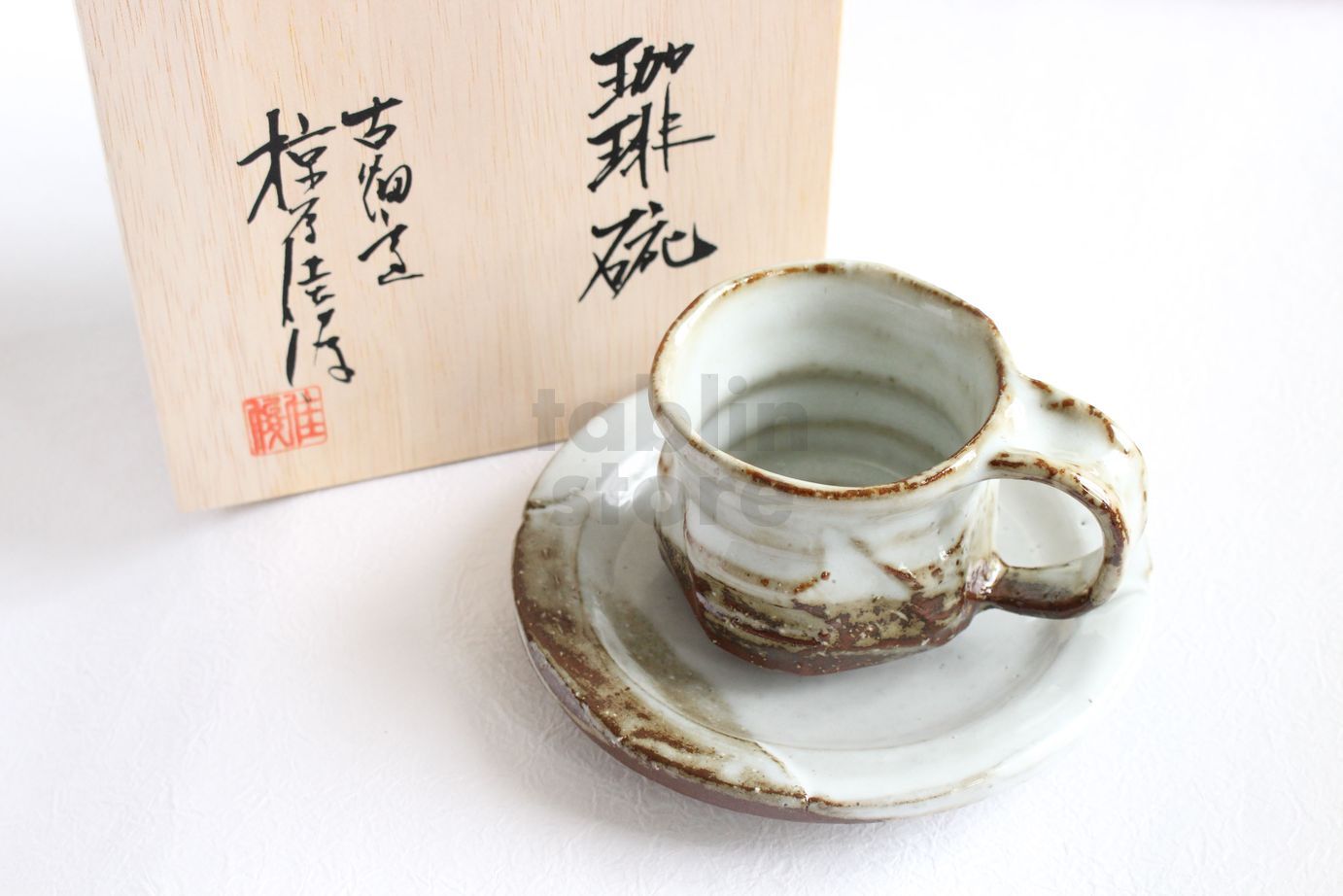
This cup is made by Kashun Mukuhara who is one of the most famous potter in Hagi.<br />
<br />
--Features of This item--<br />
<br />
*Condition: a brand-new, Price is include a cup with saucer.<br />
<br />
*Size: approx.size <br />
Cup:  D 8.0 x H 6.5 cm / D 3.1 x H 2.6 inch <br />
Saucer: D 14.5 x H 2.0 cm / D 5.7 x H 0.8 inch <br />
<br />
-- About Hagi yaki ware--<br />
<br />
The origins of Hagi yaki ware go back about 400 years. It was brought to Japan by potters returning from Korea. There was a decisive battle in 1600 in which the Lord Mori, who was protecting the Korean potters, was defeated, and subsequently moved his castle to Hagi. At this point, a kiln was opened in Hagi, and this was the starting point of Hagi yaki ware. In later times, the style was changed and diversified. One of the features of Hagi yaki ware is the feeling of softness and warmth of the soil in the finished product. It has been used mainly for tea ceremony implements, and the art has been improved and developed. Now, Hagi yaki ware is highly valued as one of the world's greatest types of earthenware.<br />
<br />
Another feature of Hagi ware is that it contains cracks, known as 'Kannyu', in its foundation. This gives it different properties of ventilation and water permeability to porcelain. Part of the charm of Hagi ware is the incrustation of tea into the cracks through use, resulting in subtle changes of pattern and color. This is the reason that Hagi ware is respected, and the respect is demonstrated in ancient sayings originating from the world of tea earthenware such as, 'one Raku, two Hagi, three Karatsu', and 'The seven changes of Hagi'. Another element of the charm of Hagi yaki ware is that it gives a feeling of amorousness combined with simplicity. Moreover, the shade will change gradually through use. Enjoy this transformation, and feel the softness and warmth in your hand.<br />
<br />
<p><img src="https://www.tablinstore.info/data/tablin/product/20141211_d7b273.jpg" /></p><br />
 - Sample Kannyu - It add an extra touch when you use it for a long time.<br />
<br />
*For handmade items, Size, color and shape is a bit different about the product.<br />
*As all potteries at tablinstore are handcrafted by a pottery artist.</p>]]></content:encoded>
                    <dc:subject>Mug Coffee cup</dc:subject>
                    <dc:creator>tablinstore</dc:creator>
                    <dc:format>111.00</dc:format>
                    <dc:date>2026-05-06T10:38:38+09:00</dc:date>
                    <dc:type>shop</dc:type>
                </item>
                
                <item rdf:about="https://www.tablinstore.info/product/4556">
                    <title>Hagi ware Japanese pottery Sake cup shot kairaigi Kashun 100ml</title>
                    <link>https://www.tablinstore.info/product/4556</link>
                    <description>Hagi ware Japanese pottery Sake cup shot kairaigi Kashun 100ml

The posture and color is very beau…</description>
                    <content:encoded><![CDATA[<p><a href="https://www.tablinstore.info/product/4556" target="_blank"><img src="https://www.tablinstore.info/data/tablin/product/IMG_8485.JPG" width="250" border="0" alt="Hagi ware Japanese pottery Sake cup shot kairaigi Kashun 100ml" hspace="5" align="left"/></a><b>Hagi ware Japanese pottery Sake cup shot kairaigi Kashun 100ml</b><br />
<br />
The posture and color is very beautiful <br />
Hagi - yaki (ware) is well known as one of the production centers of Japanese pottery.<br />
This tea cup is made by Kashun Mukuhara who is one of the most famous potter in Hagi.<br />
<br />
<br />
-- About Hagi yaki ware--<br />
<br />
The origins of Hagi yaki ware go back about 400 years. It was brought to Japan by potters returning from Korea. There was a decisive battle in 1600 in which the Lord Mori, who was protecting the Korean potters, was defeated, and subsequently moved his castle to Hagi. At this point, a kiln was opened in Hagi, and this was the starting point of Hagi yaki ware. In later times, the style was changed and diversified. One of the features of Hagi yaki ware is the feeling of softness and warmth of the soil in the finished product. It has been used mainly for tea ceremony implements, and the art has been improved and developed. Now, Hagi yaki ware is highly valued as one of the world's greatest types of earthenware.<br />
<br />
Another feature of Hagi ware is that it contains cracks, known as 'Kannyu', in its foundation. This gives it different properties of ventilation and water permeability to porcelain. Part of the charm of Hagi ware is the incrustation of tea into the cracks through use, resulting in subtle changes of pattern and color. This is the reason that Hagi ware is respected, and the respect is demonstrated in ancient sayings originating from the world of tea earthenware such as, 'one Raku, two Hagi, three Karatsu', and 'The seven changes of Hagi'. Another element of the charm of Hagi yaki ware is that it gives a feeling of amorousness combined with simplicity. Moreover, the shade will change gradually through use. Enjoy this transformation, and feel the softness and warmth in your hand.<br />
<br />
<br />
<p><img src="https://www.tablinstore.info/data/tablin/product/20130604_f8bfc5.jpg" /></p><br />
- Sample Kannyu - It add an extra touch when you use it for a long time.<br />
<br />
*For handmade items, Size, color and shape is a bit different about the product.<br />
*As all potteries at tablinstore are handcrafted by a pottery artist.</p>]]></content:encoded>
                    <dc:subject>Sake cup, tumbler </dc:subject>
                    <dc:creator>tablinstore</dc:creator>
                    <dc:format>121.00</dc:format>
                    <dc:date>2026-05-06T10:24:04+09:00</dc:date>
                    <dc:type>shop</dc:type>
                </item>
                
                <item rdf:about="https://www.tablinstore.info/product/944">
                    <title>Hagi ware Senryuzan climbing kiln Japanese matcha tea bowl wan</title>
                    <link>https://www.tablinstore.info/product/944</link>
                    <description>Hagi ware Senryuzan climbing kiln Japanese matcha tea bowl wan

-- About Senryuzan Kiln of Hagi wa…</description>
                    <content:encoded><![CDATA[<p><a href="https://www.tablinstore.info/product/944" target="_blank"><img src="https://www.tablinstore.info/data/tablin/product/20151016_c67e6e.JPG" width="250" border="0" alt="Hagi ware Senryuzan climbing kiln Japanese matcha tea bowl wan" hspace="5" align="left"/></a>Hagi ware Senryuzan climbing kiln Japanese matcha tea bowl wan<br />
<br />
<p><strong>-- About Senryuzan Kiln of Hagi ware --</strong>-</p><p><img src="https://www.tablinstore.info/data/tablin/product/20131206_497c15.jpg" alt="" /></p><p>HUNDREDS of kilns make so-called Hagi-yaki, but only a few - fire the old-style wood-burning nobori-gama, or climbing kiln, a long, narrow structure built on a hillside consisting of several consecutive firing chambers. The fire is built in the first chamber, and the flames rise during firing through each chamber in succession. Results are unpredictable, and often the potter will discard a high percentage of the firing. The other types of kilns use gas or electricity, which, because they burn evenly and can be controlled thermostatically, produce more predictable results. Very few of these pieces must be thrown away because of flaws.<br /><br /> Senryuzan, the kiln of the Yoshiga family has four firing chambers (the uppermost one is used for bisque firing), each about 8 feet high, 8 feet deep and 15 feet long. According to Yoshiga Hatao, it is the largest in Hagi. Ido tea bowls, he says, are fired only once - the glaze is applied directly to the raw clay. They are placed in the back of the firing chamber, where the temperature is lowest and most difficult to control (sometimes not a single acceptable Ido bowl comes out of an entire firing). Other Hagi-yaki is fired twice, first without glaze (bisque fired), then glazed and fired again at higher temperatures. Vases and large jars, for which the Yoshiga are known, are fired at the front of the chamber, where the flames are hottest, and show the most contrast in texture and color. Hatao makes large exhibition pieces covered with an opaque white glaze blushed with pink, sometimes streaked with black.<br /><br /> As Yoshiga Hatao the Senryuzan's leader said to us: ''You have to live with Hagi-yaki to see its beauty. It takes time, but it is the time you give it that makes it worth the price.'' Whether or not this accounts for Hagi's high prices, perhaps more than any other of Japan's pottery, Hagi ware acquires what Japanese connoisseurs call ''aji,'' literally, flavor - a richness of texture and color that comes only with age and use. After you buy a piece, you still have a lot to look forward to.</p></p>]]></content:encoded>
                    <dc:subject>Matcha Tea bowl </dc:subject>
                    <dc:creator>tablinstore</dc:creator>
                    <dc:format>59.00</dc:format>
                    <dc:date>2026-05-03T16:24:19+09:00</dc:date>
                    <dc:type>shop</dc:type>
                </item>
                
                <item rdf:about="https://www.tablinstore.info/product/3764">
                    <title>Hagi yaki ware Japanese tea bowl Gohonte Senka chawan Matcha Green Tea </title>
                    <link>https://www.tablinstore.info/product/3764</link>
                    <description>Hagi yaki ware Japanese tea bowl Gohonte Senka chawan Matcha Green Tea   

The posture and color i…</description>
                    <content:encoded><![CDATA[<p><a href="https://www.tablinstore.info/product/3764" target="_blank"><img src="https://www.tablinstore.info/data/tablin/product/IMG_3636.JPG" width="250" border="0" alt="Hagi yaki ware Japanese tea bowl Gohonte Senka chawan Matcha Green Tea " hspace="5" align="left"/></a>Hagi yaki ware Japanese tea bowl Gohonte Senka chawan Matcha Green Tea   <br />
<br />
The posture and color is very beautiful. <br />
Hagi - yaki (ware) is well known as one of the production centers of Japanese pottery.<br />
<br />
This tea bowl is made by Kazuyuki Tinshu kiln who is one of the most famous pottery kiln in Hagi.<br />
The sign of the potter was written on the bottom.<br />
<br />
<br />
-- About Hagi yaki ware--<br />
<br />
The origins of Hagi yaki ware go back about 400 years. It was brought to Japan by potters returning from Korea. There was a decisive battle in 1600 in which the Lord Mori, who was protecting the Korean potters, was defeated, and subsequently moved his castle to Hagi. At this point, a kiln was opened in Hagi, and this was the starting point of Hagi yaki ware. In later times, the style was changed and diversified. One of the features of Hagi yaki ware is the feeling of softness and warmth of the soil in the finished product. It has been used mainly for tea ceremony implements, and the art has been improved and developed. Now, Hagi yaki ware is highly valued as one of the world's greatest types of earthenware.<br />
<br />
Another feature of Hagi ware is that it contains cracks, known as 'Kannyu', in its foundation. This gives it different properties of ventilation and water permeability to porcelain. Part of the charm of Hagi ware is the incrustation of tea into the cracks through use, resulting in subtle changes of pattern and color. This is the reason that Hagi ware is respected, and the respect is demonstrated in ancient sayings originating from the world of tea earthenware such as, 'one Raku, two Hagi, three Karatsu', and 'The seven changes of Hagi'. Another element of the charm of Hagi yaki ware is that it gives a feeling of amorousness combined with simplicity. Moreover, the shade will change gradually through use. Enjoy this transformation, and feel the softness and warmth in your hand.<br />
<br />
<br />
<p><img src="https://www.tablinstore.info/data/tablin/product/20130604_f8bfc5.jpg" /></p><br />
 - Sample Kannyu - It add an extra touch when you use it for a long time.</p>]]></content:encoded>
                    <dc:subject>Matcha Tea bowl </dc:subject>
                    <dc:creator>tablinstore</dc:creator>
                    <dc:format>53.00</dc:format>
                    <dc:date>2026-04-28T14:10:19+09:00</dc:date>
                    <dc:type>shop</dc:type>
                </item>
                
                <item rdf:about="https://www.tablinstore.info/product/1259">
                    <title>Hagi ware Senryuzan climbing kiln Japanese matcha tea bowl hokage kyo</title>
                    <link>https://www.tablinstore.info/product/1259</link>
                    <description>Hagi ware Senryuzan climbing kiln Japanese matcha tea bowl hokage kyo


-- About Senryuzan Kiln o…</description>
                    <content:encoded><![CDATA[<p><a href="https://www.tablinstore.info/product/1259" target="_blank"><img src="https://www.tablinstore.info/data/tablin/product/20150305_6e6fd7.JPG" width="250" border="0" alt="Hagi ware Senryuzan climbing kiln Japanese matcha tea bowl hokage kyo" hspace="5" align="left"/></a>Hagi ware Senryuzan climbing kiln Japanese matcha tea bowl hokage kyo<br />
<br />
<br />
<p><strong>-- About Senryuzan Kiln of Hagi ware --</strong>-</p><p><img src="https://www.tablinstore.info/data/tablin/product/20131206_497c15.jpg" alt="" /></p><p>HUNDREDS of kilns make so-called Hagi-yaki, but only a few - fire the old-style wood-burning nobori-gama, or climbing kiln, a long, narrow structure built on a hillside consisting of several consecutive firing chambers. The fire is built in the first chamber, and the flames rise during firing through each chamber in succession. Results are unpredictable, and often the potter will discard a high percentage of the firing. The other types of kilns use gas or electricity, which, because they burn evenly and can be controlled thermostatically, produce more predictable results. Very few of these pieces must be thrown away because of flaws.<br /><br /> Senryuzan, the kiln of the Yoshiga family has four firing chambers (the uppermost one is used for bisque firing), each about 8 feet high, 8 feet deep and 15 feet long. According to Yoshiga Hatao, it is the largest in Hagi. Ido tea bowls, he says, are fired only once - the glaze is applied directly to the raw clay. They are placed in the back of the firing chamber, where the temperature is lowest and most difficult to control (sometimes not a single acceptable Ido bowl comes out of an entire firing). Other Hagi-yaki is fired twice, first without glaze (bisque fired), then glazed and fired again at higher temperatures. Vases and large jars, for which the Yoshiga are known, are fired at the front of the chamber, where the flames are hottest, and show the most contrast in texture and color. Hatao makes large exhibition pieces covered with an opaque white glaze blushed with pink, sometimes streaked with black.<br /><br /> As Yoshiga Hatao the Senryuzan's leader said to us: ''You have to live with Hagi-yaki to see its beauty. It takes time, but it is the time you give it that makes it worth the price.'' Whether or not this accounts for Hagi's high prices, perhaps more than any other of Japan's pottery, Hagi ware acquires what Japanese connoisseurs call ''aji,'' literally, flavor - a richness of texture and color that comes only with age and use. After you buy a piece, you still have a lot to look forward to.</p> <br />
<br />
</p>]]></content:encoded>
                    <dc:subject>Matcha Tea bowl </dc:subject>
                    <dc:creator>tablinstore</dc:creator>
                    <dc:format>115.80</dc:format>
                    <dc:date>2026-04-28T14:09:18+09:00</dc:date>
                    <dc:type>shop</dc:type>
                </item>
                
                <item rdf:about="https://www.tablinstore.info/product/482">
                    <title>Hagi yaki ware Japanese tea bowl Kobiki Idogata chawan Matcha Green Tea </title>
                    <link>https://www.tablinstore.info/product/482</link>
                    <description>Hagi yaki ware Japanese tea bowl Kobiki Idogata chawan Matcha Green Tea  

The posture and color i…</description>
                    <content:encoded><![CDATA[<p><a href="https://www.tablinstore.info/product/482" target="_blank"><img src="https://www.tablinstore.info/data/tablin/product/a2423.jpg" width="250" border="0" alt="Hagi yaki ware Japanese tea bowl Kobiki Idogata chawan Matcha Green Tea " hspace="5" align="left"/></a>Hagi yaki ware Japanese tea bowl Kobiki Idogata chawan Matcha Green Tea  <br />
<br />
The posture and color is very beautiful.<br />
Hagi - yaki (ware) is well known as one of the production centers of Japanese pottery.<br />
<br />
  <br />
-- About Hagi yaki ware--<br />
<br />
The origins of Hagi yaki ware go back about 400 years. It was brought to Japan by potters returning from Korea. There was a decisive battle in 1600 in which the Lord Mori, who was protecting the Korean potters, was defeated, and subsequently moved his castle to Hagi. At this point, a kiln was opened in Hagi, and this was the starting point of Hagi yaki ware. In later times, the style was changed and diversified. One of the features of Hagi yaki ware is the feeling of softness and warmth of the soil in the finished product. It has been used mainly for tea ceremony implements, and the art has been improved and developed. Now, Hagi yaki ware is highly valued as one of the world's greatest types of earthenware.<br />
<br />
Another feature of Hagi ware is that it contains cracks, known as 'Kannyu', in its foundation. This gives it different properties of ventilation and water permeability to porcelain. Part of the charm of Hagi ware is the incrustation of tea into the cracks through use, resulting in subtle changes of pattern and color. This is the reason that Hagi ware is respected, and the respect is demonstrated in ancient sayings originating from the world of tea earthenware such as, 'one Raku, two Hagi, three Karatsu', and 'The seven changes of Hagi'. Another element of the charm of Hagi yaki ware is that it gives a feeling of amorousness combined with simplicity. Moreover, the shade will change gradually through use. Enjoy this transformation, and feel the softness and warmth in your hand.<br />
<br />
<br />
<br />
<p><img src="https://www.tablinstore.info/data/tablin/product/20130604_f8bfc5.jpg" /></p><br />
 - Sample Kannyu - It add an extra touch when you use it for a long time.</p>]]></content:encoded>
                    <dc:subject>Matcha Tea bowl </dc:subject>
                    <dc:creator>tablinstore</dc:creator>
                    <dc:format>56.00</dc:format>
                    <dc:date>2026-04-28T14:09:18+09:00</dc:date>
                    <dc:type>shop</dc:type>
                </item>
                
                <item rdf:about="https://www.tablinstore.info/product/404">
                    <title>Hagi yaki ware Japanese tea pot Ayatuti sen kyusu pottery tea strainer 200ml</title>
                    <link>https://www.tablinstore.info/product/404</link>
                    <description>Hagi yaki ware Japanese tea pot Ayatuti sen kyusu pottery tea strainer 200ml

You can enjoy a hue …</description>
                    <content:encoded><![CDATA[<p><a href="https://www.tablinstore.info/product/404" target="_blank"><img src="https://www.tablinstore.info/data/tablin/product/20130604_7027e6.jpg" width="250" border="0" alt="Hagi yaki ware Japanese tea pot Ayatuti sen kyusu pottery tea strainer 200ml" hspace="5" align="left"/></a>Hagi yaki ware Japanese tea pot Ayatuti sen kyusu pottery tea strainer 200ml<br />
<br />
You can enjoy a hue of the tea with eyes.<br />
It is usable regardless of Japanese green tea, Chinese tea, tea and herb tea and a kind of the tea.<br />
<br />
This tea pot is made by Tinshu Kiln who is one of the most famous kiln in Hagi.<br />
<br />
The posture and color is very beautiful <br />
Hagi - yaki (ware) is well known as one of the production centers of Japanese pottery.<br />
<br />
It is high quality model inside pottery tea strainer which has the characteristics of not metallic-tasting and a lot of small hole.<br />
So you can drink tasty tea.<br />
--Features of This sake set--<br />
<br />
*Condition: a brand-new  Price is one tea pot. <br />
<br />
*Size: Diameter: 3.3 inch (8.5cm)  Height: 3.0 inch (7.5cm) approx.size <br />
<br />
*Capacity: 200 ml<br />
<br />
*Material: Japanese pottery<br />
<br />
*Origin: Made in JAPAN <br />
  <br />
  <br />
-- About Hagi yaki ware--<br />
<br />
The origins of Hagi yaki ware go back about 400 years. It was brought to Japan by potters returning from Korea. There was a decisive battle in 1600 in which the Lord Mori, who was protecting the Korean potters, was defeated, and subsequently moved his castle to Hagi. At this point, a kiln was opened in Hagi, and this was the starting point of Hagi yaki ware. In later times, the style was changed and diversified. One of the features of Hagi yaki ware is the feeling of softness and warmth of the soil in the finished product. It has been used mainly for tea ceremony implements, and the art has been improved and developed. Now, Hagi yaki ware is highly valued as one of the world's greatest types of earthenware.<br />
<br />
Another feature of Hagi ware is that it contains cracks, known as 'Kannyu', in its foundation. This gives it different properties of ventilation and water permeability to porcelain. Part of the charm of Hagi ware is the incrustation of tea into the cracks through use, resulting in subtle changes of pattern and color. This is the reason that Hagi ware is respected, and the respect is demonstrated in ancient sayings originating from the world of tea earthenware such as, 'one Raku, two Hagi, three Karatsu', and 'The seven changes of Hagi'. Another element of the charm of Hagi yaki ware is that it gives a feeling of amorousness combined with simplicity. Moreover, the shade will change gradually through use. Enjoy this transformation, and feel the softness and warmth in your hand.<br />
<br />
<br />
<p><img src="https://www.tablinstore.info/data/tablin/product/20130604_f8bfc5.jpg" /></p><br />
 - Sample Kannyu - It add an extra touch when you use it for a long time.</p>]]></content:encoded>
                    <dc:subject>Shiboridashi Hohin (none handle kyusu)</dc:subject>
                    <dc:creator>tablinstore</dc:creator>
                    <dc:format>61.00</dc:format>
                    <dc:date>2026-04-28T14:08:48+09:00</dc:date>
                    <dc:type>shop</dc:type>
                </item>
                
                <item rdf:about="https://www.tablinstore.info/product/4337">
                    <title>SAKAI TAKAYUKI Damascus 17 Layer VG10 Santoku knife 180mm</title>
                    <link>https://www.tablinstore.info/product/4337</link>
                    <description>SAKAI TAKAYUKI Damascus 17 Layer VG10 Santoku knife 180mm

Sakai takayuki is one of the most famou…</description>
                    <content:encoded><![CDATA[<p><a href="https://www.tablinstore.info/product/4337" target="_blank"><img src="https://www.tablinstore.info/data/tablin/product/20170309_cec91f.JPG" width="250" border="0" alt="SAKAI TAKAYUKI Damascus 17 Layer VG10 Santoku knife 180mm" hspace="5" align="left"/></a><b>SAKAI TAKAYUKI Damascus 17 Layer VG10 Santoku knife 180mm</b><br />
<br />
Sakai takayuki is one of the most famous Japanese chef knife brand.<br />
A hard special alloy is thrust into 17 Damascus-Layers(Hammered). <br />
Taking advantage of VG-10 stainless steel - anti-corrosion and sharpness - brings you the best possible comfort.<br />
<br />
<p><img src="https://www.tablinstore.info/data/tablin/product/20140922_d0a5d1.jpg" /></p><br />
07222 Santoku 180mm, Total length 305mm , Blade width 45mm, Weight 175g<br />
<br />
<br />
-- Material --<br />
*A brand new, Made in Japan<br />
*Blade: 17-layers hammered Damascus steel (double edge)<br />
 Core: VG10<br />
 (corrosion-resistant steel)<br />
*Handle:plywood brown<br />
*Note: hammered finish blade has some slight scratch line on the blade by hammer and grindstone, because the blade was finished a fine edged honing. It's not defective.  </p>]]></content:encoded>
                    <dc:subject>Chef&#039;s knives western style</dc:subject>
                    <dc:creator>tablinstore</dc:creator>
                    <dc:format>109.00</dc:format>
                    <dc:date>2026-04-12T10:21:21+09:00</dc:date>
                    <dc:type>shop</dc:type>
                </item>
                
                <item rdf:about="https://www.tablinstore.info/product/1666">
                    <title>SAKAI TAKAYUKI hammered Damascus 33 layer VG-10 Japanese knife any type</title>
                    <link>https://www.tablinstore.info/product/1666</link>
                    <description>SAKAI TAKAYUKI hammered Damascus 33 layer VG-10 Japanese

A hard special alloy VG-10 is thrust int…</description>
                    <content:encoded><![CDATA[<p><a href="https://www.tablinstore.info/product/1666" target="_blank"><img src="https://www.tablinstore.info/data/tablin/product/20161006_ae9dec.jpg" width="250" border="0" alt="SAKAI TAKAYUKI hammered Damascus 33 layer VG-10 Japanese knife any type" hspace="5" align="left"/></a>SAKAI TAKAYUKI hammered Damascus 33 layer VG-10 Japanese<br />
<br />
A hard special alloy VG-10 is thrust into 33 hammered Damascus-Layers. <br />
<br />
-- Item number,Type,Blade length, Total length, Blade with, Weight --<br />
Prices vary according to the knives.<br />
<br />
 <br />
<p><img src="https://www.tablinstore.info/data/tablin/product/20150129_e5a6bd.jpg" /></p><br />
07394 Gyuto 180mm chef knife, TL 307mm, BW 42mm, W 168g <br />
07395 Gyuto 210mm chef knife, TL 335mm, BW 47mm, W 188g <br />
07396 Gyuto 240mm chef knife, TL 375mm, BW 49mm, W 234g <br />
<br />
<br />
<p><img src="https://www.tablinstore.info/data/tablin/product/20150603_abb627.jpg" /></p><br />
07397 Slicer 240mm sujihiki knife, TL 360mm, BW 36mm, W 175g<br />
<br />
<br />
<p><img src="https://www.tablinstore.info/data/tablin/product/20150129_e1d0a2.jpg" /></p><br />
07392 Santoku knife 180mm, TL 303mm, BW 47mm, W 183g <br />
<br />
<p><img src="https://www.tablinstore.info/data/tablin/product/20150129_06b0c0.jpg" /></p><br />
07393 Vegetable 160mm nakiri knife, TL 297mm, BW46mm, W186g<br />
<br />
<br />
<p><img src="https://www.tablinstore.info/data/tablin/product/20150129_9a3781.jpg" /></p><br />
07390 Petty  80mm Paring knife, TL184mm, BW 21mm, Blade thickness, 1.8mm, 60g<br />
07389 Petty 120mm Paring knife, TL 220mm, BW 22mm, Blade thickness 1.5mm, W 75g <br />
07391 Petty 150mm Paring knife, TL 260mm, BW 29mm, Blade thickness 1.5mm, W 95g  *approx<br />
*approx<br />
<br />
-- Material --<br />
*Blade: 33-layers hammered Damascus steel (double edge)<br />
 Core: VG10<br />
 (corrosion-resistant steel)<br />
*Handle:plywood brown<br />
*Note: hammered finish blade has some slight scratch line on the blade by hammer and grindstone, because the blade was finished a fine edged honing. It's not defective.  <br />
<br />
<b>-- SAKAI TAKAYUKI&nbsp;recommend&nbsp;movie --</b><br><br><br />
 <object width="640" height="450"><param name="movie" value="//www.youtube.com/v/-qem04Vm3kw?version=3&amp;hl=ja_JP&amp;rel=0"><param name="allowFullScreen" value="true"><param name="allowscriptaccess" value="always"><embed src="//www.youtube.com/v/-qem04Vm3kw?version=3&amp;hl=ja_JP&amp;rel=0" type="application/x-shockwave-flash" width="640" height="450" allowscriptaccess="always" allowfullscreen="true"></object><br />
 <br>Mr. ItsuoDoi was born in 1948 and at 24 years of age, he became the apprentice of Mr. Keijiro Doi, his father. Following in the footsteps of his grandfather, Mr. Doi was trained in the secrets of his family’s craft, continuously producing excellent knives as a knife smith in the Sakai tradition.<br><br>Each knife is made using different techniques, and passes through the hands of various craftsmen such as knife smiths and polishers. In addition to traditional techniques, the passion and training of the craftsmen are embedded into each piece, and each one continues to receive high marks as a superior knife.<br />
 <br><br><br />
 <object width="640" height="450"><param name="movie" value="//www.youtube.com/v/3tVQsPqBlB8?version=3&amp;hl=ja_JP"><param name="allowFullScreen" value="true"><param name="allowscriptaccess" value="always"><embed src="//www.youtube.com/v/3tVQsPqBlB8?version=3&amp;hl=ja_JP" type="application/x-shockwave-flash" width="640" height="450" allowscriptaccess="always" allowfullscreen="true"></object></object><br><br><br />
 <object width="640" height="450"><param name="movie" value="//www.youtube.com/v/itcPEoCSBr0?version=3&amp;hl=ja_JP"><param name="allowFullScreen" value="true"><param name="allowscriptaccess" value="always"><embed src="//www.youtube.com/v/itcPEoCSBr0?version=3&amp;hl=ja_JP" type="application/x-shockwave-flash" width="640" height="450" allowscriptaccess="always" allowfullscreen="true"></object><br><br><br></font></p><p class="MsoNormal" align="left" style="margin: 0mm 0mm 0pt;"><font face="Arial, sans-serif"></b></p><p class="MsoNormal" align="left" style="margin: 0mm 0mm 0pt;"><font face="Arial, sans-serif"><b>-- Sakai's celebrated swords handed down from&nbsp;ancient&nbsp;times SAKAI TAKAYUKI --</b></p><p class="MsoNormal" align="left" style="margin: 0mm 0mm 0pt;"><font face="Arial, sans-serif"><br />Japanese swords have been status symbol from ancient times.The core blade is forged by folding selected steel many times and features supreme sharpness and brilliance;it is has been said that the human soul dwells in the sword.Japanese knifes are actually works of art descended from Japanese&nbsp;swords,and we proudly present them to the world.</b></p><p class="MsoNormal" align="left" style="margin: 0mm 0mm 0pt;"><font face="Arial, sans-serif"><br />The quality of meticulous workmanship represents the pride of masters who create&nbsp;quality&nbsp;knives,and the quality is ensured by traditional skills that have been continuously inherited from their predecessors,Japanese knifes have their own unprecedented shapes and are without parallel in the world as knives created for cutting different foods,including fishes and vegetables,and are vital for delicate Japanese dishes, All of our staff members wish that you would pick up the Sakai Takayuki brand products which maintain the traditional skills of Sakai's Japanese knives and demonstrate hte skill of world-class masters.</font></p><p class="MsoNormal" align="left" style="margin: 0mm 0mm 0pt;"><font face="Arial, sans-serif"><br><br /></font></p><p class="MsoNormal" align="left" style="margin: 0mm 0mm 0pt;"><span style="font-family: Arial, sans-serif;">--&nbsp;</span><b style="font-family: Arial, sans-serif;">Craftsman of SAKAI TAKAYUKI--</b></p><p class="MsoNormal" align="left" style="margin: 0mm 0mm 0pt;"><font face="Arial, sans-serif"><br />The title "Meister" or traditional craftsman is authorized by the Minister of International Trade and Industry only to craftsmen who have inherited and improved their skills over a long period of time in the field of Japanese traditional industries and craftwork and have passed strict screening tests. Sakai knives have a 600-year history supported by the excellent skills inherited from generation to generation by Meisters.</font></p><p class="MsoNormal" align="left" style="margin: 0mm 0mm 0pt;"><font face="Arial, sans-serif"><br><br />
 <img src="http://www.changemind.jp/ebay/image/craftman-sakaitakayuki.jpg"><br />
 <br></font></p><br />
<br />
</p>]]></content:encoded>
                    <dc:subject>Chef&#039;s knives western style</dc:subject>
                    <dc:creator>tablinstore</dc:creator>
                    <dc:format>78.00</dc:format>
                    <dc:date>2026-04-12T10:21:21+09:00</dc:date>
                    <dc:type>shop</dc:type>
                </item>
                
                <item rdf:about="https://www.tablinstore.info/product/945">
                    <title>Hagi ware Senryuzan climbing kiln Japanese tea pot kyusu Daruma shiboridashi</title>
                    <link>https://www.tablinstore.info/product/945</link>
                    <description>Hagi ware Senryuzan climbing kiln Japanese tea pot kyusu Daruma shiboridashi

-- About Senryuzan K…</description>
                    <content:encoded><![CDATA[<p><a href="https://www.tablinstore.info/product/945" target="_blank"><img src="https://www.tablinstore.info/data/tablin/product/20160105_0c531e.JPG" width="250" border="0" alt="Hagi ware Senryuzan climbing kiln Japanese tea pot kyusu Daruma shiboridashi" hspace="5" align="left"/></a>Hagi ware Senryuzan climbing kiln Japanese tea pot kyusu Daruma shiboridashi<br />
<br />
<p><strong>-- About Senryuzan Kiln of Hagi ware --</strong>-</p><p><img src="https://www.tablinstore.info/data/tablin/product/20131206_497c15.jpg" alt="" /></p><p>HUNDREDS of kilns make so-called Hagi-yaki, but only a few - fire the old-style wood-burning nobori-gama, or climbing kiln, a long, narrow structure built on a hillside consisting of several consecutive firing chambers. The fire is built in the first chamber, and the flames rise during firing through each chamber in succession. Results are unpredictable, and often the potter will discard a high percentage of the firing. The other types of kilns use gas or electricity, which, because they burn evenly and can be controlled thermostatically, produce more predictable results. Very few of these pieces must be thrown away because of flaws.<br /><br /> Senryuzan, the kiln of the Yoshiga family has four firing chambers (the uppermost one is used for bisque firing), each about 8 feet high, 8 feet deep and 15 feet long. According to Yoshiga Hatao, it is the largest in Hagi. Ido tea bowls, he says, are fired only once - the glaze is applied directly to the raw clay. They are placed in the back of the firing chamber, where the temperature is lowest and most difficult to control (sometimes not a single acceptable Ido bowl comes out of an entire firing). Other Hagi-yaki is fired twice, first without glaze (bisque fired), then glazed and fired again at higher temperatures. Vases and large jars, for which the Yoshiga are known, are fired at the front of the chamber, where the flames are hottest, and show the most contrast in texture and color. Hatao makes large exhibition pieces covered with an opaque white glaze blushed with pink, sometimes streaked with black.<br /><br /> As Yoshiga Hatao the Senryuzan's leader said to us: ''You have to live with Hagi-yaki to see its beauty. It takes time, but it is the time you give it that makes it worth the price.'' Whether or not this accounts for Hagi's high prices, perhaps more than any other of Japan's pottery, Hagi ware acquires what Japanese connoisseurs call ''aji,'' literally, flavor - a richness of texture and color that comes only with age and use. After you buy a piece, you still have a lot to look forward to.</p></p>]]></content:encoded>
                    <dc:subject>Shiboridashi Hohin (none handle kyusu)</dc:subject>
                    <dc:creator>tablinstore</dc:creator>
                    <dc:format>91.00</dc:format>
                    <dc:date>2026-03-25T09:45:56+09:00</dc:date>
                    <dc:type>shop</dc:type>
                </item>
                
                <item rdf:about="https://www.tablinstore.info/product/4952">
                    <title>Banko pottery Japanese tea pot Kyusu yubi M 380 ml</title>
                    <link>https://www.tablinstore.info/product/4952</link>
                    <description>Banko pottery Japanese tea pot Kyusu yubi M 380 ml


You can enjoy a hue of the tea with eyes.
I…</description>
                    <content:encoded><![CDATA[<p><a href="https://www.tablinstore.info/product/4952" target="_blank"><img src="https://www.tablinstore.info/data/tablin/product/20180411_dec62b.jpg" width="250" border="0" alt="Banko pottery Japanese tea pot Kyusu yubi M 380 ml" hspace="5" align="left"/></a><b>Banko pottery Japanese tea pot Kyusu yubi M 380 ml</b><br />
<br />
<br />
You can enjoy a hue of the tea with eyes.<br />
It is usable regardless of Japanese green tea, Chinese tea, tea and herb tea and a kind of the tea.<br />
<br />
Banko-yaki (ware) is well known pottery as a one of the six ancient kilns of Japan, has been built in Yokkaichi Mie-Ken.<br />
It's a high quality model which has wide pottery strainer, easy to grip handle, and easily used tea leaves away shape. </p>]]></content:encoded>
                    <dc:subject>Kyusu Japanese tea pot</dc:subject>
                    <dc:creator>tablinstore</dc:creator>
                    <dc:format>52.00</dc:format>
                    <dc:date>2026-03-14T13:13:53+09:00</dc:date>
                    <dc:type>shop</dc:type>
                </item>
                
                <item rdf:about="https://www.tablinstore.info/product/2917">
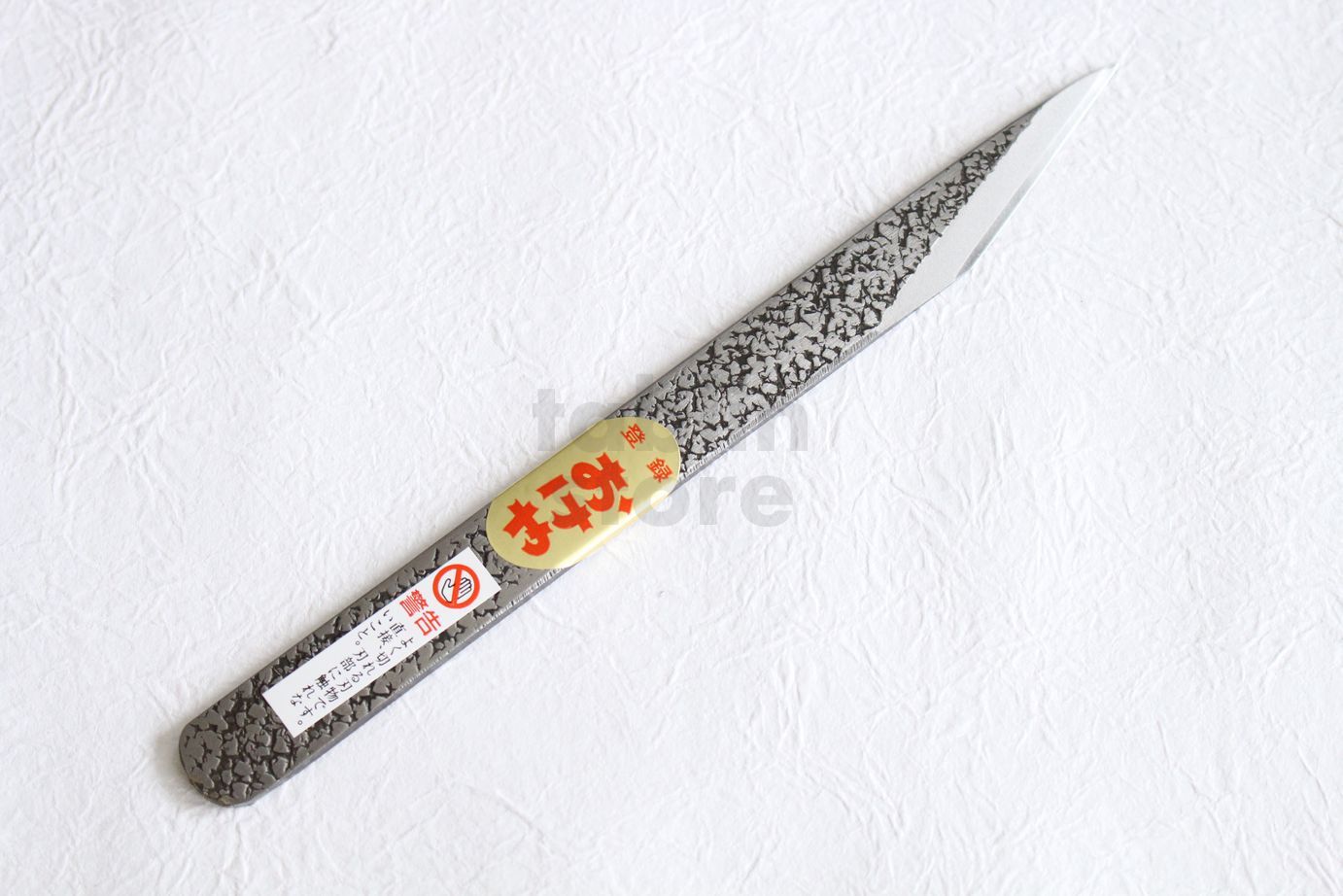
                    <title>Kiridashi knife Japanese kogatana Woodworking Okeya Yasuki white 2 steel any size</title>
                    <link>https://www.tablinstore.info/product/2917</link>
                    <description>Kiridashi knife Japanese kogatana Woodworking Okeya Yasuki white 2 steel any size

-- Features of …</description>
                    <content:encoded><![CDATA[<p><a href="https://www.tablinstore.info/product/2917" target="_blank"><img src="https://www.tablinstore.info/data/tablin/product/20170315_76a975.JPG" width="250" border="0" alt="Kiridashi knife Japanese kogatana Woodworking Okeya Yasuki white 2 steel any size" hspace="5" align="left"/></a><b>Kiridashi knife Japanese kogatana Woodworking Okeya Yasuki white 2 steel any size</b><br />
<br />
-- Features of This item --<br />
<br />
This is an especially sharp Japanese knife, using white-2 steel from Yasuki, which is reputed to be the top grade of steel for knives.<br />
This knife is made by Okeya Blacksmith who is one of the most famous craft-man.<br />
<br />
<img src="https://www.tablinstore.info/data/tablin/product/20150624_81fc5a.jpg" /><br />
<br />
-- Please select size -- <br />
<br />
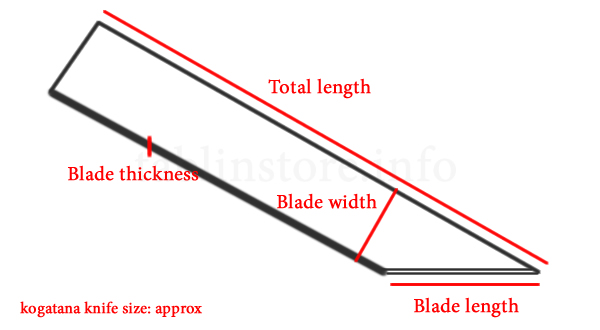
Blade width 9mm<br />
Blade width 12mm<br />
Blade width 15mm, Total length 178mm, Blade length 42mm, Blade thickness 2mm, Weight 40g<br />
Blade width 18mm, Total length 180mm, Blade length 50mm, Blade thickness 2mm, Weight 58g<br />
Blade width 21mm, Total length 185mm, Blade length 54mm, Blade thickness 2mm, Weight 68g<br />
Blade width 24mm<br />
Blade width 27mm<br />
Blade width 30mm, Total length 210mm, Blade length 70mm, Blade thickness 2.2mm, Weight 100g<br />
<br />
-- Material --<br />
*Blade:  Yasuki white-2 steel / Single edged for right hand<br />
<br />
-- Note --<br />
*Price is include a knife. The engraved mark of backside may change without notice. BW 30mm type dose not have engraved mark of backside.</p>]]></content:encoded>
                    <dc:subject>Kiridashi kogatana woodworking knife</dc:subject>
                    <dc:creator>tablinstore</dc:creator>
                    <dc:format>30.00</dc:format>
                    <dc:date>2026-03-10T10:42:51+09:00</dc:date>
                    <dc:type>shop</dc:type>
                </item>
                
                <item rdf:about="https://www.tablinstore.info/product/4400">
                    <title>Natural farming Premium Sencha Japanese green tea Watarai Ise 100g</title>
                    <link>https://www.tablinstore.info/product/4400</link>
                    <description>Natural farming Premium Sencha Japanese green tea Watarai Ise 100g

Chemical free, Fertilizer free…</description>
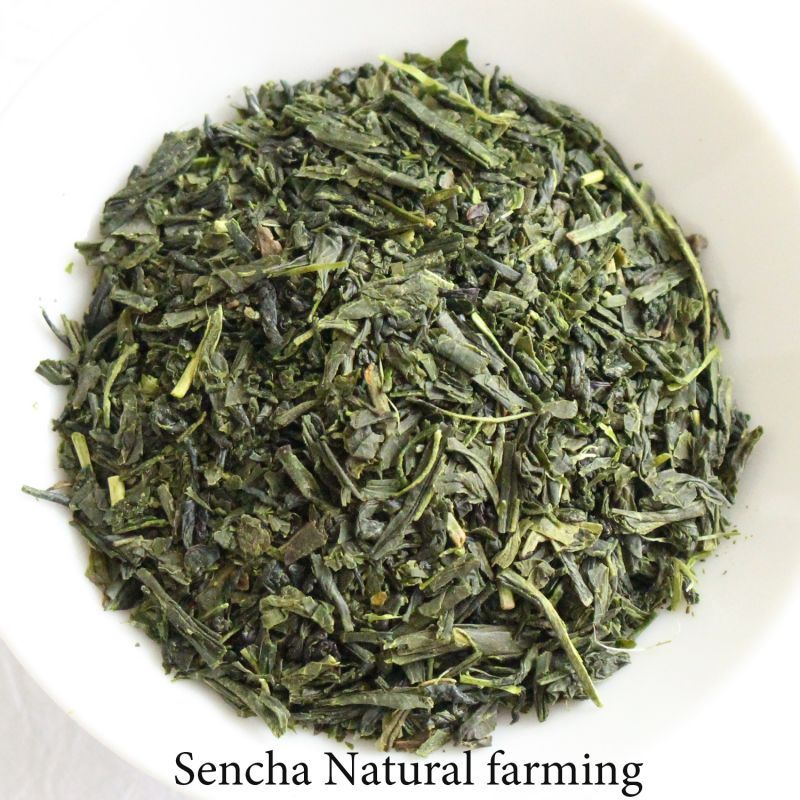
                    <content:encoded><![CDATA[<p><a href="https://www.tablinstore.info/product/4400" target="_blank"><img src="https://www.tablinstore.info/data/tablin/product/20170417_81eb23.jpg" width="250" border="0" alt="Natural farming Premium Sencha Japanese green tea Watarai Ise 100g" hspace="5" align="left"/></a><b>Natural farming Premium Sencha Japanese green tea Watarai Ise 100g</b><br />
<br />
<b>Chemical free, Fertilizer free, Narural farming Tea<br />
Rich, deep and thick flavor spread in your mouth</b><br />
<br />
Most of Japanese tea farmers has grown green tea leaves with pesticide and chemical fertilizer in response to the rising demand since 1950 at the height of Japan’s economic boom. Many of those came to face serious problems from polluted water and soil which affect health and life of their family and local villages.<br />
<br />
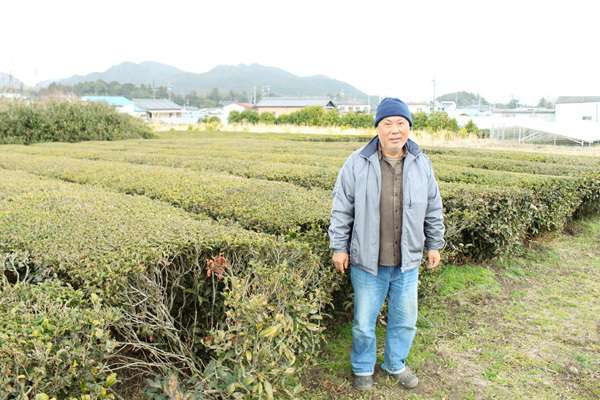
Mr. Nakamura, who owns tea field, has started to cultivate tea leaves without using chemical since 1985, with increasing demand for safe agricultural products.<br />
*Mr. Nakamura obtains JAS standards for organic vegetables by JAS Registered Certification Organaization. *JAS=Japan Agricultural Standards<br />
<br />
<br />
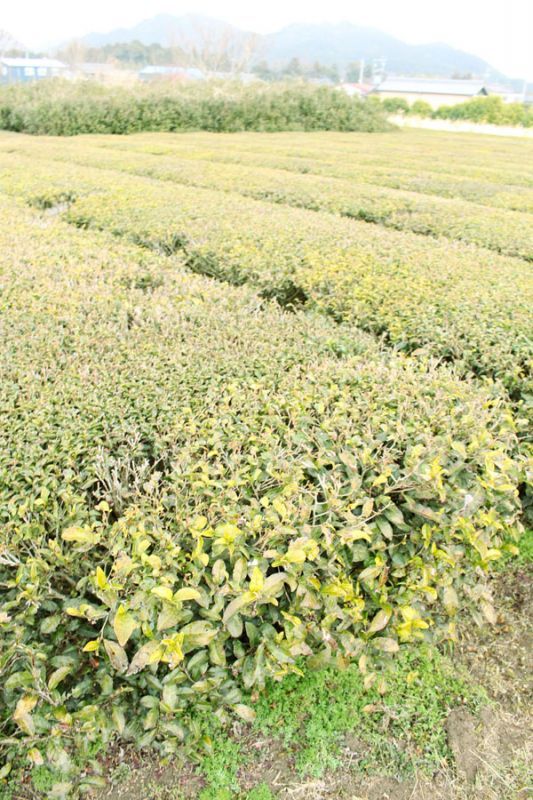
<img src="https://www.tablinstore.info/data/tablin/product/20170417_1ebd05.jpg" /><br />
*field covered with bright yellow tea leaves<br />
<br />
Furthermore, he has made the shift to cultivate them without using any fertilizer since 2006. Soon after, tea trees got weakened and lost its fertility. Mr. Nakamura could not harvest any tea leaves for 5 years. But it gradually went to bloom beautiful flowers and seed every year. Although it is on a small-scale comparing what it was, it finally grow as thrive tea trees so that we can enjoy rich, deep and thick taste.<br />
<br />
<b>Chemical free, Fertilizer free</b><br />
We offer an unique and sincere experience of genuine taste green tea made from over 60-years-olds tree. <br />
<br />
<b>Cultivar and processing</b><br />
Only using native species : the seeds of tea tree which existed naturally since old times.<br />
Mr.Nakamura, a family-run tea farm, also operates a tea processing factory which takes whole process, harvesting, steaming and drying, to make finished product.<br />
This exclusive natural, healthy and genuine taste green tea is made by reducing processing time as much as possible.<br />
<br />
<img src="https://www.tablinstore.info/data/tablin/product/20170417_1b26b6.jpg" /><br />
<b>Fertilizer free</b><br />
You can see the farm is overgrown with weeds by picture above. A superior natural environment is formed by leaf mold piled with pulled weeds and dead tea leaves.<br />
<br />
<b>WATARAI tea in ISE</b><br />
Watarai tea is well known as one of ISE tea as for the third tea production in Japan.<br />
Thanks for its rich natural environment at the foot of Suzuka mountain range, it has long history.<br />
<br />
<img src="https://www.tablinstore.info/data/tablin/product/20170417_abfd84.png" /><br />
<br />
*No pesticide and No chemical fertilizer<br />
*Net weight 100g /3.52oz<br />
*Brand: Nakamura natural farming<br />
*Growing Region: 100% in  Ise Watarai, Japan<br />
*Cultivar(s) 100% native species tea (Zairai), 60 year-old tree <br />
*Steaming: short time<br />
*Year Harvested: every year<br />
*Expiration date: about 6 months <br />
*Please note that the packaging may change without notice.<br />
<br />
<center><img src="https://www.tablinstore.info/data/tablin/product/20181030_a320f1.jpg" /><br />
Mr. Nakamura</center><br />
<br />
-- What is green tea? --<br />
<br />
Green tea refers to unfermented tea leaves wherein fermentation is stopped right after picking. <br />
“Green tea” is the general term given to all kinds of Japanese tea. “Sencha” or regular green tea, <br />
“Gyokuro” or the highest-quality green tea and “Houjicha” or roasted green tea all fall under the generic term “green tea.”<br />
<br />
<br />
-- "Sencha" or regular tea --<br />
<br />
Sencha is the most widely drunk tea by the Japanese. Freshly-picked tea leaves are steamed and roasted,<br />
and the fermentation process is stopped by the heat from steaming and roasting. <br />
Before picking, tea leaves are allowed to bathe in the sun, and through photosynthesis, <br />
the tea’s astringent components called catechin increase, resulting in a tea with a slightly astringent, refreshing scent and a clean, clear taste.<br />
<br />
<br />
-- Recommended way to make this tea --<br />
1.Place 1 tea spoon. (about 5g) in tea pot.<br />
<br />
2.Add 150 to 220 ml of boiling water.<br />
<br />
3.Brew for about 30 sec.<br />
<br />
Hint:Don’t shake the tea pot while brewing.when serving,pour out every last drop.<br />
<br />
*Up to 3 pots can be made using the same tea leaves because High class Japanese tea. <br />
<br />
<br />
-- Additional information on how to brew tea --<br />
<br />
Tea is a matter of personal taste, so we would be happy if you could find a preparation method that suits you best.<br />
If you would like a “sweeter” tea, brew it for 40-60 seconds in hot water that is about 75 degrees Celsius.<br />
If you would like a "stronger", more astringent tea, brew it for 30-40 seconds in hotter water that is 90 degrees Celsius.<br />
Moreover, if you start brewing at a lower temperature and brew it at higher temperature increments, you can use the same tea leaves three to four times.<br />
</p>]]></content:encoded>
                    <dc:subject>Green tea, Matcha</dc:subject>
                    <dc:creator>tablinstore</dc:creator>
                    <dc:format>25.00</dc:format>
                    <dc:date>2026-03-05T10:51:08+09:00</dc:date>
                    <dc:type>shop</dc:type>
                </item>
                
                <item rdf:about="https://www.tablinstore.info/product/866">
                    <title>Japanese Chasen Black Bamboo Whisk Shitiku Shin Yasaburo Tanimura of Suikaen</title>
                    <link>https://www.tablinstore.info/product/866</link>
                    <description>Japanese Chasen Black Bamboo Whisk Shitiku Shin Yasaburo Tanimura of Suikaen

Chasen whisk /The ty…</description>
                    <content:encoded><![CDATA[<p><a href="https://www.tablinstore.info/product/866" target="_blank"><img src="https://www.tablinstore.info/data/tablin/product/s5-1.jpg" width="250" border="0" alt="Japanese Chasen Black Bamboo Whisk Shitiku Shin Yasaburo Tanimura of Suikaen" hspace="5" align="left"/></a>Japanese Chasen Black Bamboo Whisk Shitiku Shin Yasaburo Tanimura of Suikaen<br />
<br />
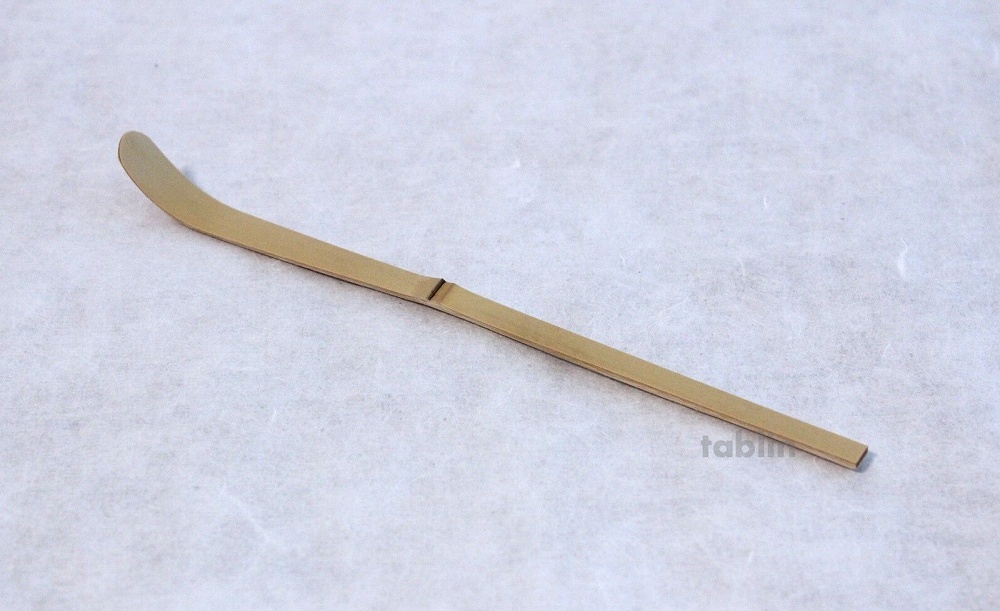
Chasen whisk /The type is Shofuku: It has about 66 tip. *approx<br />
This is a high quality item.<br />
Chasen (tea whisk) is used in Japanese tea ceremony to mix hot water and matcha.<br />
<br />
<br />
<b>-- Introduce Making Bamboo Whisk (Chasen) and a traditional craftsman Mr. Yasaburo Tanimura of Suikaen -- <br />
<br />
Takayama Tea Whisks by Mr. Yasaburo Tanimura of Suikaen: A traditional art handed down unchanged for the past five hundred years and made with the spirit of crafting things without compromise.</b><br />
<br />
<br />
<b>About material</b><br />
With regards to bamboo which is the raw material for tea whisks, winter is the only time when insects don’t approach the bamboo and when their strength is at its peak so they are only felled during this time. After removing the oils by boiling the bamboo in a pot, they are left to dry under the gentle rays of the winter sun. They are then stored for 2-3 years and only good-quality bamboo is used in making tea whisks and tea ladles.<br />
<br />
*Harvesting bamboo is only conducted in Takayama or in neighboring bamboo forests.<br />
<br />
By taking years to process the materials, unsuitable bamboo crack, or change color with the passing of time, so only good-quality materials naturally rise above the rest.<br />
<br />
<br />
<iframe width="600" height="450" src="//www.youtube.com/embed/C17V5Unu-Vc" frameborder="0" allowfullscreen></iframe><br />
The movie of making Japanese bamboo tea spoon Yasaburo Tanimura Suikaen.<br />
<br />
<br />
<b>Techniques that have remained unchanged for five hundred years</b><br />
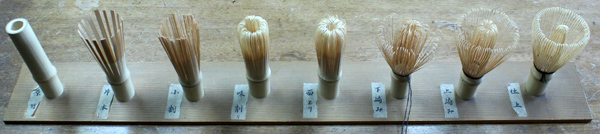
Bamboo that has been stored are peeled, and after being divided into sixteen parts with a knife; and depending on the type of tea whisk; the bamboo are finely shaved further, and are shaped and turned into finished products.<br />
<p><img src="https://www.tablinstore.info/data/tablin/product/aIMG_7672.jpg" /></p><br />
*The left side is raw bamboo, and the finished product is on the right.<br />
<br />
Each step of the process is divided among craftsmen, and here at Suikaen there are ten artisans who complete the tea whisks through their handiwork. <br />
<br />
<iframe width="600" height="338" src="//www.youtube.com/embed/GzLtgVFjqrw" frameborder="0" allowfullscreen></iframe><br />
”Aji Kezuri” <br />
The tines are steeped in hot water, and are then shaved thinner and thinner up until the tips are formed. The tines are then shaped so that the inner parts become rounded.<br />
<br />
<br />
<p><img src="https://www.tablinstore.info/data/tablin/product/aIMG_7676.jpg" /></p><br />
“Uwa ami”<br />
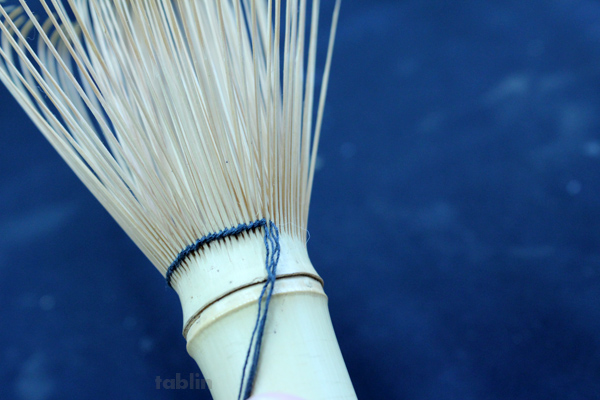
I also tried my hand at the process called “uwa ami.” This is the stage wherein thread is woven into each of the tines near the base of the whisk; a rather delicate and astounding task.<br />
<br />
<br />
<iframe width="600" height="338" src="//www.youtube.com/embed/ovwRvUfGXcA" frameborder="0" allowfullscreen></iframe><br />
"Finishing"<br />
Arranging the tines of the whisk, then finishing off by adjusting its shape.<br />
<br />
<br />
<br />
Takayama tea whisks are made just by using a knife and the fingertips, a highly-acclaimed technique known as “fingertip art.”<br />
<br />
These traditional techniques manipulate the material into something with the thickness of paper. It not only gives a fine, smooth foaming of tea but it also has durability and a unique texture - a tool of high quality. <br />
<br />
Today, aside from industrial products, Japanese traditional products are manufactured and distributed abroad; but there are still a lot of things that can only be obtained in certain areas, just like Takayama tea whisks - a traditional art continuously handed down and made with the spirit of crafting things without compromise.<br />
<br />
A tool that is also a traditional art, and the appeal of merit such as the history and culture of a place is probably the reason why many people are attracted to it.<br />
<br />
<br />
<p><img src="https://www.tablinstore.info/data/tablin/product/aIMG_7665.jpg" /></p><br />
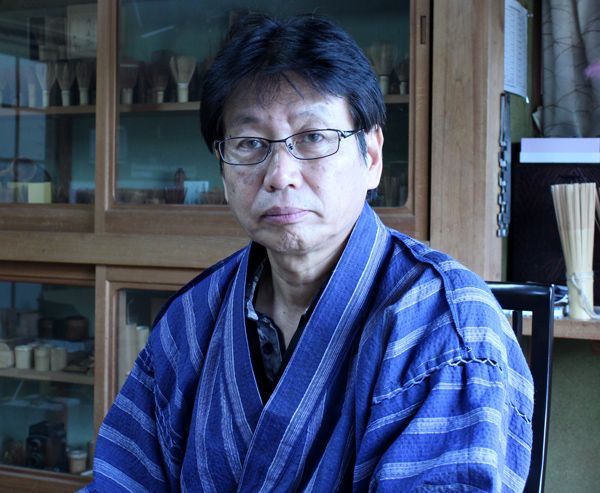
This is Mr. Yasaburo Tanimura, a traditional craftsman and the head of Suikaen.  When he was 35 years old, his predecessor passed away at a young age, so he took over Suikaen and has continued preserving traditional techniques.</p>]]></content:encoded>
                    <dc:subject>Tea ceremony Chanoyu</dc:subject>
                    <dc:creator>tablinstore</dc:creator>
                    <dc:format>49.00</dc:format>
                    <dc:date>2026-03-05T10:49:51+09:00</dc:date>
                    <dc:type>shop</dc:type>
                </item>
                
                <item rdf:about="https://www.tablinstore.info/product/4601">
                    <title>Tsunesaburo Kaku Mentori kanna Chamfer Plane SKH51 steel Easy maintenance blade</title>
                    <link>https://www.tablinstore.info/product/4601</link>
                    <description>Tsunesaburo Kaku Mentori kanna Chamfer Plane SKH51 steel Easy maintenance blade 45-degree angle

-…</description>
                    <content:encoded><![CDATA[<p><a href="https://www.tablinstore.info/product/4601" target="_blank"><img src="https://www.tablinstore.info/data/tablin/product/IMG_9870.JPG" width="250" border="0" alt="Tsunesaburo Kaku Mentori kanna Chamfer Plane SKH51 steel Easy maintenance blade" hspace="5" align="left"/></a><b>Tsunesaburo Kaku Mentori kanna Chamfer Plane SKH51 steel Easy maintenance blade 45-degree angle</b><br />
<br />
-- Features of This item --<br />
<br />
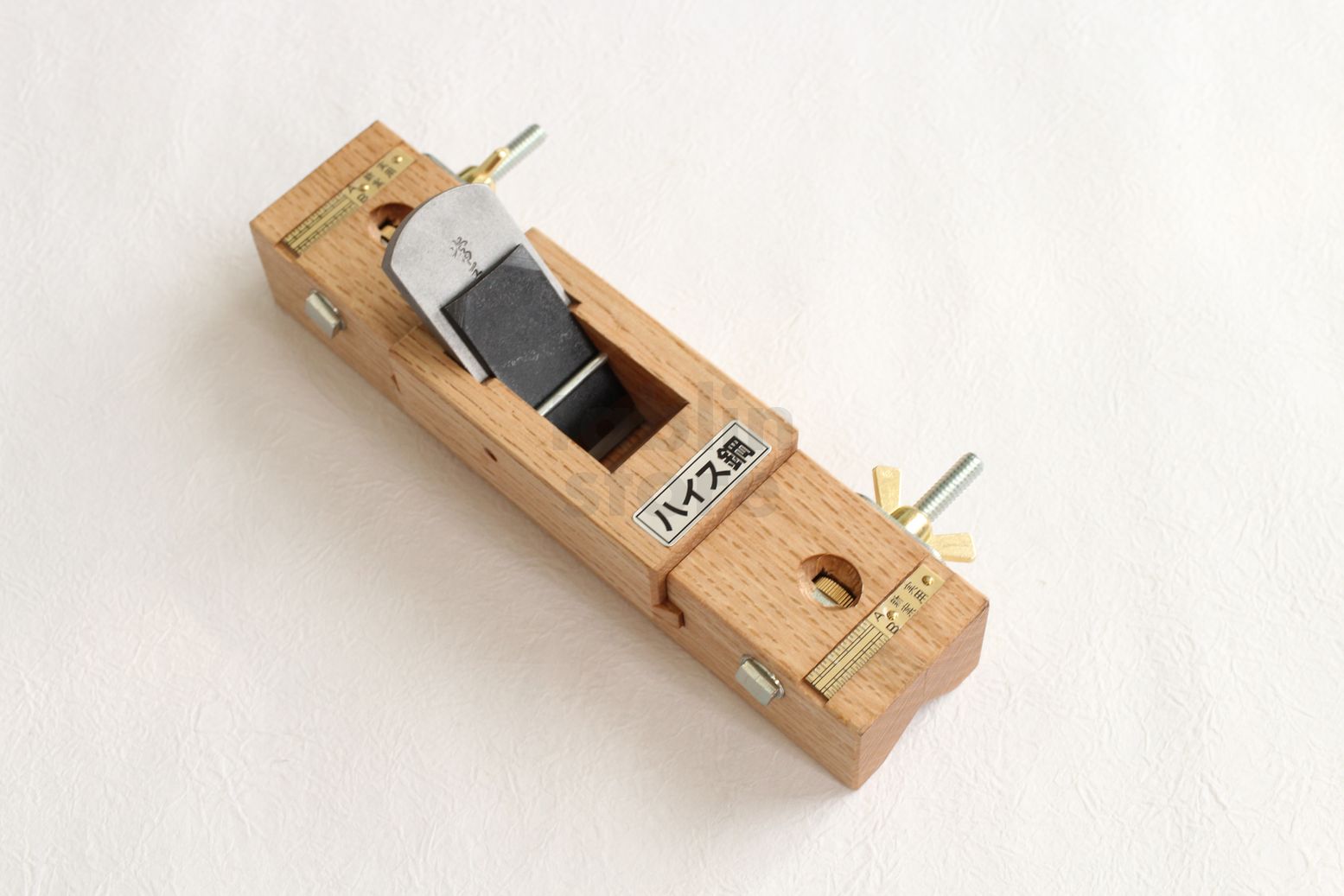
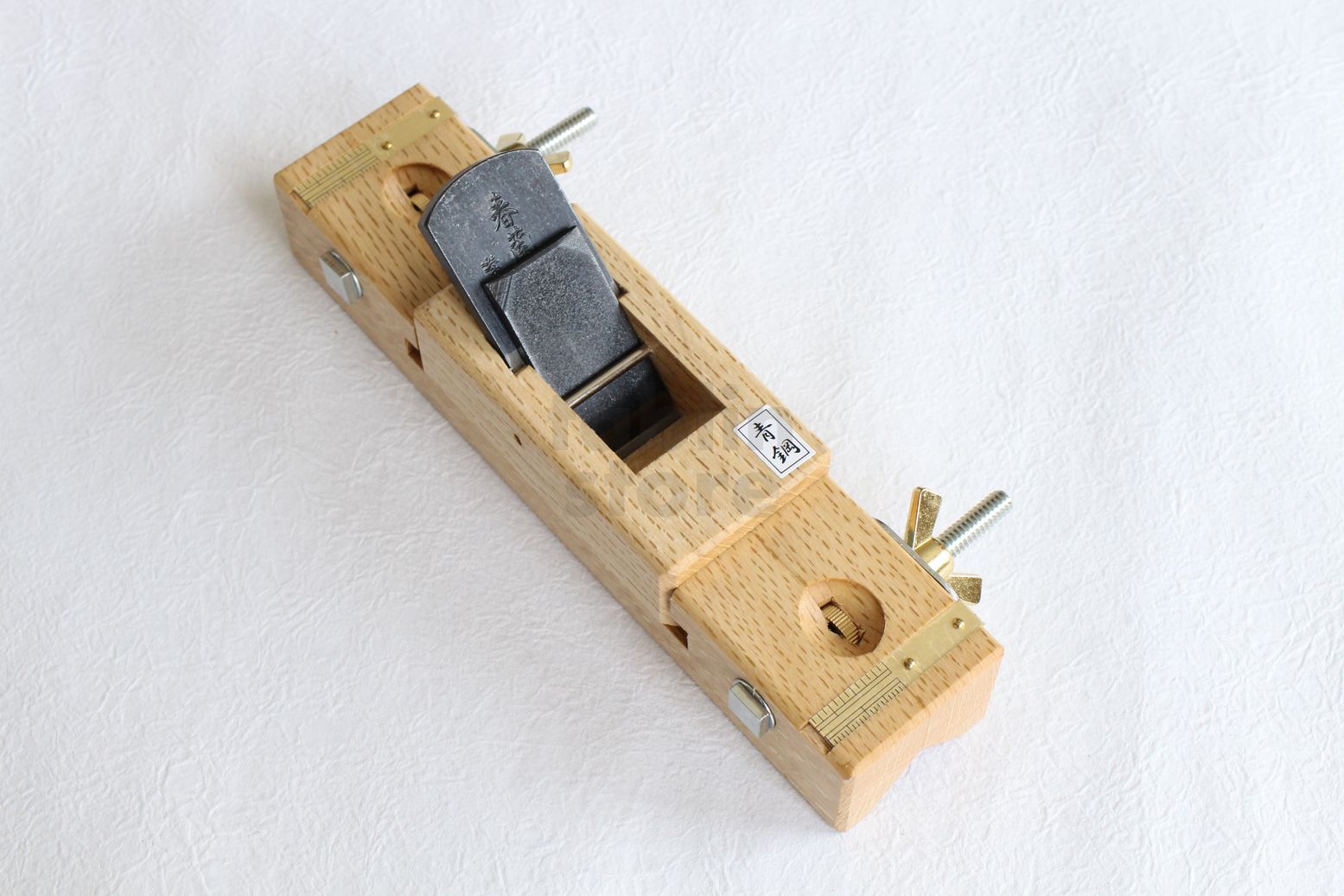
Tsunesaburo is one of the most famous woodworking molding plane brand in Japan. The blade part is made of SKH51 High Speed Steel which is the highest glade steel.<br />
This Kaku mentori kanna is for 45° bevels, and the bevel width can be adjusted 0-16mm.<br />
<br />
*Size<br />
Plane blade width 30mm, Cutting width 27mm, Total length 75mm / stand size: Total length 197mm, Width 47mm, Height 40mm<br />
<br />
*Blade Material<br />
Core blade: SKH51 High Speed Steel<br />
Base blade: soft iron <br />
<br />
*stand Material: Quercus myrsinifolia (Japanese shirakashi wood), wood grain varies<br />
*Mouth: normal<br />
<br />
*Note: size and weight, approx <br />
*Handling time: 14 to 60 business days / After order craftsman will give the last finish.   <br />
*Made in Japan<br />
*A brand new, Price is include a Kanna plane.<br />
<br />
<b>About Tsunesaburo</b><br />
Mr.Tsuenzaburo Uozumi, a first-generation plane blade maker studied under Mr. Fukuzaburo Kanna since he was a child and has mastered the secrets of process for making plane blade for 28years. He established the Tsunesaburo Plane Works Co., Ltd. in 1947. A third-generation of the Tsunesaburo family, Mr. Toru Uozumi who currently takes over a business crafts various type of plane according to the purpose of use utilizing both the traditional method and modern equipment. It provides excellent sharpness, high durability and usable from hard materials to softwood and laminated wood. The Tsunesaburo bland built a reputation all over the world especially woodworkers and craftsmen who make musical instruments.<br />
<center><br />
<img src="https://www.tablinstore.info/data/tablin/product/20170512_a81001.jpg" /></center><br />
<b>Stable high quality</b><br />
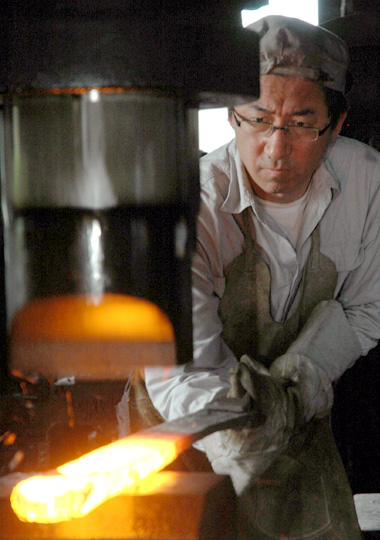
The plane is made from high class steel, mainly the finest blue steel, for core blade material and soft iron carbon steel for base blade material. The processes are all done by hand(called Koshiki tanzo). Controlling hardening and tempering, the key to make stable quality plane blade, is operated with not only depending on intuition of experienced craftmen, but using several thermometers.<br />
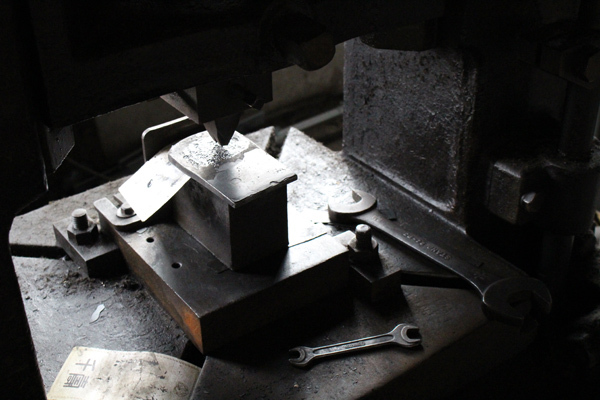
*Only high-speed steel(SKH51) is done by press working.<br />
<center><br />
<img src="https://www.tablinstore.info/data/tablin/product/20170512_1481a3.jpg" /></center><br />
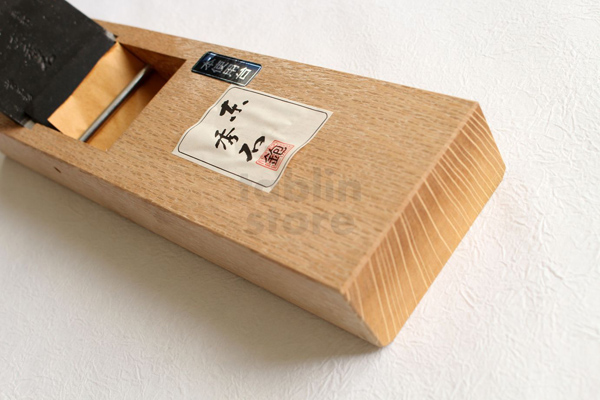
Body stand is made from Japanese quercus myrsinifolla which is completely dried over 3 years. Hardly warped, providing strength and resistant to aged.<br />
<br />
<b>Special Techniques of Tsunazaburo</b><br />
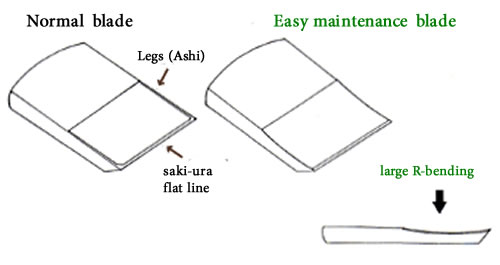
The easy maintenance plane blade: unnecessary “ura dashi” kanna<br />
Regular plane has legs called “ashi” on both sides.(left below: necessary “ura dashi” kanna) <br />
On the other hand, this easy maintenance plane blade doesn’t has legs but being processed as a large R-bending from the blade steel end point(Kaisaki) to the blade edge. Therefore, it’s only needed to whet back side of the blade even when the end of the blade is abraded. <br />
<br />
<center><br />
<img src="https://www.tablinstore.info/data/tablin/image/ura-img.jpg" /></center><br />
<br />
<br />
FYI:How to “ura dashi kanna”<br />
https://www.youtube.com/watch?v=_wSuN68Log0<br />
<br />
<center><br />
<img src="https://www.tablinstore.info/data/tablin/product/20170512_e115f0.jpg" /></center></p>]]></content:encoded>
                    <dc:subject>Plane Kanna</dc:subject>
                    <dc:creator>tablinstore</dc:creator>
                    <dc:format>261.00</dc:format>
                    <dc:date>2026-03-05T10:19:48+09:00</dc:date>
                    <dc:type>shop</dc:type>
                </item>
                
                <item rdf:about="https://www.tablinstore.info/product/4472">
                    <title>Tsunesaburo Kaku Mentori kanna Chamfer Plane Shunran Blue 1 steel</title>
                    <link>https://www.tablinstore.info/product/4472</link>
                    <description>Tsunesaburo Kaku Mentori kanna Chamfer Plane Shunran Blue 1 steel 45-degree angle

-- Features of …</description>
                    <content:encoded><![CDATA[<p><a href="https://www.tablinstore.info/product/4472" target="_blank"><img src="https://www.tablinstore.info/data/tablin/product/20180728_3bcb62.JPG" width="250" border="0" alt="Tsunesaburo Kaku Mentori kanna Chamfer Plane Shunran Blue 1 steel" hspace="5" align="left"/></a><b>Tsunesaburo Kaku Mentori kanna Chamfer Plane Shunran Blue 1 steel 45-degree angle</b><br />
<br />
-- Features of This item --<br />
<br />
Tsunesaburo is one of the most famous woodworking molding plane brand in Japan. The blade part is made of Blue 1 steel which is the highest glade steel and made by hand hammer by craft-man. This Kaku mentori kanna is for 45°bevels, and the bevel width can be adjusted 0 to maximum width 20mm.<br />
<br />
-- Item detail --<br />
Plane blade width 30mm, Cutting width 27mm, Total length 75mm / stand size: Total length 197mm, Width 47mm, Height 40mm, 460g<br />
<br />
*Blade Material<br />
Core blade: Aogami Blue 1 steel ( carbon steel), Hand forged by craft-man. <br />
Base blade: soft iron <br />
<br />
*stand Material: Quercus myrsinifolia (Japanese shirakashi wood), wood grain varies<br />
*Mouth: normal<br />
*Note: size and weight, approx <br />
*Handling time: 7 to 21 days / After order craftsman will give the last finish.  <br />
*Made in Japan<br />
*A brand new, Price is include a Kanna plane.<br />
<br />
<b>About Tsunesaburo</b><br />
Mr.Tsuenzaburo Uozumi, a first-generation plane blade maker studied under Mr. Fukuzaburo Kanna since he was a child and has mastered the secrets of process for making plane blade for 28years. He established the Tsunesaburo Plane Works Co., Ltd. in 1947. A third-generation of the Tsunesaburo family, Mr. Toru Uozumi who currently takes over a business crafts various type of plane according to the purpose of use utilizing both the traditional method and modern equipment. It provides excellent sharpness, high durability and usable from hard materials to softwood and laminated wood. The Tsunesaburo bland built a reputation all over the world especially woodworkers and craftsmen who make musical instruments.<br />
<center><br />
<img src="https://www.tablinstore.info/data/tablin/product/20170512_a81001.jpg" /></center><br />
<b>Stable high quality</b><br />
The plane is made from high class steel, mainly the finest blue steel, for core blade material and soft iron carbon steel for base blade material. The processes are all done by hand(called Koshiki tanzo). Controlling hardening and tempering, the key to make stable quality plane blade, is operated with not only depending on intuition of experienced craftmen, but using several thermometers.<br />
*Only high-speed steel(SKH51) is done by press working.<br />
<center><br />
<img src="https://www.tablinstore.info/data/tablin/product/20170512_1481a3.jpg" /></center><br />
Body stand is made from Japanese quercus myrsinifolla which is completely dried over 3 years. Hardly warped, providing strength and resistant to aged.<br />
<br />
<center><br />
<img src="https://www.tablinstore.info/data/tablin/product/20170512_e115f0.jpg" /></center><br />
</p>]]></content:encoded>
                    <dc:subject>Plane Kanna</dc:subject>
                    <dc:creator>tablinstore</dc:creator>
                    <dc:format>229.00</dc:format>
                    <dc:date>2026-03-05T10:19:11+09:00</dc:date>
                    <dc:type>shop</dc:type>
                </item>
                
                <item rdf:about="https://www.tablinstore.info/product/4384">
                    <title>Kuro black Raku ware Shoraku Sasaki Jyo Japanese matcha tea bowl chawan with a wooden box</title>
                    <link>https://www.tablinstore.info/product/4384</link>
                    <description>Kuro black Raku ware Shoraku Sasaki Jyo Japanese matcha tea bowl chawan with a wooden box

The pos…</description>
                    <content:encoded><![CDATA[<p><a href="https://www.tablinstore.info/product/4384" target="_blank"><img src="https://www.tablinstore.info/data/tablin/product/IMG_7301.JPG" width="250" border="0" alt="Kuro black Raku ware Shoraku Sasaki Jyo Japanese matcha tea bowl chawan with a wooden box" hspace="5" align="left"/></a>Kuro black Raku ware Shoraku Sasaki Jyo Japanese matcha tea bowl chawan with a wooden box<br />
<br />
The posture and color is very beautiful. <br />
Kiyomizu - yaki (ware) is one of the best-known Japanese traditional potteries.<br />
<br />
This tea bowl is made by Shoraku Sasaki Kiln which is one the most famous pottery kiln in Japan. <br />
Signature of the potter is stamped on the bottom.<br />
<br />
Traditional raku ware has some slight cracks on the clay in some case. These are part of the natural soft clay's containing a lot of air properties, unique material and hand work, so please enjoy this unique texture not found anywhere else.<br />
<br />
<br />
--- About Kiyomizu kyoto ware ---<br />
Although this craft dates back to before the Heian period (794-1185), the making of pottery began in earnest when the capital of Heian-kyo (now Kyoto) was founded in 794. Since that time Kyoto has been the home to many famous potters and the birthplace of many fine pieces of work. Famous potters such as Ninsei and Kenzan were at work in the 17th century and then in the 19th century, the potter Eisen successfully fired porcelain, while such masters as Mokubei, Hozen and Ninami were remarkably active during the same century. Great advances were then made from toward the end of the 19th century with the introduction of various techniques from around the world, when German ceramists were invited to come to Kyoto.<br />
<br />
The sheer beauty and craftsmanship of some pieces over which so much trouble is taken have a strong traditional feel, while other pieces are invested with a freshness that finds favor in contemporary life. Each piece has its place within the scheme of things and manages to maintain its own unique ambience. The range of pottery and porcelain now made in Kyoto is almost beyond comprehension, but mainly consists of good quality tableware for use at home and in the best Japanese style restaurants. Many pieces are still made for use in association with the tea ceremony.<br />
</p>]]></content:encoded>
                    <dc:subject>Matcha Tea bowl </dc:subject>
                    <dc:creator>tablinstore</dc:creator>
                    <dc:format>258.00</dc:format>
                    <dc:date>2026-01-19T09:18:37+09:00</dc:date>
                    <dc:type>shop</dc:type>
                </item>
                
                <item rdf:about="https://www.tablinstore.info/product/3222">
                    <title>Sakai takayuki Japanese knife Tokujou Yasuki white-2 steel Edo saki eel any size</title>
                    <link>https://www.tablinstore.info/product/3222</link>
                    <description>Sakai takayuki Japanese knife Tokujou Yasuki white-2 steel Edo saki eel any size

-- Features of T…</description>
                    <content:encoded><![CDATA[<p><a href="https://www.tablinstore.info/product/3222" target="_blank"><img src="https://www.tablinstore.info/data/tablin/product/20160315_57a5e2.JPG" width="250" border="0" alt="Sakai takayuki Japanese knife Tokujou Yasuki white-2 steel Edo saki eel any size" hspace="5" align="left"/></a><b>Sakai takayuki Japanese knife Tokujou Yasuki white-2 steel Edo saki eel any size</b><br />
<br />
-- Features of This item --<br />
<br />
The knives are the most reliable series of Sakai Takayuki products, which were created with the painstaking efforts of top blacksmith craftsmen and knife grinders in Japan. The steel is Yasuki white-2 steel.<br />
<br />
-- About eel knife --<br />
The knives are used to cut up for eel and conger eel. <br />
<br />
<br />
-- Item number, Type, Blade Length --<br />
<img src="https://www.tablinstore.info/data/tablin/product/20150803_55bd82.jpg" /><br />
anago-saki (eel)<br />
03111 eel knife 120mm <br />
03112 eel knife 135mm 　<br />
<img src="https://www.tablinstore.info/data/tablin/product/20150803_7336c4.jpg" /><br />
edo-saki (unagi-saki)(eel)<br />
03113 eel knife 150mm, Total length 263mm, Blade width 35mm, Blade thickness 4mm, 141g 　<br />
03114 eel knife 165mm 　<br />
03115 eel knife 180mm 　<br />
03116 eel knife 195mm 　<br />
03117 eel knife 210mm 　<br />
03118 eel knife 225mm 　<br />
03119 eel knife 240mm 　<br />
03120 eel knife 270mm 　<br />
　<br />
-- Material --<br />
*Blade: Yasuki white-2 steel, single edged <br />
*Handle: natural wood with a Buffalo horn ring / colors varies<br />
<br />
<br />
<b>-- SAKAI TAKAYUKI&nbsp;recommend&nbsp;movie --</b><br><br><br />
 <object width="640" height="450"><param name="movie" value="//www.youtube.com/v/-qem04Vm3kw?version=3&amp;hl=ja_JP&amp;rel=0"><param name="allowFullScreen" value="true"><param name="allowscriptaccess" value="always"><embed src="//www.youtube.com/v/-qem04Vm3kw?version=3&amp;hl=ja_JP&amp;rel=0" type="application/x-shockwave-flash" width="640" height="450" allowscriptaccess="always" allowfullscreen="true"></object><br />
 <br>Mr. ItsuoDoi was born in 1948 and at 24 years of age, he became the apprentice of Mr. Keijiro Doi, his father. Following in the footsteps of his grandfather, Mr. Doi was trained in the secrets of his family’s craft, continuously producing excellent knives as a knife smith in the Sakai tradition.<br><br>Each knife is made using different techniques, and passes through the hands of various craftsmen such as knife smiths and polishers. In addition to traditional techniques, the passion and training of the craftsmen are embedded into each piece, and each one continues to receive high marks as a superior knife.<br />
 <br><br><br />
 <object width="640" height="450"><param name="movie" value="//www.youtube.com/v/3tVQsPqBlB8?version=3&amp;hl=ja_JP"><param name="allowFullScreen" value="true"><param name="allowscriptaccess" value="always"><embed src="//www.youtube.com/v/3tVQsPqBlB8?version=3&amp;hl=ja_JP" type="application/x-shockwave-flash" width="640" height="450" allowscriptaccess="always" allowfullscreen="true"></object></object><br><br><br />
 <object width="640" height="450"><param name="movie" value="//www.youtube.com/v/itcPEoCSBr0?version=3&amp;hl=ja_JP"><param name="allowFullScreen" value="true"><param name="allowscriptaccess" value="always"><embed src="//www.youtube.com/v/itcPEoCSBr0?version=3&amp;hl=ja_JP" type="application/x-shockwave-flash" width="640" height="450" allowscriptaccess="always" allowfullscreen="true"></object><br><br><br></font></p><p class="MsoNormal" align="left" style="margin: 0mm 0mm 0pt;"><font face="Arial, sans-serif"></b></p><p class="MsoNormal" align="left" style="margin: 0mm 0mm 0pt;"><font face="Arial, sans-serif"><b>-- Sakai's celebrated swords handed down from&nbsp;ancient&nbsp;times SAKAI TAKAYUKI --</b></p><p class="MsoNormal" align="left" style="margin: 0mm 0mm 0pt;"><font face="Arial, sans-serif"><br />Japanese swords have been status symbol from ancient times. The core blade is forged by folding selected steel many times and features supreme sharpness and brilliance;it is has been said that the human soul dwells in the sword.Japanese knifes are actually works of art descended from Japanese&nbsp;swords,and we proudly present them to the world.</b></p><p class="MsoNormal" align="left" style="margin: 0mm 0mm 0pt;"><font face="Arial, sans-serif"><br />The quality of meticulous workmanship represents the pride of masters who create&nbsp;quality&nbsp;knives,and the quality is ensured by traditional skills that have been continuously inherited from their predecessors,Japanese knifes have their own unprecedented shapes and are without parallel in the world as knives created for cutting different foods,including fishes and vegetables,and are vital for delicate Japanese dishes, All of our staff members wish that you would pick up the Sakai Takayuki brand products which maintain the traditional skills of Sakai's Japanese knives and demonstrate hte skill of world-class masters.</font></p><p class="MsoNormal" align="left" style="margin: 0mm 0mm 0pt;"><font face="Arial, sans-serif"><br><br /></font></p><p class="MsoNormal" align="left" style="margin: 0mm 0mm 0pt;"><span style="font-family: Arial, sans-serif;">--&nbsp;</span><b style="font-family: Arial, sans-serif;">Craftsman of SAKAI TAKAYUKI--</b></p><p class="MsoNormal" align="left" style="margin: 0mm 0mm 0pt;"><font face="Arial, sans-serif"><br />The title "Meister" or traditional craftsman is authorized by the Minister of International Trade and Industry only to craftsmen who have inherited and improved their skills over a long period of time in the field of Japanese traditional industries and craftwork and have passed strict screening tests. Sakai knives have a 600-year history supported by the excellent skills inherited from generation to generation by Meisters.</font></p><p class="MsoNormal" align="left" style="margin: 0mm 0mm 0pt;"><font face="Arial, sans-serif"><br><br />
 <img src="http://www.changemind.jp/ebay/image/craftman-sakaitakayuki.jpg"></font></p><br />
<img src="https://www.tablinstore.info/data/tablin/product/20140429_b0b5fb.jpg" />"</p>]]></content:encoded>
                    <dc:subject>other Japanese style knives</dc:subject>
                    <dc:creator>tablinstore</dc:creator>
                    <dc:format>219.00</dc:format>
                    <dc:date>2026-01-15T08:48:02+09:00</dc:date>
                    <dc:type>shop</dc:type>
                </item>
                
                <item rdf:about="https://www.tablinstore.info/product/3297">
                    <title>SAKAI TAKAYUKI Japanese knife edo saki ko katana eel unagi Yasuki blue-2steel any size</title>
                    <link>https://www.tablinstore.info/product/3297</link>
                    <description>SAKAI TAKAYUKI Japanese knife edo saki ko katana Yasuki blue-2steel any size

-- Features of This …</description>
                    <content:encoded><![CDATA[<p><a href="https://www.tablinstore.info/product/3297" target="_blank"><img src="https://www.tablinstore.info/data/tablin/product/20150826_cdc2e3.JPG" width="250" border="0" alt="SAKAI TAKAYUKI Japanese knife edo saki ko katana eel unagi Yasuki blue-2steel any size" hspace="5" align="left"/></a><b>SAKAI TAKAYUKI Japanese knife edo saki ko katana Yasuki blue-2steel any size</b><br />
<br />
-- Features of This item --<br />
<br />
This is an especially sharp Japanese knife, using blue-2 steel from Yasuki, which is reputed to be the top grade of steel for knives.<br />
<br />
-- About eel knife --<br />
The knives are used to cut up for eel and conger eel. <br />
<br />
<br />
-- Item number, Type, Blade Length --<br />
No.01111　size120mm 　material(Yasuki blue-2steel)<br />
No.01112　size135mm 　material(Yasuki blue-2steel)<br />
No.01113　size150mm 　material(Yasuki blue-2steel)<br />
No.01114　size165mm 　material(Yasuki blue-2steel)<br />
No.01115　size180mm 　material(Yasuki blue-2steel), TL 275mm, BW 36mm, BT 3.8mm, 157g<br />
No.01116　size195mm 　material(Yasuki blue-2steel)<br />
No.01117　size210mm 　material(Yasuki blue-2steel)<br />
No.01118　size225mm 　material(Yasuki blue-2steel)<br />
No.01119　size240mm 　material(Yasuki blue-2steel)<br />
　<br />
-- Material --<br />
*Handle: natural wood with a Buffalo horn ring / colors varies<br />
<br />
<br />
<b>-- SAKAI TAKAYUKI&nbsp;recommend&nbsp;movie --</b><br><br><br />
 <object width="640" height="450"><param name="movie" value="//www.youtube.com/v/-qem04Vm3kw?version=3&amp;hl=ja_JP&amp;rel=0"><param name="allowFullScreen" value="true"><param name="allowscriptaccess" value="always"><embed src="//www.youtube.com/v/-qem04Vm3kw?version=3&amp;hl=ja_JP&amp;rel=0" type="application/x-shockwave-flash" width="640" height="450" allowscriptaccess="always" allowfullscreen="true"></object><br />
 <br>Mr. ItsuoDoi was born in 1948 and at 24 years of age, he became the apprentice of Mr. Keijiro Doi, his father. Following in the footsteps of his grandfather, Mr. Doi was trained in the secrets of his family’s craft, continuously producing excellent knives as a knife smith in the Sakai tradition.<br><br>Each knife is made using different techniques, and passes through the hands of various craftsmen such as knife smiths and polishers. In addition to traditional techniques, the passion and training of the craftsmen are embedded into each piece, and each one continues to receive high marks as a superior knife.<br />
 <br><br><br />
 <object width="640" height="450"><param name="movie" value="//www.youtube.com/v/3tVQsPqBlB8?version=3&amp;hl=ja_JP"><param name="allowFullScreen" value="true"><param name="allowscriptaccess" value="always"><embed src="//www.youtube.com/v/3tVQsPqBlB8?version=3&amp;hl=ja_JP" type="application/x-shockwave-flash" width="640" height="450" allowscriptaccess="always" allowfullscreen="true"></object></object><br><br><br />
 <object width="640" height="450"><param name="movie" value="//www.youtube.com/v/itcPEoCSBr0?version=3&amp;hl=ja_JP"><param name="allowFullScreen" value="true"><param name="allowscriptaccess" value="always"><embed src="//www.youtube.com/v/itcPEoCSBr0?version=3&amp;hl=ja_JP" type="application/x-shockwave-flash" width="640" height="450" allowscriptaccess="always" allowfullscreen="true"></object><br><br><br></font></p><p class="MsoNormal" align="left" style="margin: 0mm 0mm 0pt;"><font face="Arial, sans-serif"></b></p><p class="MsoNormal" align="left" style="margin: 0mm 0mm 0pt;"><font face="Arial, sans-serif"><b>-- Sakai's celebrated swords handed down from&nbsp;ancient&nbsp;times SAKAI TAKAYUKI --</b></p><p class="MsoNormal" align="left" style="margin: 0mm 0mm 0pt;"><font face="Arial, sans-serif"><br />Japanese swords have been status symbol from ancient times. The core blade is forged by folding selected steel many times and features supreme sharpness and brilliance;it is has been said that the human soul dwells in the sword.Japanese knifes are actually works of art descended from Japanese&nbsp;swords,and we proudly present them to the world.</b></p><p class="MsoNormal" align="left" style="margin: 0mm 0mm 0pt;"><font face="Arial, sans-serif"><br />The quality of meticulous workmanship represents the pride of masters who create&nbsp;quality&nbsp;knives,and the quality is ensured by traditional skills that have been continuously inherited from their predecessors,Japanese knifes have their own unprecedented shapes and are without parallel in the world as knives created for cutting different foods,including fishes and vegetables,and are vital for delicate Japanese dishes, All of our staff members wish that you would pick up the Sakai Takayuki brand products which maintain the traditional skills of Sakai's Japanese knives and demonstrate hte skill of world-class masters.</font></p><p class="MsoNormal" align="left" style="margin: 0mm 0mm 0pt;"><font face="Arial, sans-serif"><br><br /></font></p><p class="MsoNormal" align="left" style="margin: 0mm 0mm 0pt;"><span style="font-family: Arial, sans-serif;">--&nbsp;</span><b style="font-family: Arial, sans-serif;">Craftsman of SAKAI TAKAYUKI--</b></p><p class="MsoNormal" align="left" style="margin: 0mm 0mm 0pt;"><font face="Arial, sans-serif"><br />The title "Meister" or traditional craftsman is authorized by the Minister of International Trade and Industry only to craftsmen who have inherited and improved their skills over a long period of time in the field of Japanese traditional industries and craftwork and have passed strict screening tests. Sakai knives have a 600-year history supported by the excellent skills inherited from generation to generation by Meisters.</font></p><p class="MsoNormal" align="left" style="margin: 0mm 0mm 0pt;"><font face="Arial, sans-serif"><br><br />
 <img src="http://www.changemind.jp/ebay/image/craftman-sakaitakayuki.jpg"></font></p><br />
<img src="https://www.tablinstore.info/data/tablin/product/20140429_b0b5fb.jpg" />"</p>]]></content:encoded>
                    <dc:subject>other Japanese style knives</dc:subject>
                    <dc:creator>tablinstore</dc:creator>
                    <dc:format>330.00</dc:format>
                    <dc:date>2026-01-15T08:47:52+09:00</dc:date>
                    <dc:type>shop</dc:type>
                </item>
                
                <item rdf:about="https://www.tablinstore.info/product/1084">
                    <title>Kyoto Noren SB Japanese batik door curtain Uzum Whirlpool dark navy 85cm x 120cm</title>
                    <link>https://www.tablinstore.info/product/1084</link>
                    <description>Kyoto Noren SB Japanese batik door curtain Uzum Whirlpool dark navy 85cm x 120cm

-Kyoto&amp;rsquo;s t…</description>
                    <content:encoded><![CDATA[<p><a href="https://www.tablinstore.info/product/1084" target="_blank"><img src="https://www.tablinstore.info/data/tablin/product/20131227_0af7b7.JPG" width="250" border="0" alt="Kyoto Noren SB Japanese batik door curtain Uzum Whirlpool dark navy 85cm x 120cm" hspace="5" align="left"/></a>Kyoto Noren SB Japanese batik door curtain Uzum Whirlpool dark navy 85cm x 120cm<br />
<br />
<b>-Kyoto&rsquo;s traditional technique - Roketsuzome - Japanese Batik -</b><br />
Shobi Studio in Kyoto has been received old traditional technique for Roketsuzome - Japanese Batik.When draw a picture pattern to the fabric, they use special method to not mix the color and make border. It called resist printing.Also Yuzenzome uses rice paste to resist dyeing; Roketsuzome uses wax to resist dyeing. Moreover, the wax is not only prevent the mixing the colors, but also the area those painted wax become dry and crack, and dye goes to into the cracks. The result is very original.<br />
These cracks are never being the same.<br /><br />
<br /><br />
<img src="http://news.tablin.info/wp-content/uploads/rouketuzume01.jpg" /><br />
&nbsp;<br />
<br />
<b>The process of making charming Roketsuzome needs more than 20 procedures.</b><br />
After placing the glue to the pattern of the fabric, coat the wax throughout.<br />
After coating the wax on the fabric, pour the paint into handle parts to be dyed.<br />
Then remove the wax and wash the fabric well and dry naturally.<br />
Then cut the fabric and tailor carefully.<br /><br />
<br /><br />
<img src="http://news.tablin.info/wp-content/uploads/rouketuzome-2nagare.jpg" /><br />
&nbsp;<br />
<br />
<br /><br />
<b>Craftsman of Roketsuzome</b><br />
Kambayashi Katsumi<br />
Since studio inception in 1963, I have been fascinated to Rouketsuzome and spent my whole life single-mindedly in this line of work. Above all the biggest charm is that gentleness and softness of Roketsuzome. And also would like my customers to know about goodness of hand-painted. I will continue to devote myself as not to forget the effort and pride as a craftsman.<br />
<br />
<br /><br />
<img src="http://news.tablin.info/wp-content/uploads/rouketu-3craft.jpg" /><br /><br />
&nbsp;<br />
<br />
<b>How to care of Roketsuzome Noren</b><br />
Pour the plenty of lukewarm water into a bigger container and dissolve the neutral detergent that does not contains neither fluorescent agent nor bleach. The amount of detergent is same amount as any other laundry.Please wash separately to prevent color transfer.<br />
Gently press water out of fabric without rubbing (Do not soak for a long time).<br />
Do not squeeze.<br />
Wrap by such as bath towel and dehydrated by washing machine.<br />
While dehydrating in washing machine, if protrude from towel, it could cause of whiten by rubbing.<br />
Smooth out while hanging the laundry out.<br />
Ironing. Cotton and hemp are possible to press by high temperature.<br /><br />
&nbsp;<br />
<br />
<b>History of Noren - traditional Japanese fabric dividers</b><br />
In the first place Noren were face of shop with dyed logo or family crest on the fabric.Because of being exposed to the eyes of many people, people in those days kept Noren very carefully.&nbsp;<br />
The city of Kyoto at that time, there were so many housing that has been called &quot; the bed of eel&rdquo;. That&rsquo;s why Noren were essential for this type of housing.This is not only preventing the house visible from the outside. But in winter it&#39;s for protecting from cold wind, and in summer it&#39;s to generate coolness by Noren&rsquo;s swinging by the wind. Noren were closely related to people&rsquo;s lives.<br />
As years went by, we rarely can find Noren at home.Just because of that, fashion and function of the Noren do not mean they are no longer needed. Rather, Noren have atmosphere of calm and a sense of healing, and it would be necessary to our modern life. In addition, Noren would be match with our modern life and bring us sense of warmth.<br />
Because in our modern life it is easy to forget the old tradition, we would like to recommend living with Noren.<br /><br />
<br /><br />
<br />
</p>]]></content:encoded>
                    <dc:subject>Noren door curtain</dc:subject>
                    <dc:creator>tablinstore</dc:creator>
                    <dc:format>123.00</dc:format>
                    <dc:date>2026-01-07T16:12:32+09:00</dc:date>
                    <dc:type>shop</dc:type>
                </item>
                
                <item rdf:about="https://www.tablinstore.info/product/3539">
                    <title>ITCHU-DO HAKEME Japanese Cast Iron tea Kettle Nambu Tetsubin 1300ml</title>
                    <link>https://www.tablinstore.info/product/3539</link>
                    <description>ITCHU-DO HAKEME Japanese Cast Iron tea Kettle Nambu Tetsubin 1300ml

This tea Kettle is made by IT…</description>
                    <content:encoded><![CDATA[<p><a href="https://www.tablinstore.info/product/3539" target="_blank"><img src="https://www.tablinstore.info/data/tablin/product/20160201_40083f.JPG" width="250" border="0" alt="ITCHU-DO HAKEME Japanese Cast Iron tea Kettle Nambu Tetsubin 1300ml" hspace="5" align="left"/></a><b>ITCHU-DO HAKEME Japanese Cast Iron tea Kettle Nambu Tetsubin 1300ml</b><br />
<br />
This tea Kettle is made by ITCHU-DO which is one the most famous Cast Iron brand in Japan.<br />
<br />
Nambu Tetsubin Kettle helps the body to absorb iron, because this item inside is not coated enamel and chemical material. So you can bring the water to a boil for good drink.<br />
<br />
<br />
<p><img src="https://www.tablinstore.info/data/tablin/product/20160127_dd5667.jpg" /></p><br />
Designer Yoshitaka Nakamura<br />
Nakamura is a successful craft designer, who has won prizes in numerous design competitions.<br />
The design for his teapot was acquired in 2004 by the MoMA (Museum of Modern Art in New York) for serving pots used in its cafe.<br />
He also works as a graphic designer, creating emblems for towns and schools etc...<br />
<br />
<img src="https://www.tablinstore.info/data/tablin/product/20150428_91e861.jpg" /><br />
</p>]]></content:encoded>
                    <dc:subject>Kitchen Tools</dc:subject>
                    <dc:creator>tablinstore</dc:creator>
                    <dc:format>258.00</dc:format>
                    <dc:date>2026-01-03T10:48:51+09:00</dc:date>
                    <dc:type>shop</dc:type>
                </item>
                
                <item rdf:about="https://www.tablinstore.info/product/4182">
                    <title>Tokoname tea pot kyusu Jinsui Kiwami shudei red biku flat shape small 120ml</title>
                    <link>https://www.tablinstore.info/product/4182</link>
                    <description>Tokoname tea pot kyusu Jinsui Kiwami shudei red biku small 120ml
The &quot;KIWAMI&quot; premium red color of …</description>
                    <content:encoded><![CDATA[<p><a href="https://www.tablinstore.info/product/4182" target="_blank"><img src="https://www.tablinstore.info/data/tablin/product/IMG_6402.JPG" width="250" border="0" alt="Tokoname tea pot kyusu Jinsui Kiwami shudei red biku flat shape small 120ml" hspace="5" align="left"/></a><b>Tokoname tea pot kyusu Jinsui Kiwami shudei red biku small 120ml</b><br />
The "KIWAMI" premium red color of this tea pot is made by for a prolonged time firing process.　<br />
Please get a quality feeling and enjoy good tea time.<br />
 <br />
<br />
-- <b>About Jinsui Kiln </b> --<br />
<img src="https://www.tablinstore.info/data/tablin/product/20161203_918f4a.jpg" /><br />
Jinsui is the one of the most famous tea pot manufacture in Japan. They focus to make Japanese style tea pot which is beautiful red color and high quality made of Jinsui special shudei red cray-pottery.<br />
<br />
<br />
About ceramic tea strainer<br />
It is high quality inside tea strainer which has the characteristics of not metallic-tasting and a lot of small hole.<br />
So you can drink tasty tea.<br />
<br />
<br />
<img src="https://www.tablinstore.info/data/tablin/product/20161203_2432ce.jpg" /><br />
<br />
<b>History of Jinsui </b><br />
1900 Yasumasa Watanabe founded Yamaya Yasumasa Watanabe<br />
1971 Yoshiji Watanabe is founded Jinsui<br />
1990 Changes from Yoshiji Watanabe to Toshimasa Watanabe representative<br />
2011 To Co., Ltd. the Jinsui<br />
　　Yusuke Watanabe is appointed CEO     </p>]]></content:encoded>
                    <dc:subject>Kyusu Japanese tea pot</dc:subject>
                    <dc:creator>tablinstore</dc:creator>
                    <dc:format>53.00</dc:format>
                    <dc:date>2025-12-31T03:45:55+09:00</dc:date>
                    <dc:type>shop</dc:type>
                </item>
                
                <item rdf:about="https://www.tablinstore.info/product/3849">
                    <title>Kiyomizu porcelain Japanese sake guinomi Junzo Okayama seiji blue craze frog cup</title>
                    <link>https://www.tablinstore.info/product/3849</link>
                    <description>Kiyomizu porcelain Japanese sake guinomi Junzo Okayama seiji blue craze frog 

The posture and col…</description>
                    <content:encoded><![CDATA[<p><a href="https://www.tablinstore.info/product/3849" target="_blank"><img src="https://www.tablinstore.info/data/tablin/product/IMG_3824.JPG" width="250" border="0" alt="Kiyomizu porcelain Japanese sake guinomi Junzo Okayama seiji blue craze frog cup" hspace="5" align="left"/></a><b>Kiyomizu porcelain Japanese sake guinomi Junzo Okayama seiji blue craze frog </b><br />
<br />
The posture and color is very beautiful <br />
Kiyomizu - yaki (ware) is well known as one of the production centers of Japanese pottery. <br />
<br />
This pottery is made by Junzo Okayama who is one the most famous pottery artist in Japan. <br />
</p>]]></content:encoded>
                    <dc:subject>Sake cup, tumbler </dc:subject>
                    <dc:creator>tablinstore</dc:creator>
                    <dc:format>33.00</dc:format>
                    <dc:date>2025-12-24T08:07:08+09:00</dc:date>
                    <dc:type>shop</dc:type>
                </item>
                
                <item rdf:about="https://www.tablinstore.info/product/3702">
                    <title>Noren Japanese Curtain Doorway NM yu furo bath cotton 85 x 90cm</title>
                    <link>https://www.tablinstore.info/product/3702</link>
                    <description>Noren Japanese Curtain Doorway NM yu furo bath cotton 85 x 90cm</description>
                    <content:encoded><![CDATA[<p><a href="https://www.tablinstore.info/product/3702" target="_blank"><img src="https://www.tablinstore.info/data/tablin/product/20160519_695033.JPG" width="250" border="0" alt="Noren Japanese Curtain Doorway NM yu furo bath cotton 85 x 90cm" hspace="5" align="left"/></a><b>Noren Japanese Curtain Doorway NM yu furo bath cotton 85 x 90cm </b><br />
<br />
</p>]]></content:encoded>
                    <dc:subject>Noren door curtain</dc:subject>
                    <dc:creator>tablinstore</dc:creator>
                    <dc:format>36.00</dc:format>
                    <dc:date>2025-12-02T08:47:56+09:00</dc:date>
                    <dc:type>shop</dc:type>
                </item>
                
                <item rdf:about="https://www.tablinstore.info/product/3453">
                    <title>Noren Japanese Curtain Doorway NM yu furo bath cotton 85 x 150cm </title>
                    <link>https://www.tablinstore.info/product/3453</link>
                    <description>Noren Japanese Curtain Doorway NM yu furo bath cotton 85 x 150cm</description>
                    <content:encoded><![CDATA[<p><a href="https://www.tablinstore.info/product/3453" target="_blank"><img src="https://www.tablinstore.info/data/tablin/product/20151126_fbe1f4.jpg" width="250" border="0" alt="Noren Japanese Curtain Doorway NM yu furo bath cotton 85 x 150cm " hspace="5" align="left"/></a><b>Noren Japanese Curtain Doorway NM yu furo bath cotton 85 x 150cm </b><br />
<br />
</p>]]></content:encoded>
                    <dc:subject>Noren door curtain</dc:subject>
                    <dc:creator>tablinstore</dc:creator>
                    <dc:format>43.00</dc:format>
                    <dc:date>2025-12-02T08:47:56+09:00</dc:date>
                    <dc:type>shop</dc:type>
                </item>
                
                <item rdf:about="https://www.tablinstore.info/product/721">
                    <title>Kutani Porcelain Yunomi Ginsai blue red haku m3 Japanese tea cup (set of 2)</title>
                    <link>https://www.tablinstore.info/product/721</link>
                    <description>Kutani Porcelain Yunomi Ginsai blue red haku m3 Japanese tea cup (set of 2)

The posture and color…</description>
                    <content:encoded><![CDATA[<p><a href="https://www.tablinstore.info/product/721" target="_blank"><img src="https://www.tablinstore.info/data/tablin/product/s_aIMG_8770.jpg" width="250" border="0" alt="Kutani Porcelain Yunomi Ginsai blue red haku m3 Japanese tea cup (set of 2)" hspace="5" align="left"/></a>Kutani Porcelain Yunomi Ginsai blue red haku m3 Japanese tea cup (set of 2)<br />
<br />
The posture and color is very beautiful. <br />
Kutani-yaki(ware)  is is one of the best-known Japanese traditional potteries.<br />
<br />
Beautiful Japanese traditional pattern is drawn on it.<br />
 <br />
<br />
--ROMANTIC HISTORY OF 350 YEARS SUPPORTED BY KUTANIYAKI--<br />
<br />
Ko-Kutani of early stage progressed under the support of the Daishoji clan in 1655.<br />
 <br />
After the discovery of potter’s clay at amine near kutani village, Saijiro Goto was sent to Arita in Kyushu district to master ceramics and brought back the techniques. Though the Ko-Kutani kilns developed their bold and lovely style,they disappeared suddenly in about 1700.<br />
<br />
The cayse of the decline is still unknown.<br />
<br />
Then the Kasugayama kiln opend at Kanazawa under the control of Kaga clan about eighty years after the close of the Ko-Kutani kiln.<br />
And here starts the period of Restored Kutani.<br />
  <br />
A lot of kilns were built such as Mokubei kiln the Yoshida-ya Kiln, developing each special style.<br />
<br />
In the Meiji period, Shoza Kutani developed his own style which became popular for it’s painting of Saishiki-kinrande with all styles putting together and the works of his appren-tices were exported to get a high position as Industrial Arts of kutani.</p>]]></content:encoded>
                    <dc:subject>Yunomi, tea cup</dc:subject>
                    <dc:creator>tablinstore</dc:creator>
                    <dc:format>67.00</dc:format>
                    <dc:date>2025-11-29T13:37:27+09:00</dc:date>
                    <dc:type>shop</dc:type>
                </item>
                
                <item rdf:about="https://www.tablinstore.info/product/3492">
                    <title>Kutani yaki ware Kohakubai Shoryu Fukuda Japanese Sake cup and Sake bottle set</title>
                    <link>https://www.tablinstore.info/product/3492</link>
                    <description>Kutani yaki ware Kohakubai Shoryu Fukuda Japanese Sake cup and Sake bottle set

The posture and co…</description>
                    <content:encoded><![CDATA[<p><a href="https://www.tablinstore.info/product/3492" target="_blank"><img src="https://www.tablinstore.info/data/tablin/product/20160118_e98620.JPG" width="250" border="0" alt="Kutani yaki ware Kohakubai Shoryu Fukuda Japanese Sake cup and Sake bottle set" hspace="5" align="left"/></a>Kutani yaki ware Kohakubai Shoryu Fukuda Japanese Sake cup and Sake bottle set<br />
<br />
The posture and color is very beautiful<br />
Kutani-yaki(ware)  is well known  as one of the production centers of Japanese pottery. <br />
<br />
**ROMANTIC HISTORY OF 350 YEARS SUPPORTED BY KUTANIYAKI**<br />
<br />
Ko-Kutani of early stage progressed under the support of the Daishoji clan in 1655.<br />
After the discovery of potter’s clay at amine near kutani village,Saijiro Goto was sent to Arita in Kyushu district to master ceramics and brought back the techniques. Though the Ko-Kutani kilns developed their bold and lovely style,they disappeared suddenly in about 1700.<br />
The cayse of the decline is still unknown.<br />
<br />
Then the Kasugayama kiln opend at Kanazawa under the control of Kaga clan about eighty years after the close of the Ko-Kutani kiln.<br />
And here starts the period of Restored Kutani.<br />
A lot of kilns were built such as Mokubei kiln the Yoshida-ya Kiln, developing each special style.<br />
<br />
In the Meiji period, Shoza Kutani developed his own style which became popular for it’s painting of Saishiki-kinrande with all styles putting together and the works of his appren-tices were exported to get a high position as Industrial Arts of kutani.<br />
<br />
</p>]]></content:encoded>
                    <dc:subject>Sake set (bottle and cup)</dc:subject>
                    <dc:creator>tablinstore</dc:creator>
                    <dc:format>195.00</dc:format>
                    <dc:date>2025-11-24T11:52:27+09:00</dc:date>
                    <dc:type>shop</dc:type>
                </item>
                
                <item rdf:about="https://www.tablinstore.info/product/3279">
                    <title>Kutani Porcelain yunomi tea cup pottery tumbler kinpakusai 330ml</title>
                    <link>https://www.tablinstore.info/product/3279</link>
                    <description>Kutani Porcelain yunomi tea cup pottery tumbler kinpakusai 330ml

The posture and color is very be…</description>
                    <content:encoded><![CDATA[<p><a href="https://www.tablinstore.info/product/3279" target="_blank"><img src="https://www.tablinstore.info/data/tablin/product/IMG_0055191107.JPG" width="250" border="0" alt="Kutani Porcelain yunomi tea cup pottery tumbler kinpakusai 330ml" hspace="5" align="left"/></a><b>Kutani Porcelain yunomi tea cup pottery tumbler kinpakusai 330ml</b><br />
<br />
The posture and color is very beautiful <br />
Kutani-yaki(ware)  is well known  as one of the production centers of Japanese pottery. <br />
<br />
It pattern is Japanese-style painting which is very beautiful traditional pattern.<br />
<br />
-- ROMANTIC HISTORY OF 350 YEARS SUPPORTED BY KUTANIYAKI --<br />
Ko-Kutani of early stage progressed under the support of the Daishoji clan in 1655.<br />
After the discovery of potter’s clay at amine near kutani village,Saijiro Goto was sent to Arita in Kyushu district to master ceramics and brought back the techniques. Though the Ko-Kutani kilns developed their bold and lovely style,they disappeared suddenly in about 1700.<br />
The cayse of the decline is still unknown.<br />
<br />
Then the Kasugayama kiln opend at Kanazawa under the control of Kaga clan about eighty years after the close of the Ko-Kutani kiln.<br />
And here starts the period of Restored Kutani.<br />
A lot of kilns were built such as Mokubei kiln the Yoshida-ya Kiln, developing each special style.<br />
<br />
In the Meiji period, Shoza Kutani developed his own style which became popular for it’s painting of Saishiki-kinrande with all styles putting together and the works of his appren-tices were exported to get a high position as Industrial Arts of kutani.</p>]]></content:encoded>
                    <dc:subject>Sake cup, tumbler </dc:subject>
                    <dc:creator>tablinstore</dc:creator>
                    <dc:format>131.00</dc:format>
                    <dc:date>2025-11-24T11:52:27+09:00</dc:date>
                    <dc:type>shop</dc:type>
                </item>
                
                <item rdf:about="https://www.tablinstore.info/product/2359">
                    <title>Kutani yaki ware Kinpakukabun High class Japanese Sake cup</title>
                    <link>https://www.tablinstore.info/product/2359</link>
                    <description>Kutani yaki ware Kinpakukabun High class Japanese Sake cup           
The posture and color is very…</description>
                    <content:encoded><![CDATA[<p><a href="https://www.tablinstore.info/product/2359" target="_blank"><img src="https://www.tablinstore.info/data/tablin/product/20141224_3ab2ae.jpg" width="250" border="0" alt="Kutani yaki ware Kinpakukabun High class Japanese Sake cup" hspace="5" align="left"/></a>Kutani yaki ware Kinpakukabun High class Japanese Sake cup           <br />
The posture and color is very beautiful <br />
Kutani-yaki(ware)  is well known  as one of the production centers of Japanese pottery. <br />
<br />
It pattern is Japanese-style painting which is very beautiful traditional pattern. <br />
<br />
 *For handmade items,   Size, color and shape is a bit different about the product.<br />
 *As all potteries at tablinstore are handcrafted by a pottery artist.<br />
<br />
**ROMANTIC HISTORY OF 350 YEARS SUPPORTED BY KUTANIYAKI**<br />
Ko-Kutani of early stage progressed under the support of the Daishoji clan in 1655.<br />
After the discovery of potter’s clay at amine near kutani village,Saijiro Goto was sent to Arita in Kyushu district to master ceramics and brought back the techniques. Though the Ko-Kutani kilns developed their bold and lovely style,they disappeared suddenly in about 1700.<br />
The cayse of the decline is still unknown.<br />
<br />
Then the Kasugayama kiln opend at Kanazawa under the control of Kaga clan about eighty years after the close of the Ko-Kutani kiln.<br />
And here starts the period of Restored Kutani.<br />
A lot of kilns were built such as Mokubei kiln the Yoshida-ya Kiln, developing each special style.<br />
<br />
In the Meiji period, Shoza Kutani developed his own style which became popular for it’s painting of Saishiki-kinrande with all styles putting together and the works of his appren-tices were exported to get a high position as Industrial Arts of kutani.</p>]]></content:encoded>
                    <dc:subject>Sake cup, tumbler </dc:subject>
                    <dc:creator>tablinstore</dc:creator>
                    <dc:format>61.00</dc:format>
                    <dc:date>2025-11-24T11:52:27+09:00</dc:date>
                    <dc:type>shop</dc:type>
                </item>
                
                <item rdf:about="https://www.tablinstore.info/product/1646">
                    <title>Kutani Porcelain Japanese Sake cup &amp; Sake bottle set Kinka cha soroe</title>
                    <link>https://www.tablinstore.info/product/1646</link>
                    <description>Kutani Porcelain Japanese Sake cup &amp; Sake bottle set Kinka cha soroe
The posture and color is very …</description>
                    <content:encoded><![CDATA[<p><a href="https://www.tablinstore.info/product/1646" target="_blank"><img src="https://www.tablinstore.info/data/tablin/product/20140624_4c2548.jpg" width="250" border="0" alt="Kutani Porcelain Japanese Sake cup & Sake bottle set Kinka cha soroe" hspace="5" align="left"/></a>Kutani Porcelain Japanese Sake cup & Sake bottle set Kinka cha soroe<br />
The posture and color is very beautiful<br />
Kutani-yaki(ware)  is well known  as one of the production centers of Japanese pottery. <br />
<br />
**ROMANTIC HISTORY OF 350 YEARS SUPPORTED BY KUTANIYAKI**<br />
<br />
Ko-Kutani of early stage progressed under the support of the Daishoji clan in 1655.<br />
After the discovery of potter’s clay at amine near kutani village,Saijiro Goto was sent to Arita in Kyushu district to master ceramics and brought back the techniques. Though the Ko-Kutani kilns developed their bold and lovely style,they disappeared suddenly in about 1700.<br />
The cayse of the decline is still unknown.<br />
<br />
Then the Kasugayama kiln opend at Kanazawa under the control of Kaga clan about eighty years after the close of the Ko-Kutani kiln.<br />
And here starts the period of Restored Kutani.<br />
A lot of kilns were built such as Mokubei kiln the Yoshida-ya Kiln, developing each special style.<br />
<br />
In the Meiji period, Shoza Kutani developed his own style which became popular for it’s painting of Saishiki-kinrande with all styles putting together and the works of his appren-tices were exported to get a high position as Industrial Arts of kutani.<br />
<br />
 *For handmade items,   Size, color and shape is a bit different about the product.<br />
 *As all potteries at tablinstore are handcrafted by a pottery artist.</p>]]></content:encoded>
                    <dc:subject>Sake set (bottle and cup)</dc:subject>
                    <dc:creator>tablinstore</dc:creator>
                    <dc:format>66.00</dc:format>
                    <dc:date>2025-11-24T11:52:27+09:00</dc:date>
                    <dc:type>shop</dc:type>
                </item>
                
                <item rdf:about="https://www.tablinstore.info/product/1645">
                    <title>Kutani Porcelain Japanese Sake cup &amp; Sake bottle set Ginsai soroe</title>
                    <link>https://www.tablinstore.info/product/1645</link>
                    <description>Kutani Porcelain Japanese Sake cup &amp; Sake bottle set Ginsai soroe
The posture and color is very bea…</description>
                    <content:encoded><![CDATA[<p><a href="https://www.tablinstore.info/product/1645" target="_blank"><img src="https://www.tablinstore.info/data/tablin/product/20140624_09c260.jpg" width="250" border="0" alt="Kutani Porcelain Japanese Sake cup & Sake bottle set Ginsai soroe" hspace="5" align="left"/></a>Kutani Porcelain Japanese Sake cup & Sake bottle set Ginsai soroe<br />
The posture and color is very beautiful<br />
Kutani-yaki(ware)  is well known  as one of the production centers of Japanese pottery. <br />
<br />
**ROMANTIC HISTORY OF 350 YEARS SUPPORTED BY KUTANIYAKI**<br />
<br />
Ko-Kutani of early stage progressed under the support of the Daishoji clan in 1655.<br />
After the discovery of potter’s clay at amine near kutani village,Saijiro Goto was sent to Arita in Kyushu district to master ceramics and brought back the techniques. Though the Ko-Kutani kilns developed their bold and lovely style,they disappeared suddenly in about 1700.<br />
The cayse of the decline is still unknown.<br />
<br />
Then the Kasugayama kiln opend at Kanazawa under the control of Kaga clan about eighty years after the close of the Ko-Kutani kiln.<br />
And here starts the period of Restored Kutani.<br />
A lot of kilns were built such as Mokubei kiln the Yoshida-ya Kiln, developing each special style.<br />
<br />
In the Meiji period, Shoza Kutani developed his own style which became popular for it’s painting of Saishiki-kinrande with all styles putting together and the works of his appren-tices were exported to get a high position as Industrial Arts of kutani.<br />
<br />
 *For handmade items,   Size, color and shape is a bit different about the product.<br />
 *As all potteries at tablinstore are handcrafted by a pottery artist.</p>]]></content:encoded>
                    <dc:subject>Sake set (bottle and cup)</dc:subject>
                    <dc:creator>tablinstore</dc:creator>
                    <dc:format>85.00</dc:format>
                    <dc:date>2025-11-24T11:52:27+09:00</dc:date>
                    <dc:type>shop</dc:type>
                </item>
                
                <item rdf:about="https://www.tablinstore.info/product/1644">
                    <title>Kutani yaki ware Tukimi usagi Japanese Sake cup and Sake bottle set</title>
                    <link>https://www.tablinstore.info/product/1644</link>
                    <description>Kutani yaki ware Tukimi usagi  Japanese Sake cup and Sake bottle set 

The posture and color is ve…</description>
                    <content:encoded><![CDATA[<p><a href="https://www.tablinstore.info/product/1644" target="_blank"><img src="https://www.tablinstore.info/data/tablin/product/20140624_a24e38.jpg" width="250" border="0" alt="Kutani yaki ware Tukimi usagi Japanese Sake cup and Sake bottle set" hspace="5" align="left"/></a>Kutani yaki ware Tukimi usagi  Japanese Sake cup and Sake bottle set <br />
<br />
The posture and color is very beautiful<br />
Kutani-yaki(ware)  is well known  as one of the production centers of Japanese pottery.<br />
<br />
It is made by Nagomi kiln who is one of the most famous pottery artist in Kutani. <br />
<br />
**ROMANTIC HISTORY OF 350 YEARS SUPPORTED BY KUTANIYAKI**<br />
<br />
Ko-Kutani of early stage progressed under the support of the Daishoji clan in 1655.<br />
After the discovery of potter’s clay at amine near kutani village,Saijiro Goto was sent to Arita in Kyushu district to master ceramics and brought back the techniques. Though the Ko-Kutani kilns developed their bold and lovely style,they disappeared suddenly in about 1700.<br />
The cayse of the decline is still unknown.<br />
<br />
Then the Kasugayama kiln opend at Kanazawa under the control of Kaga clan about eighty years after the close of the Ko-Kutani kiln.<br />
And here starts the period of Restored Kutani.<br />
A lot of kilns were built such as Mokubei kiln the Yoshida-ya Kiln, developing each special style.<br />
<br />
In the Meiji period, Shoza Kutani developed his own style which became popular for it’s painting of Saishiki-kinrande with all styles putting together and the works of his appren-tices were exported to get a high position as Industrial Arts of kutani.<br />
<br />
 *For handmade items,   Size, color and shape is a bit different about the product.<br />
 *As all potteries at tablinstore are handcrafted by a pottery artist.</p>]]></content:encoded>
                    <dc:subject>Sake set (bottle and cup)</dc:subject>
                    <dc:creator>tablinstore</dc:creator>
                    <dc:format>156.00</dc:format>
                    <dc:date>2025-11-24T11:52:27+09:00</dc:date>
                    <dc:type>shop</dc:type>
                </item>
                
                <item rdf:about="https://www.tablinstore.info/product/4332">
                    <title>Kutani yaki ware Hakuryu Tessen High class Japanese Sake cup</title>
                    <link>https://www.tablinstore.info/product/4332</link>
                    <description>Kutani yaki ware Hakuryu Tessen High class Japanese Sake cup

The posture and color is very beauti…</description>
                    <content:encoded><![CDATA[<p><a href="https://www.tablinstore.info/product/4332" target="_blank"><img src="https://www.tablinstore.info/data/tablin/product/IMG_6773.JPG" width="250" border="0" alt="Kutani yaki ware Hakuryu Tessen High class Japanese Sake cup" hspace="5" align="left"/></a><b>Kutani yaki ware Hakuryu Tessen High class Japanese Sake cup</b><br />
<br />
The posture and color is very beautiful<br />
Kutani-yaki(ware)  is well known  as one of the production centers of Japanese pottery. <br />
It pattern is Japanese-style painting which is very beautiful traditional pattern. <br />
<br />
**ROMANTIC HISTORY OF 350 YEARS SUPPORTED BY KUTANIYAKI**<br />
Ko-Kutani of early stage progressed under the support of the Daishoji clan in 1655.<br />
After the discovery of potter’s clay at amine near kutani village,Saijiro Goto was sent to Arita in Kyushu district to master ceramics and brought back the techniques. Though the Ko-Kutani kilns developed their bold and lovely style,they disappeared suddenly in about 1700.<br />
The cayse of the decline is still unknown.<br />
<br />
Then the Kasugayama kiln opend at Kanazawa under the control of Kaga clan about eighty years after the close of the Ko-Kutani kiln.<br />
And here starts the period of Restored Kutani.<br />
A lot of kilns were built such as Mokubei kiln the Yoshida-ya Kiln, developing each special style.<br />
<br />
In the Meiji period, Shoza Kutani developed his own style which became popular for it’s painting of Saishiki-kinrande with all styles putting together and the works of his appren-tices were exported to get a high position as Industrial Arts of kutani.</p>]]></content:encoded>
                    <dc:subject>Sake cup, tumbler </dc:subject>
                    <dc:creator>tablinstore</dc:creator>
                    <dc:format>65.00</dc:format>
                    <dc:date>2025-11-24T11:52:14+09:00</dc:date>
                    <dc:type>shop</dc:type>
                </item>
                
                <item rdf:about="https://www.tablinstore.info/product/4106">
                    <title>Kutani yaki ware Ginsai Japanese tea,sake cup</title>
                    <link>https://www.tablinstore.info/product/4106</link>
                    <description>Kutani yaki ware Ginsai Japanese tea,sake cup

The posture and color is very beautiful
Kutani-yak…</description>
                    <content:encoded><![CDATA[<p><a href="https://www.tablinstore.info/product/4106" target="_blank"><img src="https://www.tablinstore.info/data/tablin/product/IMG_5330.JPG" width="250" border="0" alt="Kutani yaki ware Ginsai Japanese tea,sake cup" hspace="5" align="left"/></a><b>Kutani yaki ware Ginsai Japanese tea,sake cup</b><br />
<br />
The posture and color is very beautiful<br />
Kutani-yaki(ware)  is well known  as one of the production centers of Japanese pottery. <br />
It pattern is Japanese-style painting which is very beautiful traditional pattern. <br />
<br />
**ROMANTIC HISTORY OF 350 YEARS SUPPORTED BY KUTANIYAKI**<br />
Ko-Kutani of early stage progressed under the support of the Daishoji clan in 1655.<br />
After the discovery of potter’s clay at amine near kutani village,Saijiro Goto was sent to Arita in Kyushu district to master ceramics and brought back the techniques. Though the Ko-Kutani kilns developed their bold and lovely style,they disappeared suddenly in about 1700.<br />
The cayse of the decline is still unknown.<br />
<br />
Then the Kasugayama kiln opend at Kanazawa under the control of Kaga clan about eighty years after the close of the Ko-Kutani kiln.<br />
And here starts the period of Restored Kutani.<br />
A lot of kilns were built such as Mokubei kiln the Yoshida-ya Kiln, developing each special style.<br />
<br />
In the Meiji period, Shoza Kutani developed his own style which became popular for it’s painting of Saishiki-kinrande with all styles putting together and the works of his appren-tices were exported to get a high position as Industrial Arts of kutani.</p>]]></content:encoded>
                    <dc:subject>Sake cup, tumbler </dc:subject>
                    <dc:creator>tablinstore</dc:creator>
                    <dc:format>33.00</dc:format>
                    <dc:date>2025-11-24T11:52:14+09:00</dc:date>
                    <dc:type>shop</dc:type>
                </item>
                
                <item rdf:about="https://www.tablinstore.info/product/3290">
                    <title>Kutani Porcelain yunomi tea cup pottery tumbler sakura 380ml</title>
                    <link>https://www.tablinstore.info/product/3290</link>
                    <description>Kutani Porcelain yunomi tea cup pottery tumbler sakura 380ml

The posture and color is very beauti…</description>
                    <content:encoded><![CDATA[<p><a href="https://www.tablinstore.info/product/3290" target="_blank"><img src="https://www.tablinstore.info/data/tablin/product/20160421_7b1139.JPG" width="250" border="0" alt="Kutani Porcelain yunomi tea cup pottery tumbler sakura 380ml" hspace="5" align="left"/></a><b>Kutani Porcelain yunomi tea cup pottery tumbler sakura 380ml</b><br />
<br />
The posture and color is very beautiful <br />
Kutani-yaki(ware)  is well known  as one of the production centers of Japanese pottery. <br />
<br />
It pattern is Japanese-style painting which is very beautiful traditional pattern.<br />
<br />
-- ROMANTIC HISTORY OF 350 YEARS SUPPORTED BY KUTANIYAKI --<br />
Ko-Kutani of early stage progressed under the support of the Daishoji clan in 1655.<br />
After the discovery of potter’s clay at amine near kutani village,Saijiro Goto was sent to Arita in Kyushu district to master ceramics and brought back the techniques. Though the Ko-Kutani kilns developed their bold and lovely style,they disappeared suddenly in about 1700.<br />
The cayse of the decline is still unknown.<br />
<br />
Then the Kasugayama kiln opend at Kanazawa under the control of Kaga clan about eighty years after the close of the Ko-Kutani kiln.<br />
And here starts the period of Restored Kutani.<br />
A lot of kilns were built such as Mokubei kiln the Yoshida-ya Kiln, developing each special style.<br />
<br />
In the Meiji period, Shoza Kutani developed his own style which became popular for it’s painting of Saishiki-kinrande with all styles putting together and the works of his appren-tices were exported to get a high position as Industrial Arts of kutani.</p>]]></content:encoded>
                    <dc:subject>Sake cup, tumbler </dc:subject>
                    <dc:creator>tablinstore</dc:creator>
                    <dc:format>75.00</dc:format>
                    <dc:date>2025-11-24T11:52:14+09:00</dc:date>
                    <dc:type>shop</dc:type>
                </item>
                
                <item rdf:about="https://www.tablinstore.info/product/3289">
                    <title>Kutani Porcelain yunomi tea cup pottery tumbler marumon 380ml</title>
                    <link>https://www.tablinstore.info/product/3289</link>
                    <description>Kutani Porcelain yunomi tea cup pottery tumbler marumon 380ml

The posture and color is very beaut…</description>
                    <content:encoded><![CDATA[<p><a href="https://www.tablinstore.info/product/3289" target="_blank"><img src="https://www.tablinstore.info/data/tablin/product/20150821_2cdb91.jpg" width="250" border="0" alt="Kutani Porcelain yunomi tea cup pottery tumbler marumon 380ml" hspace="5" align="left"/></a><b>Kutani Porcelain yunomi tea cup pottery tumbler marumon 380ml</b><br />
<br />
The posture and color is very beautiful <br />
Kutani-yaki(ware)  is well known  as one of the production centers of Japanese pottery. <br />
<br />
It pattern is Japanese-style painting which is very beautiful traditional pattern.<br />
<br />
-- ROMANTIC HISTORY OF 350 YEARS SUPPORTED BY KUTANIYAKI --<br />
Ko-Kutani of early stage progressed under the support of the Daishoji clan in 1655.<br />
After the discovery of potter’s clay at amine near kutani village,Saijiro Goto was sent to Arita in Kyushu district to master ceramics and brought back the techniques. Though the Ko-Kutani kilns developed their bold and lovely style,they disappeared suddenly in about 1700.<br />
The cayse of the decline is still unknown.<br />
<br />
Then the Kasugayama kiln opend at Kanazawa under the control of Kaga clan about eighty years after the close of the Ko-Kutani kiln.<br />
And here starts the period of Restored Kutani.<br />
A lot of kilns were built such as Mokubei kiln the Yoshida-ya Kiln, developing each special style.<br />
<br />
In the Meiji period, Shoza Kutani developed his own style which became popular for it’s painting of Saishiki-kinrande with all styles putting together and the works of his appren-tices were exported to get a high position as Industrial Arts of kutani.</p>]]></content:encoded>
                    <dc:subject>Sake cup, tumbler </dc:subject>
                    <dc:creator>tablinstore</dc:creator>
                    <dc:format>75.00</dc:format>
                    <dc:date>2025-11-24T11:52:14+09:00</dc:date>
                    <dc:type>shop</dc:type>
                </item>
                
                <item rdf:about="https://www.tablinstore.info/product/3288">
                    <title>Kutani Porcelain yunomi tea cup pottery tumbler cosumosu 380ml</title>
                    <link>https://www.tablinstore.info/product/3288</link>
                    <description>Kutani Porcelain yunomi tea cup pottery tumbler cosumosu 380ml

The posture and color is very beau…</description>
                    <content:encoded><![CDATA[<p><a href="https://www.tablinstore.info/product/3288" target="_blank"><img src="https://www.tablinstore.info/data/tablin/product/IMG_4499.JPG" width="250" border="0" alt="Kutani Porcelain yunomi tea cup pottery tumbler cosumosu 380ml" hspace="5" align="left"/></a><b>Kutani Porcelain yunomi tea cup pottery tumbler cosumosu 380ml</b><br />
<br />
The posture and color is very beautiful <br />
Kutani-yaki(ware)  is well known  as one of the production centers of Japanese pottery. <br />
<br />
It pattern is Japanese-style painting which is very beautiful traditional pattern.<br />
<br />
-- ROMANTIC HISTORY OF 350 YEARS SUPPORTED BY KUTANIYAKI --<br />
Ko-Kutani of early stage progressed under the support of the Daishoji clan in 1655.<br />
After the discovery of potter’s clay at amine near kutani village,Saijiro Goto was sent to Arita in Kyushu district to master ceramics and brought back the techniques. Though the Ko-Kutani kilns developed their bold and lovely style,they disappeared suddenly in about 1700.<br />
The cayse of the decline is still unknown.<br />
<br />
Then the Kasugayama kiln opend at Kanazawa under the control of Kaga clan about eighty years after the close of the Ko-Kutani kiln.<br />
And here starts the period of Restored Kutani.<br />
A lot of kilns were built such as Mokubei kiln the Yoshida-ya Kiln, developing each special style.<br />
<br />
In the Meiji period, Shoza Kutani developed his own style which became popular for it’s painting of Saishiki-kinrande with all styles putting together and the works of his appren-tices were exported to get a high position as Industrial Arts of kutani.</p>]]></content:encoded>
                    <dc:subject>Sake cup, tumbler </dc:subject>
                    <dc:creator>tablinstore</dc:creator>
                    <dc:format>75.00</dc:format>
                    <dc:date>2025-11-24T11:52:14+09:00</dc:date>
                    <dc:type>shop</dc:type>
                </item>
                
                <item rdf:about="https://www.tablinstore.info/product/3286">
                    <title>Kutani Porcelain yunomi tea cup pottery tumbler akifuji 330ml</title>
                    <link>https://www.tablinstore.info/product/3286</link>
                    <description>Kutani Porcelain yunomi tea cup pottery tumbler akifuji 330ml

The posture and color is very beaut…</description>
                    <content:encoded><![CDATA[<p><a href="https://www.tablinstore.info/product/3286" target="_blank"><img src="https://www.tablinstore.info/data/tablin/product/20151223_57cee5.JPG" width="250" border="0" alt="Kutani Porcelain yunomi tea cup pottery tumbler akifuji 330ml" hspace="5" align="left"/></a><b>Kutani Porcelain yunomi tea cup pottery tumbler akifuji 330ml</b><br />
<br />
The posture and color is very beautiful <br />
Kutani-yaki(ware)  is well known  as one of the production centers of Japanese pottery. <br />
<br />
It pattern is Japanese-style painting which is very beautiful traditional pattern.<br />
<br />
-- ROMANTIC HISTORY OF 350 YEARS SUPPORTED BY KUTANIYAKI --<br />
Ko-Kutani of early stage progressed under the support of the Daishoji clan in 1655.<br />
After the discovery of potter’s clay at amine near kutani village,Saijiro Goto was sent to Arita in Kyushu district to master ceramics and brought back the techniques. Though the Ko-Kutani kilns developed their bold and lovely style,they disappeared suddenly in about 1700.<br />
The cayse of the decline is still unknown.<br />
<br />
Then the Kasugayama kiln opend at Kanazawa under the control of Kaga clan about eighty years after the close of the Ko-Kutani kiln.<br />
And here starts the period of Restored Kutani.<br />
A lot of kilns were built such as Mokubei kiln the Yoshida-ya Kiln, developing each special style.<br />
<br />
In the Meiji period, Shoza Kutani developed his own style which became popular for it’s painting of Saishiki-kinrande with all styles putting together and the works of his appren-tices were exported to get a high position as Industrial Arts of kutani.</p>]]></content:encoded>
                    <dc:subject>Sake cup, tumbler </dc:subject>
                    <dc:creator>tablinstore</dc:creator>
                    <dc:format>75.00</dc:format>
                    <dc:date>2025-11-24T11:52:14+09:00</dc:date>
                    <dc:type>shop</dc:type>
                </item>
                
                <item rdf:about="https://www.tablinstore.info/product/3285">
                    <title>Kutani Porcelain yunomi tea cup pottery tumbler harunofuji 330ml</title>
                    <link>https://www.tablinstore.info/product/3285</link>
                    <description>Kutani Porcelain yunomi tea cup pottery tumbler harunofuji 330ml

The posture and color is very be…</description>
                    <content:encoded><![CDATA[<p><a href="https://www.tablinstore.info/product/3285" target="_blank"><img src="https://www.tablinstore.info/data/tablin/product/20160118_bd520c.JPG" width="250" border="0" alt="Kutani Porcelain yunomi tea cup pottery tumbler harunofuji 330ml" hspace="5" align="left"/></a><b>Kutani Porcelain yunomi tea cup pottery tumbler harunofuji 330ml</b><br />
<br />
The posture and color is very beautiful <br />
Kutani-yaki(ware)  is well known  as one of the production centers of Japanese pottery. <br />
<br />
It pattern is Japanese-style painting which is very beautiful traditional pattern.<br />
<br />
-- ROMANTIC HISTORY OF 350 YEARS SUPPORTED BY KUTANIYAKI --<br />
Ko-Kutani of early stage progressed under the support of the Daishoji clan in 1655.<br />
After the discovery of potter’s clay at amine near kutani village,Saijiro Goto was sent to Arita in Kyushu district to master ceramics and brought back the techniques. Though the Ko-Kutani kilns developed their bold and lovely style,they disappeared suddenly in about 1700.<br />
The cayse of the decline is still unknown.<br />
<br />
Then the Kasugayama kiln opend at Kanazawa under the control of Kaga clan about eighty years after the close of the Ko-Kutani kiln.<br />
And here starts the period of Restored Kutani.<br />
A lot of kilns were built such as Mokubei kiln the Yoshida-ya Kiln, developing each special style.<br />
<br />
In the Meiji period, Shoza Kutani developed his own style which became popular for it’s painting of Saishiki-kinrande with all styles putting together and the works of his appren-tices were exported to get a high position as Industrial Arts of kutani.</p>]]></content:encoded>
                    <dc:subject>Sake cup, tumbler </dc:subject>
                    <dc:creator>tablinstore</dc:creator>
                    <dc:format>75.00</dc:format>
                    <dc:date>2025-11-24T11:52:14+09:00</dc:date>
                    <dc:type>shop</dc:type>
                </item>
                
                <item rdf:about="https://www.tablinstore.info/product/3284">
                    <title>Kutani Porcelain yunomi tea cup pottery tumbler hana 280ml</title>
                    <link>https://www.tablinstore.info/product/3284</link>
                    <description>Kutani Porcelain yunomi tea cup pottery tumbler hana 280ml

The posture and color is very beautifu…</description>
                    <content:encoded><![CDATA[<p><a href="https://www.tablinstore.info/product/3284" target="_blank"><img src="https://www.tablinstore.info/data/tablin/product/20150821_a2d6a8.jpg" width="250" border="0" alt="Kutani Porcelain yunomi tea cup pottery tumbler hana 280ml" hspace="5" align="left"/></a><b>Kutani Porcelain yunomi tea cup pottery tumbler hana 280ml</b><br />
<br />
The posture and color is very beautiful <br />
Kutani-yaki(ware)  is well known  as one of the production centers of Japanese pottery. <br />
<br />
It pattern is Japanese-style painting which is very beautiful traditional pattern.<br />
<br />
-- ROMANTIC HISTORY OF 350 YEARS SUPPORTED BY KUTANIYAKI --<br />
Ko-Kutani of early stage progressed under the support of the Daishoji clan in 1655.<br />
After the discovery of potter’s clay at amine near kutani village,Saijiro Goto was sent to Arita in Kyushu district to master ceramics and brought back the techniques. Though the Ko-Kutani kilns developed their bold and lovely style,they disappeared suddenly in about 1700.<br />
The cayse of the decline is still unknown.<br />
<br />
Then the Kasugayama kiln opend at Kanazawa under the control of Kaga clan about eighty years after the close of the Ko-Kutani kiln.<br />
And here starts the period of Restored Kutani.<br />
A lot of kilns were built such as Mokubei kiln the Yoshida-ya Kiln, developing each special style.<br />
<br />
In the Meiji period, Shoza Kutani developed his own style which became popular for it’s painting of Saishiki-kinrande with all styles putting together and the works of his appren-tices were exported to get a high position as Industrial Arts of kutani.</p>]]></content:encoded>
                    <dc:subject>Sake cup, tumbler </dc:subject>
                    <dc:creator>tablinstore</dc:creator>
                    <dc:format>75.00</dc:format>
                    <dc:date>2025-11-24T11:52:14+09:00</dc:date>
                    <dc:type>shop</dc:type>
                </item>
                
                <item rdf:about="https://www.tablinstore.info/product/3283">
                    <title>Kutani Porcelain yunomi tea cup pottery tumbler yusai hanakutani 280ml</title>
                    <link>https://www.tablinstore.info/product/3283</link>
                    <description>Kutani Porcelain yunomi tea cup pottery tumbler yusai hanakutani 280ml

The posture and color is v…</description>
                    <content:encoded><![CDATA[<p><a href="https://www.tablinstore.info/product/3283" target="_blank"><img src="https://www.tablinstore.info/data/tablin/product/20150821_0c5052.jpg" width="250" border="0" alt="Kutani Porcelain yunomi tea cup pottery tumbler yusai hanakutani 280ml" hspace="5" align="left"/></a><b>Kutani Porcelain yunomi tea cup pottery tumbler yusai hanakutani 280ml</b><br />
<br />
The posture and color is very beautiful <br />
Kutani-yaki(ware)  is well known  as one of the production centers of Japanese pottery. <br />
<br />
It pattern is Japanese-style painting which is very beautiful traditional pattern.<br />
<br />
-- ROMANTIC HISTORY OF 350 YEARS SUPPORTED BY KUTANIYAKI --<br />
Ko-Kutani of early stage progressed under the support of the Daishoji clan in 1655.<br />
After the discovery of potter’s clay at amine near kutani village,Saijiro Goto was sent to Arita in Kyushu district to master ceramics and brought back the techniques. Though the Ko-Kutani kilns developed their bold and lovely style,they disappeared suddenly in about 1700.<br />
The cayse of the decline is still unknown.<br />
<br />
Then the Kasugayama kiln opend at Kanazawa under the control of Kaga clan about eighty years after the close of the Ko-Kutani kiln.<br />
And here starts the period of Restored Kutani.<br />
A lot of kilns were built such as Mokubei kiln the Yoshida-ya Kiln, developing each special style.<br />
<br />
In the Meiji period, Shoza Kutani developed his own style which became popular for it’s painting of Saishiki-kinrande with all styles putting together and the works of his appren-tices were exported to get a high position as Industrial Arts of kutani.</p>]]></content:encoded>
                    <dc:subject>Sake cup, tumbler </dc:subject>
                    <dc:creator>tablinstore</dc:creator>
                    <dc:format>65.00</dc:format>
                    <dc:date>2025-11-24T11:52:14+09:00</dc:date>
                    <dc:type>shop</dc:type>
                </item>
                
                <item rdf:about="https://www.tablinstore.info/product/3282">
                    <title>Kutani Porcelain yunomi tea cup pottery tumbler yoshidaya sazanka 280ml</title>
                    <link>https://www.tablinstore.info/product/3282</link>
                    <description>Kutani Porcelain yunomi tea cup pottery tumbler yoshidaya sazanka 280ml

The posture and color is …</description>
                    <content:encoded><![CDATA[<p><a href="https://www.tablinstore.info/product/3282" target="_blank"><img src="https://www.tablinstore.info/data/tablin/product/20150821_654571.jpg" width="250" border="0" alt="Kutani Porcelain yunomi tea cup pottery tumbler yoshidaya sazanka 280ml" hspace="5" align="left"/></a><b>Kutani Porcelain yunomi tea cup pottery tumbler yoshidaya sazanka 280ml</b><br />
<br />
The posture and color is very beautiful <br />
Kutani-yaki(ware)  is well known  as one of the production centers of Japanese pottery. <br />
<br />
It pattern is Japanese-style painting which is very beautiful traditional pattern.<br />
<br />
-- ROMANTIC HISTORY OF 350 YEARS SUPPORTED BY KUTANIYAKI --<br />
Ko-Kutani of early stage progressed under the support of the Daishoji clan in 1655.<br />
After the discovery of potter’s clay at amine near kutani village,Saijiro Goto was sent to Arita in Kyushu district to master ceramics and brought back the techniques. Though the Ko-Kutani kilns developed their bold and lovely style,they disappeared suddenly in about 1700.<br />
The cayse of the decline is still unknown.<br />
<br />
Then the Kasugayama kiln opend at Kanazawa under the control of Kaga clan about eighty years after the close of the Ko-Kutani kiln.<br />
And here starts the period of Restored Kutani.<br />
A lot of kilns were built such as Mokubei kiln the Yoshida-ya Kiln, developing each special style.<br />
<br />
In the Meiji period, Shoza Kutani developed his own style which became popular for it’s painting of Saishiki-kinrande with all styles putting together and the works of his appren-tices were exported to get a high position as Industrial Arts of kutani.</p>]]></content:encoded>
                    <dc:subject>Sake cup, tumbler </dc:subject>
                    <dc:creator>tablinstore</dc:creator>
                    <dc:format>65.00</dc:format>
                    <dc:date>2025-11-24T11:52:14+09:00</dc:date>
                    <dc:type>shop</dc:type>
                </item>
                
                <item rdf:about="https://www.tablinstore.info/product/3281">
                    <title>Kutani Porcelain yunomi tea cup pottery tumbler tsubaki 280ml</title>
                    <link>https://www.tablinstore.info/product/3281</link>
                    <description>Kutani Porcelain yunomi tea cup pottery tumbler tsubaki 280ml

The posture and color is very beaut…</description>
                    <content:encoded><![CDATA[<p><a href="https://www.tablinstore.info/product/3281" target="_blank"><img src="https://www.tablinstore.info/data/tablin/product/20150821_07a9b6.jpg" width="250" border="0" alt="Kutani Porcelain yunomi tea cup pottery tumbler tsubaki 280ml" hspace="5" align="left"/></a><b>Kutani Porcelain yunomi tea cup pottery tumbler tsubaki 280ml</b><br />
<br />
The posture and color is very beautiful <br />
Kutani-yaki(ware)  is well known  as one of the production centers of Japanese pottery. <br />
<br />
It pattern is Japanese-style painting which is very beautiful traditional pattern.<br />
<br />
-- ROMANTIC HISTORY OF 350 YEARS SUPPORTED BY KUTANIYAKI --<br />
Ko-Kutani of early stage progressed under the support of the Daishoji clan in 1655.<br />
After the discovery of potter’s clay at amine near kutani village,Saijiro Goto was sent to Arita in Kyushu district to master ceramics and brought back the techniques. Though the Ko-Kutani kilns developed their bold and lovely style,they disappeared suddenly in about 1700.<br />
The cayse of the decline is still unknown.<br />
<br />
Then the Kasugayama kiln opend at Kanazawa under the control of Kaga clan about eighty years after the close of the Ko-Kutani kiln.<br />
And here starts the period of Restored Kutani.<br />
A lot of kilns were built such as Mokubei kiln the Yoshida-ya Kiln, developing each special style.<br />
<br />
In the Meiji period, Shoza Kutani developed his own style which became popular for it’s painting of Saishiki-kinrande with all styles putting together and the works of his appren-tices were exported to get a high position as Industrial Arts of kutani.</p>]]></content:encoded>
                    <dc:subject>Sake cup, tumbler </dc:subject>
                    <dc:creator>tablinstore</dc:creator>
                    <dc:format>55.00</dc:format>
                    <dc:date>2025-11-24T11:52:14+09:00</dc:date>
                    <dc:type>shop</dc:type>
                </item>
                
                <item rdf:about="https://www.tablinstore.info/product/3280">
                    <title>Kutani Porcelain yunomi tea cup pottery tumbler ginsai ao 330ml</title>
                    <link>https://www.tablinstore.info/product/3280</link>
                    <description>Kutani Porcelain yunomi tea cup pottery tumbler ginsai ao 330ml

The posture and color is very bea…</description>
                    <content:encoded><![CDATA[<p><a href="https://www.tablinstore.info/product/3280" target="_blank"><img src="https://www.tablinstore.info/data/tablin/product/20150821_ef4df7.jpg" width="250" border="0" alt="Kutani Porcelain yunomi tea cup pottery tumbler ginsai ao 330ml" hspace="5" align="left"/></a><b>Kutani Porcelain yunomi tea cup pottery tumbler ginsai ao 330ml</b><br />
<br />
The posture and color is very beautiful <br />
Kutani-yaki(ware)  is well known  as one of the production centers of Japanese pottery. <br />
<br />
It pattern is Japanese-style painting which is very beautiful traditional pattern.<br />
<br />
-- ROMANTIC HISTORY OF 350 YEARS SUPPORTED BY KUTANIYAKI --<br />
Ko-Kutani of early stage progressed under the support of the Daishoji clan in 1655.<br />
After the discovery of potter’s clay at amine near kutani village,Saijiro Goto was sent to Arita in Kyushu district to master ceramics and brought back the techniques. Though the Ko-Kutani kilns developed their bold and lovely style,they disappeared suddenly in about 1700.<br />
The cayse of the decline is still unknown.<br />
<br />
Then the Kasugayama kiln opend at Kanazawa under the control of Kaga clan about eighty years after the close of the Ko-Kutani kiln.<br />
And here starts the period of Restored Kutani.<br />
A lot of kilns were built such as Mokubei kiln the Yoshida-ya Kiln, developing each special style.<br />
<br />
In the Meiji period, Shoza Kutani developed his own style which became popular for it’s painting of Saishiki-kinrande with all styles putting together and the works of his appren-tices were exported to get a high position as Industrial Arts of kutani.</p>]]></content:encoded>
                    <dc:subject>Sake cup, tumbler </dc:subject>
                    <dc:creator>tablinstore</dc:creator>
                    <dc:format>75.00</dc:format>
                    <dc:date>2025-11-24T11:52:14+09:00</dc:date>
                    <dc:type>shop</dc:type>
                </item>
                
                <item rdf:about="https://www.tablinstore.info/product/3121">
                    <title>Kutani Porcelain Japanese mug coffee tea cup aoshirotessen D 8cm</title>
                    <link>https://www.tablinstore.info/product/3121</link>
                    <description>Kutani Porcelain Japanese mug coffee tea cup aoshirotessen D 8cm

The posture and color is very be…</description>
                    <content:encoded><![CDATA[<p><a href="https://www.tablinstore.info/product/3121" target="_blank"><img src="https://www.tablinstore.info/data/tablin/product/20150715_e92887.jpg" width="250" border="0" alt="Kutani Porcelain Japanese mug coffee tea cup aoshirotessen D 8cm" hspace="5" align="left"/></a><b>Kutani Porcelain Japanese mug coffee tea cup aoshirotessen D 8cm</b><br />
<br />
The posture and color is very beautiful <br />
Kutani-yaki(ware)  is well known  as one of the production centers of Japanese pottery. <br />
<br />
It pattern is Japanese-style painting which is very beautiful traditional pattern.<br />
<br />
-- ROMANTIC HISTORY OF 350 YEARS SUPPORTED BY KUTANIYAKI --<br />
Ko-Kutani of early stage progressed under the support of the Daishoji clan in 1655.<br />
After the discovery of potter’s clay at amine near kutani village,Saijiro Goto was sent to Arita in Kyushu district to master ceramics and brought back the techniques. Though the Ko-Kutani kilns developed their bold and lovely style,they disappeared suddenly in about 1700.<br />
The cayse of the decline is still unknown.<br />
<br />
Then the Kasugayama kiln opend at Kanazawa under the control of Kaga clan about eighty years after the close of the Ko-Kutani kiln.<br />
And here starts the period of Restored Kutani.<br />
A lot of kilns were built such as Mokubei kiln the Yoshida-ya Kiln, developing each special style.<br />
<br />
In the Meiji period, Shoza Kutani developed his own style which became popular for it’s painting of Saishiki-kinrande with all styles putting together and the works of his appren-tices were exported to get a high position as Industrial Arts of kutani.</p>]]></content:encoded>
                    <dc:subject>Mug Coffee cup</dc:subject>
                    <dc:creator>tablinstore</dc:creator>
                    <dc:format>70.00</dc:format>
                    <dc:date>2025-11-24T11:52:14+09:00</dc:date>
                    <dc:type>shop</dc:type>
                </item>
                
                <item rdf:about="https://www.tablinstore.info/product/3119">
                    <title>Kutani Porcelain Japanese mug coffee tea cup komontogusa D 8.7cm</title>
                    <link>https://www.tablinstore.info/product/3119</link>
                    <description>Kutani Porcelain Japanese mug coffee tea cup komontogusa D 8.7cm

The posture and color is very be…</description>
                    <content:encoded><![CDATA[<p><a href="https://www.tablinstore.info/product/3119" target="_blank"><img src="https://www.tablinstore.info/data/tablin/product/IMG_9809.JPG" width="250" border="0" alt="Kutani Porcelain Japanese mug coffee tea cup komontogusa D 8.7cm" hspace="5" align="left"/></a><b>Kutani Porcelain Japanese mug coffee tea cup komontogusa D 8.7cm</b><br />
<br />
The posture and color is very beautiful <br />
Kutani-yaki(ware)  is well known  as one of the production centers of Japanese pottery. <br />
<br />
It pattern is Japanese-style painting which is very beautiful traditional pattern.<br />
<br />
-- ROMANTIC HISTORY OF 350 YEARS SUPPORTED BY KUTANIYAKI --<br />
Ko-Kutani of early stage progressed under the support of the Daishoji clan in 1655.<br />
After the discovery of potter’s clay at amine near kutani village,Saijiro Goto was sent to Arita in Kyushu district to master ceramics and brought back the techniques. Though the Ko-Kutani kilns developed their bold and lovely style,they disappeared suddenly in about 1700.<br />
The cayse of the decline is still unknown.<br />
<br />
Then the Kasugayama kiln opend at Kanazawa under the control of Kaga clan about eighty years after the close of the Ko-Kutani kiln.<br />
And here starts the period of Restored Kutani.<br />
A lot of kilns were built such as Mokubei kiln the Yoshida-ya Kiln, developing each special style.<br />
<br />
In the Meiji period, Shoza Kutani developed his own style which became popular for it’s painting of Saishiki-kinrande with all styles putting together and the works of his appren-tices were exported to get a high position as Industrial Arts of kutani.</p>]]></content:encoded>
                    <dc:subject>Mug Coffee cup</dc:subject>
                    <dc:creator>tablinstore</dc:creator>
                    <dc:format>65.00</dc:format>
                    <dc:date>2025-11-24T11:52:14+09:00</dc:date>
                    <dc:type>shop</dc:type>
                </item>
                
                <item rdf:about="https://www.tablinstore.info/product/3113">
                    <title>Kutani Porcelain Japanese mug coffee tea cup shumakikobana D 9.5cm</title>
                    <link>https://www.tablinstore.info/product/3113</link>
                    <description>Kutani Porcelain Japanese mug coffee tea cup shumakikobana D 9.5cm

The posture and color is very …</description>
                    <content:encoded><![CDATA[<p><a href="https://www.tablinstore.info/product/3113" target="_blank"><img src="https://www.tablinstore.info/data/tablin/product/20150715_dadff7.jpg" width="250" border="0" alt="Kutani Porcelain Japanese mug coffee tea cup shumakikobana D 9.5cm" hspace="5" align="left"/></a><b>Kutani Porcelain Japanese mug coffee tea cup shumakikobana D 9.5cm</b><br />
<br />
The posture and color is very beautiful <br />
Kutani-yaki(ware)  is well known  as one of the production centers of Japanese pottery. <br />
<br />
It pattern is Japanese-style painting which is very beautiful traditional pattern.<br />
<br />
-- ROMANTIC HISTORY OF 350 YEARS SUPPORTED BY KUTANIYAKI --<br />
Ko-Kutani of early stage progressed under the support of the Daishoji clan in 1655.<br />
After the discovery of potter’s clay at amine near kutani village,Saijiro Goto was sent to Arita in Kyushu district to master ceramics and brought back the techniques. Though the Ko-Kutani kilns developed their bold and lovely style,they disappeared suddenly in about 1700.<br />
The cayse of the decline is still unknown.<br />
<br />
Then the Kasugayama kiln opend at Kanazawa under the control of Kaga clan about eighty years after the close of the Ko-Kutani kiln.<br />
And here starts the period of Restored Kutani.<br />
A lot of kilns were built such as Mokubei kiln the Yoshida-ya Kiln, developing each special style.<br />
<br />
In the Meiji period, Shoza Kutani developed his own style which became popular for it’s painting of Saishiki-kinrande with all styles putting together and the works of his appren-tices were exported to get a high position as Industrial Arts of kutani.</p>]]></content:encoded>
                    <dc:subject>Mug Coffee cup</dc:subject>
                    <dc:creator>tablinstore</dc:creator>
                    <dc:format>50.00</dc:format>
                    <dc:date>2025-11-24T11:52:14+09:00</dc:date>
                    <dc:type>shop</dc:type>
                </item>
                
                <item rdf:about="https://www.tablinstore.info/product/999">
                    <title>Kutani yaki ware Korinbai Japanese cup New</title>
                    <link>https://www.tablinstore.info/product/999</link>
                    <description>Kutani yaki ware Korinbai Japanese cup New

The posture and color is very beautiful. 
Kutani-yaki…</description>
                    <content:encoded><![CDATA[<p><a href="https://www.tablinstore.info/product/999" target="_blank"><img src="https://www.tablinstore.info/data/tablin/product/20131220_008e18.JPG" width="250" border="0" alt="Kutani yaki ware Korinbai Japanese cup New" hspace="5" align="left"/></a>Kutani yaki ware Korinbai Japanese cup New<br />
<br />
The posture and color is very beautiful. <br />
Kutani-yaki(ware) is is one of the best-known Japanese traditional potteries.<br />
<br />
The Japanese plum is drawn on the cup.<br />
<br />
<br />
--ROMANTIC HISTORY OF 350 YEARS SUPPORTED BY KUTANIYAKI--<br />
<br />
Ko-Kutani of early stage progressed under the support of the Daishoji clan in 1655.<br />
<br />
After the discovery of potter’s clay at amine near kutani village, Saijiro Goto was sent to Arita in Kyushu district to master ceramics and brought back the techniques. Though the Ko-Kutani kilns developed their bold and lovely style,they disappeared suddenly in about 1700.<br />
<br />
The cayse of the decline is still unknown.<br />
<br />
Then the Kasugayama kiln opend at Kanazawa under the control of Kaga clan about eighty years after the close of the Ko-Kutani kiln.<br />
And here starts the period of Restored Kutani.<br />
<br />
A lot of kilns were built such as Mokubei kiln the Yoshida-ya Kiln, developing each special style.<br />
<br />
In the Meiji period, Shoza Kutani developed his own style which became popular for it’s painting of Saishiki-kinrande with all styles putting together and the works of his appren-tices were exported to get a high position as Industrial Arts of kutani.<br />
</p>]]></content:encoded>
                    <dc:subject>Mug Coffee cup</dc:subject>
                    <dc:creator>tablinstore</dc:creator>
                    <dc:format>39.00</dc:format>
                    <dc:date>2025-11-24T11:52:14+09:00</dc:date>
                    <dc:type>shop</dc:type>
                </item>
                
                <item rdf:about="https://www.tablinstore.info/product/5191">
                    <title>Kutani porcelain Futatuki Yunomi kai blue gold aotibu Japanese tea cup (set of 2)</title>
                    <link>https://www.tablinstore.info/product/5191</link>
                    <description>Kutani porcelain Futatuki Yunomi kai blue gold aotibu Japanese tea cup (set of 2)

The posture and…</description>
                    <content:encoded><![CDATA[<p><a href="https://www.tablinstore.info/product/5191" target="_blank"><img src="https://www.tablinstore.info/data/tablin/product/IMG_0000191107.JPG" width="250" border="0" alt="Kutani porcelain Futatuki Yunomi kai blue gold aotibu Japanese tea cup (set of 2)" hspace="5" align="left"/></a><b>Kutani porcelain Futatuki Yunomi kai blue gold aotibu Japanese tea cup (set of 2)</b><br />
<br />
The posture and color is very beautiful <br />
Kutani-yaki(ware)  is well known  as one of the production centers of Japanese pottery. <br />
<br />
It pattern is Japanese-style painting which is very beautiful traditional pattern.  <br />
<br />
--About blue and white grain (Aotibu and Hakutibu)--<br />
The colored technique which spread in the Taisho Era. The technique line up livening of the small blue point called a blue grain (AOCHIBU). Technology is requested by the size of the grain, the color and uniformity of the interval. There are also a white grain and a gold grain in addition to the blue grain. <br />
<br />
-- ROMANTIC HISTORY OF 350 YEARS SUPPORTED BY KUTANIYAKI --<br />
Ko-Kutani of early stage progressed under the support of the Daishoji clan in 1655.<br />
After the discovery of potter’s clay at amine near kutani village,Saijiro Goto was sent to Arita in Kyushu district to master ceramics and brought back the techniques. Though the Ko-Kutani kilns developed their bold and lovely style,they disappeared suddenly in about 1700.<br />
The cayse of the decline is still unknown.<br />
<br />
Then the Kasugayama kiln opend at Kanazawa under the control of Kaga clan about eighty years after the close of the Ko-Kutani kiln.<br />
And here starts the period of Restored Kutani.<br />
A lot of kilns were built such as Mokubei kiln the Yoshida-ya Kiln, developing each special style.<br />
<br />
In the Meiji period, Shoza Kutani developed his own style which became popular for it’s painting of Saishiki-kinrande with all styles putting together and the works of his appren-tices were exported to get a high position as Industrial Arts of kutani.</p>]]></content:encoded>
                    <dc:subject>Yunomi, tea cup</dc:subject>
                    <dc:creator>tablinstore</dc:creator>
                    <dc:format>67.00</dc:format>
                    <dc:date>2025-11-24T11:51:43+09:00</dc:date>
                    <dc:type>shop</dc:type>
                </item>
                
                <item rdf:about="https://www.tablinstore.info/product/5183">
                    <title>Kutani yaki pottery Korinbai Japanese yunomi cup</title>
                    <link>https://www.tablinstore.info/product/5183</link>
                    <description>Kutani yaki pottery Korinbai Japanese yunomi

The posture and color is very beautiful. 
Kutani-ya…</description>
                    <content:encoded><![CDATA[<p><a href="https://www.tablinstore.info/product/5183" target="_blank"><img src="https://www.tablinstore.info/data/tablin/product/20190724_4d94cf.jpg" width="250" border="0" alt="Kutani yaki pottery Korinbai Japanese yunomi cup" hspace="5" align="left"/></a>Kutani yaki pottery Korinbai Japanese yunomi<br />
<br />
The posture and color is very beautiful. <br />
Kutani-yaki(ware) is is one of the best-known Japanese traditional potteries.<br />
<br />
The Japanese plum is drawn on the cup.<br />
<br />
<br />
--ROMANTIC HISTORY OF 350 YEARS SUPPORTED BY KUTANIYAKI--<br />
<br />
Ko-Kutani of early stage progressed under the support of the Daishoji clan in 1655.<br />
<br />
After the discovery of potter’s clay at amine near kutani village, Saijiro Goto was sent to Arita in Kyushu district to master ceramics and brought back the techniques. Though the Ko-Kutani kilns developed their bold and lovely style,they disappeared suddenly in about 1700.<br />
<br />
The cayse of the decline is still unknown.<br />
<br />
Then the Kasugayama kiln opend at Kanazawa under the control of Kaga clan about eighty years after the close of the Ko-Kutani kiln.<br />
And here starts the period of Restored Kutani.<br />
<br />
A lot of kilns were built such as Mokubei kiln the Yoshida-ya Kiln, developing each special style.<br />
<br />
In the Meiji period, Shoza Kutani developed his own style which became popular for it’s painting of Saishiki-kinrande with all styles putting together and the works of his appren-tices were exported to get a high position as Industrial Arts of kutani.<br />
</p>]]></content:encoded>
                    <dc:subject>Yunomi, tea cup</dc:subject>
                    <dc:creator>tablinstore</dc:creator>
                    <dc:format>37.00</dc:format>
                    <dc:date>2025-11-24T11:51:43+09:00</dc:date>
                    <dc:type>shop</dc:type>
                </item>
                
                <item rdf:about="https://www.tablinstore.info/product/4653">
                    <title>Kutani Porcelain Yunomi Ginzan Chabana flower Japanese tea cup (set of 2)</title>
                    <link>https://www.tablinstore.info/product/4653</link>
                    <description>Kutani Porcelain Yunomi Ginzan Chabana flower Japanese tea cup (set of 2)

The posture and color i…</description>
                    <content:encoded><![CDATA[<p><a href="https://www.tablinstore.info/product/4653" target="_blank"><img src="https://www.tablinstore.info/data/tablin/product/20170727_31488a.jpg" width="250" border="0" alt="Kutani Porcelain Yunomi Ginzan Chabana flower Japanese tea cup (set of 2)" hspace="5" align="left"/></a>Kutani Porcelain Yunomi Ginzan Chabana flower Japanese tea cup (set of 2)<br />
<br />
The posture and color is very beautiful <br />
Kutani-yaki(ware)  is well known  as one of the production centers of Japanese pottery. <br />
<br />
It pattern is Japanese-style painting which is very beautiful traditional pattern.  <br />
<br />
 *For handmade items,   Size, color and shape is a bit different about the product.<br />
 *As all potteries at tablinstore are handcrafted by a pottery artist.<br />
                                                                    <br />
<br />
-- ROMANTIC HISTORY OF 350 YEARS SUPPORTED BY KUTANIYAKI --<br />
Ko-Kutani of early stage progressed under the support of the Daishoji clan in 1655.<br />
After the discovery of potter’s clay at amine near kutani village,Saijiro Goto was sent to Arita in Kyushu district to master ceramics and brought back the techniques. Though the Ko-Kutani kilns developed their bold and lovely style,they disappeared suddenly in about 1700.<br />
The cayse of the decline is still unknown.<br />
<br />
Then the Kasugayama kiln opend at Kanazawa under the control of Kaga clan about eighty years after the close of the Ko-Kutani kiln.<br />
And here starts the period of Restored Kutani.<br />
A lot of kilns were built such as Mokubei kiln the Yoshida-ya Kiln, developing each special style.<br />
<br />
In the Meiji period, Shoza Kutani developed his own style which became popular for it’s painting of Saishiki-kinrande with all styles putting together and the works of his appren-tices were exported to get a high position as Industrial Arts of kutani.</p>]]></content:encoded>
                    <dc:subject>Yunomi, tea cup</dc:subject>
                    <dc:creator>tablinstore</dc:creator>
                    <dc:format>70.00</dc:format>
                    <dc:date>2025-11-24T11:51:43+09:00</dc:date>
                    <dc:type>shop</dc:type>
                </item>
                
                <item rdf:about="https://www.tablinstore.info/product/4613">
                    <title>Kutani yaki ware Kumi Yunomi Kinpaku kamon Gold Japanese tea cup (set of 2)</title>
                    <link>https://www.tablinstore.info/product/4613</link>
                    <description>Kutani yaki ware Kumi Yunomi Kinpaku kamon Gold Japanese tea cup (set of 2)

The posture and color…</description>
                    <content:encoded><![CDATA[<p><a href="https://www.tablinstore.info/product/4613" target="_blank"><img src="https://www.tablinstore.info/data/tablin/product/IMG_8027.JPG" width="250" border="0" alt="Kutani yaki ware Kumi Yunomi Kinpaku kamon Gold Japanese tea cup (set of 2)" hspace="5" align="left"/></a><b>Kutani yaki ware Kumi Yunomi Kinpaku kamon Gold Japanese tea cup (set of 2)</b><br />
<br />
The posture and color is very beautiful <br />
Kutani-yaki(ware)  is well known  as one of the production centers of Japanese pottery. <br />
<br />
It pattern is Japanese-style painting which is very beautiful traditional pattern.  <br />
<br />
-- ROMANTIC HISTORY OF 350 YEARS SUPPORTED BY KUTANIYAKI --<br />
Ko-Kutani of early stage progressed under the support of the Daishoji clan in 1655.<br />
After the discovery of potter’s clay at amine near kutani village,Saijiro Goto was sent to Arita in Kyushu district to master ceramics and brought back the techniques. Though the Ko-Kutani kilns developed their bold and lovely style,they disappeared suddenly in about 1700.<br />
The cayse of the decline is still unknown.<br />
<br />
Then the Kasugayama kiln opend at Kanazawa under the control of Kaga clan about eighty years after the close of the Ko-Kutani kiln.<br />
And here starts the period of Restored Kutani.<br />
A lot of kilns were built such as Mokubei kiln the Yoshida-ya Kiln, developing each special style.<br />
<br />
In the Meiji period, Shoza Kutani developed his own style which became popular for it’s painting of Saishiki-kinrande with all styles putting together and the works of his appren-tices were exported to get a high position as Industrial Arts of kutani.</p>]]></content:encoded>
                    <dc:subject>Yunomi, tea cup</dc:subject>
                    <dc:creator>tablinstore</dc:creator>
                    <dc:format>97.00</dc:format>
                    <dc:date>2025-11-24T11:51:43+09:00</dc:date>
                    <dc:type>shop</dc:type>
                </item>
                
                <item rdf:about="https://www.tablinstore.info/product/3098">
                    <title>Kutani Porcelain Japanese tea cups yon ginsai nishoku (set of 2)</title>
                    <link>https://www.tablinstore.info/product/3098</link>
                    <description>Kutani Porcelain Japanese tea cups yon ginsai nishoku (set of 2)

The posture and color is very be…</description>
                    <content:encoded><![CDATA[<p><a href="https://www.tablinstore.info/product/3098" target="_blank"><img src="https://www.tablinstore.info/data/tablin/product/IMG_7132.JPG" width="250" border="0" alt="Kutani Porcelain Japanese tea cups yon ginsai nishoku (set of 2)" hspace="5" align="left"/></a><b>Kutani Porcelain Japanese tea cups yon ginsai nishoku (set of 2)</b><br />
<br />
The posture and color is very beautiful <br />
Kutani-yaki(ware)  is well known  as one of the production centers of Japanese pottery. <br />
<br />
It pattern is Japanese-style painting which is very beautiful traditional pattern.<br />
<br />
-- ROMANTIC HISTORY OF 350 YEARS SUPPORTED BY KUTANIYAKI --<br />
Ko-Kutani of early stage progressed under the support of the Daishoji clan in 1655.<br />
After the discovery of potter’s clay at amine near kutani village,Saijiro Goto was sent to Arita in Kyushu district to master ceramics and brought back the techniques. Though the Ko-Kutani kilns developed their bold and lovely style,they disappeared suddenly in about 1700.<br />
The cayse of the decline is still unknown.<br />
<br />
Then the Kasugayama kiln opend at Kanazawa under the control of Kaga clan about eighty years after the close of the Ko-Kutani kiln.<br />
And here starts the period of Restored Kutani.<br />
A lot of kilns were built such as Mokubei kiln the Yoshida-ya Kiln, developing each special style.<br />
<br />
In the Meiji period, Shoza Kutani developed his own style which became popular for it’s painting of Saishiki-kinrande with all styles putting together and the works of his appren-tices were exported to get a high position as Industrial Arts of kutani.</p>]]></content:encoded>
                    <dc:subject>Yunomi, tea cup</dc:subject>
                    <dc:creator>tablinstore</dc:creator>
                    <dc:format>65.00</dc:format>
                    <dc:date>2025-11-24T11:51:43+09:00</dc:date>
                    <dc:type>shop</dc:type>
                </item>
                
                <item rdf:about="https://www.tablinstore.info/product/3094">
                    <title>Kutani Porcelain Japanese tea cups yon kinpakusai (set of 2)</title>
                    <link>https://www.tablinstore.info/product/3094</link>
                    <description>Kutani Porcelain Japanese tea cups yon kinpakusai (set of 2)

The posture and color is very beauti…</description>
                    <content:encoded><![CDATA[<p><a href="https://www.tablinstore.info/product/3094" target="_blank"><img src="https://www.tablinstore.info/data/tablin/product/20160118_5bdf90.JPG" width="250" border="0" alt="Kutani Porcelain Japanese tea cups yon kinpakusai (set of 2)" hspace="5" align="left"/></a><b>Kutani Porcelain Japanese tea cups yon kinpakusai (set of 2)</b><br />
<br />
The posture and color is very beautiful <br />
Kutani-yaki(ware)  is well known  as one of the production centers of Japanese pottery. <br />
<br />
It pattern is Japanese-style painting which is very beautiful traditional pattern.<br />
<br />
-- ROMANTIC HISTORY OF 350 YEARS SUPPORTED BY KUTANIYAKI --<br />
Ko-Kutani of early stage progressed under the support of the Daishoji clan in 1655.<br />
After the discovery of potter’s clay at amine near kutani village,Saijiro Goto was sent to Arita in Kyushu district to master ceramics and brought back the techniques. Though the Ko-Kutani kilns developed their bold and lovely style,they disappeared suddenly in about 1700.<br />
The cayse of the decline is still unknown.<br />
<br />
Then the Kasugayama kiln opend at Kanazawa under the control of Kaga clan about eighty years after the close of the Ko-Kutani kiln.<br />
And here starts the period of Restored Kutani.<br />
A lot of kilns were built such as Mokubei kiln the Yoshida-ya Kiln, developing each special style.<br />
<br />
In the Meiji period, Shoza Kutani developed his own style which became popular for it’s painting of Saishiki-kinrande with all styles putting together and the works of his appren-tices were exported to get a high position as Industrial Arts of kutani.</p>]]></content:encoded>
                    <dc:subject>Yunomi, tea cup</dc:subject>
                    <dc:creator>tablinstore</dc:creator>
                    <dc:format>50.00</dc:format>
                    <dc:date>2025-11-24T11:51:43+09:00</dc:date>
                    <dc:type>shop</dc:type>
                </item>
                
                <item rdf:about="https://www.tablinstore.info/product/3093">
                    <title>Kutani Porcelain Japanese tea cups yon ginsai (set of 2)</title>
                    <link>https://www.tablinstore.info/product/3093</link>
                    <description>Kutani Porcelain Japanese tea cups yon ginsai (set of 2)

The posture and color is very beautiful …</description>
                    <content:encoded><![CDATA[<p><a href="https://www.tablinstore.info/product/3093" target="_blank"><img src="https://www.tablinstore.info/data/tablin/product/20150715_2e4495.jpg" width="250" border="0" alt="Kutani Porcelain Japanese tea cups yon ginsai (set of 2)" hspace="5" align="left"/></a><b>Kutani Porcelain Japanese tea cups yon ginsai (set of 2)</b><br />
<br />
The posture and color is very beautiful <br />
Kutani-yaki(ware)  is well known  as one of the production centers of Japanese pottery. <br />
<br />
It pattern is Japanese-style painting which is very beautiful traditional pattern.<br />
<br />
-- ROMANTIC HISTORY OF 350 YEARS SUPPORTED BY KUTANIYAKI --<br />
Ko-Kutani of early stage progressed under the support of the Daishoji clan in 1655.<br />
After the discovery of potter’s clay at amine near kutani village,Saijiro Goto was sent to Arita in Kyushu district to master ceramics and brought back the techniques. Though the Ko-Kutani kilns developed their bold and lovely style,they disappeared suddenly in about 1700.<br />
The cayse of the decline is still unknown.<br />
<br />
Then the Kasugayama kiln opend at Kanazawa under the control of Kaga clan about eighty years after the close of the Ko-Kutani kiln.<br />
And here starts the period of Restored Kutani.<br />
A lot of kilns were built such as Mokubei kiln the Yoshida-ya Kiln, developing each special style.<br />
<br />
In the Meiji period, Shoza Kutani developed his own style which became popular for it’s painting of Saishiki-kinrande with all styles putting together and the works of his appren-tices were exported to get a high position as Industrial Arts of kutani.</p>]]></content:encoded>
                    <dc:subject>Yunomi, tea cup</dc:subject>
                    <dc:creator>tablinstore</dc:creator>
                    <dc:format>50.00</dc:format>
                    <dc:date>2025-11-24T11:51:43+09:00</dc:date>
                    <dc:type>shop</dc:type>
                </item>
                
                <item rdf:about="https://www.tablinstore.info/product/3092">
                    <title>Kutani Porcelain Japanese tea cups yon nobudo (set of 2)</title>
                    <link>https://www.tablinstore.info/product/3092</link>
                    <description>Kutani Porcelain Japanese tea cups yon nobudo  (set of 2)

The posture and color is very beautiful…</description>
                    <content:encoded><![CDATA[<p><a href="https://www.tablinstore.info/product/3092" target="_blank"><img src="https://www.tablinstore.info/data/tablin/product/20150715_5d620d.jpg" width="250" border="0" alt="Kutani Porcelain Japanese tea cups yon nobudo (set of 2)" hspace="5" align="left"/></a><b>Kutani Porcelain Japanese tea cups yon nobudo  (set of 2)</b><br />
<br />
The posture and color is very beautiful <br />
Kutani-yaki(ware)  is well known  as one of the production centers of Japanese pottery. <br />
<br />
It pattern is Japanese-style painting which is very beautiful traditional pattern.<br />
<br />
-- ROMANTIC HISTORY OF 350 YEARS SUPPORTED BY KUTANIYAKI --<br />
Ko-Kutani of early stage progressed under the support of the Daishoji clan in 1655.<br />
After the discovery of potter’s clay at amine near kutani village,Saijiro Goto was sent to Arita in Kyushu district to master ceramics and brought back the techniques. Though the Ko-Kutani kilns developed their bold and lovely style,they disappeared suddenly in about 1700.<br />
The cayse of the decline is still unknown.<br />
<br />
Then the Kasugayama kiln opend at Kanazawa under the control of Kaga clan about eighty years after the close of the Ko-Kutani kiln.<br />
And here starts the period of Restored Kutani.<br />
A lot of kilns were built such as Mokubei kiln the Yoshida-ya Kiln, developing each special style.<br />
<br />
In the Meiji period, Shoza Kutani developed his own style which became popular for it’s painting of Saishiki-kinrande with all styles putting together and the works of his appren-tices were exported to get a high position as Industrial Arts of kutani.</p>]]></content:encoded>
                    <dc:subject>Yunomi, tea cup</dc:subject>
                    <dc:creator>tablinstore</dc:creator>
                    <dc:format>50.00</dc:format>
                    <dc:date>2025-11-24T11:51:43+09:00</dc:date>
                    <dc:type>shop</dc:type>
                </item>
                
                <item rdf:about="https://www.tablinstore.info/product/3087">
                    <title>Kutani Porcelain Japanese tea cups yon umomokusaiyu  (set of 2)</title>
                    <link>https://www.tablinstore.info/product/3087</link>
                    <description>Kutani Porcelain Japanese tea cups yon umomokusaiyu  (set of 2)

The posture and color is very bea…</description>
                    <content:encoded><![CDATA[<p><a href="https://www.tablinstore.info/product/3087" target="_blank"><img src="https://www.tablinstore.info/data/tablin/product/20150715_57251c.jpg" width="250" border="0" alt="Kutani Porcelain Japanese tea cups yon umomokusaiyu  (set of 2)" hspace="5" align="left"/></a><b>Kutani Porcelain Japanese tea cups yon umomokusaiyu  (set of 2)</b><br />
<br />
The posture and color is very beautiful <br />
Kutani-yaki(ware)  is well known  as one of the production centers of Japanese pottery. <br />
<br />
It pattern is Japanese-style painting which is very beautiful traditional pattern.<br />
<br />
-- ROMANTIC HISTORY OF 350 YEARS SUPPORTED BY KUTANIYAKI --<br />
Ko-Kutani of early stage progressed under the support of the Daishoji clan in 1655.<br />
After the discovery of potter’s clay at amine near kutani village,Saijiro Goto was sent to Arita in Kyushu district to master ceramics and brought back the techniques. Though the Ko-Kutani kilns developed their bold and lovely style,they disappeared suddenly in about 1700.<br />
The cayse of the decline is still unknown.<br />
<br />
Then the Kasugayama kiln opend at Kanazawa under the control of Kaga clan about eighty years after the close of the Ko-Kutani kiln.<br />
And here starts the period of Restored Kutani.<br />
A lot of kilns were built such as Mokubei kiln the Yoshida-ya Kiln, developing each special style.<br />
<br />
In the Meiji period, Shoza Kutani developed his own style which became popular for it’s painting of Saishiki-kinrande with all styles putting together and the works of his appren-tices were exported to get a high position as Industrial Arts of kutani.</p>]]></content:encoded>
                    <dc:subject>Yunomi, tea cup</dc:subject>
                    <dc:creator>tablinstore</dc:creator>
                    <dc:format>45.00</dc:format>
                    <dc:date>2025-11-24T11:51:43+09:00</dc:date>
                    <dc:type>shop</dc:type>
                </item>
                
                <item rdf:about="https://www.tablinstore.info/product/3084">
                    <title>Kutani Porcelain Japanese tea cups yon sanchabana  (set of 2)</title>
                    <link>https://www.tablinstore.info/product/3084</link>
                    <description>Kutani Porcelain Japanese tea cups yon sanchabana  (set of 2)

The posture and color is very beaut…</description>
                    <content:encoded><![CDATA[<p><a href="https://www.tablinstore.info/product/3084" target="_blank"><img src="https://www.tablinstore.info/data/tablin/product/IMG_5356.JPG" width="250" border="0" alt="Kutani Porcelain Japanese tea cups yon sanchabana  (set of 2)" hspace="5" align="left"/></a><b>Kutani Porcelain Japanese tea cups yon sanchabana  (set of 2)</b><br />
<br />
The posture and color is very beautiful <br />
Kutani-yaki(ware)  is well known  as one of the production centers of Japanese pottery. <br />
<br />
It pattern is Japanese-style painting which is very beautiful traditional pattern.<br />
<br />
-- ROMANTIC HISTORY OF 350 YEARS SUPPORTED BY KUTANIYAKI --<br />
Ko-Kutani of early stage progressed under the support of the Daishoji clan in 1655.<br />
After the discovery of potter’s clay at amine near kutani village,Saijiro Goto was sent to Arita in Kyushu district to master ceramics and brought back the techniques. Though the Ko-Kutani kilns developed their bold and lovely style,they disappeared suddenly in about 1700.<br />
The cayse of the decline is still unknown.<br />
<br />
Then the Kasugayama kiln opend at Kanazawa under the control of Kaga clan about eighty years after the close of the Ko-Kutani kiln.<br />
And here starts the period of Restored Kutani.<br />
A lot of kilns were built such as Mokubei kiln the Yoshida-ya Kiln, developing each special style.<br />
<br />
In the Meiji period, Shoza Kutani developed his own style which became popular for it’s painting of Saishiki-kinrande with all styles putting together and the works of his appren-tices were exported to get a high position as Industrial Arts of kutani.</p>]]></content:encoded>
                    <dc:subject>Yunomi, tea cup</dc:subject>
                    <dc:creator>tablinstore</dc:creator>
                    <dc:format>35.00</dc:format>
                    <dc:date>2025-11-24T11:51:43+09:00</dc:date>
                    <dc:type>shop</dc:type>
                </item>
                
                <item rdf:about="https://www.tablinstore.info/product/1630">
                    <title>Kutani yaki ware Yunomi Kon sakura Japanese tea,sake cup 220ml</title>
                    <link>https://www.tablinstore.info/product/1630</link>
                    <description>Kutani yaki ware Yunomi Kon sakura Japanese tea,sake cup      

The posture and color is very beau…</description>
                    <content:encoded><![CDATA[<p><a href="https://www.tablinstore.info/product/1630" target="_blank"><img src="https://www.tablinstore.info/data/tablin/product/20140623_ea231f.jpg" width="250" border="0" alt="Kutani yaki ware Yunomi Kon sakura Japanese tea,sake cup 220ml" hspace="5" align="left"/></a>Kutani yaki ware Yunomi Kon sakura Japanese tea,sake cup      <br />
<br />
The posture and color is very beautiful<br />
Kutani-yaki(ware)  is well known  as one of the production centers of Japanese pottery.<br />
<br />
It pattern is Japanese-style painting which is very beautiful traditional pattern. <br />
This tea cup is made by Seiko Kiln which is one the most famous kiln in Kutani.<br />
<br />
**ROMANTIC HISTORY OF 350 YEARS SUPPORTED BY KUTANIYAKI**<br />
<br />
Ko-Kutani of early stage progressed under the support of the Daishoji clan in 1655.<br />
After the discovery of potter’s clay at amine near kutani village,Saijiro Goto was sent to Arita in Kyushu district to master ceramics and brought back the techniques. Though the Ko-Kutani kilns developed their bold and lovely style,they disappeared suddenly in about 1700.<br />
The cayse of the decline is still unknown.<br />
<br />
Then the Kasugayama kiln opend at Kanazawa under the control of Kaga clan about eighty years after the close of the Ko-Kutani kiln.<br />
And here starts the period of Restored Kutani.<br />
A lot of kilns were built such as Mokubei kiln the Yoshida-ya Kiln, developing each special style.<br />
<br />
In the Meiji period, Shoza Kutani developed his own style which became popular for it’s painting of Saishiki-kinrande with all styles putting together and the works of his appren-tices were exported to get a high position as Industrial Arts of kutani.<br />
<br />
 *For handmade items,   Size, color and shape is a bit different about the product.<br />
 *As all potteries at tablinstore are handcrafted by a pottery artist.</p>]]></content:encoded>
                    <dc:subject>Yunomi, tea cup</dc:subject>
                    <dc:creator>tablinstore</dc:creator>
                    <dc:format>33.00</dc:format>
                    <dc:date>2025-11-24T11:51:43+09:00</dc:date>
                    <dc:type>shop</dc:type>
                </item>
                
                <item rdf:about="https://www.tablinstore.info/product/995">
                    <title>Kutani yaki ware Yunomi Ginsai Japanese tea cup or Sake cup (set of 2)</title>
                    <link>https://www.tablinstore.info/product/995</link>
                    <description>Kutani yaki ware Yunomi Ginsai Japanese tea cup or Sake cup (set of 2)

The posture and color is v…</description>
                    <content:encoded><![CDATA[<p><a href="https://www.tablinstore.info/product/995" target="_blank"><img src="https://www.tablinstore.info/data/tablin/product/20131220_22ff97.JPG" width="250" border="0" alt="Kutani yaki ware Yunomi Ginsai Japanese tea cup or Sake cup (set of 2)" hspace="5" align="left"/></a>Kutani yaki ware Yunomi Ginsai Japanese tea cup or Sake cup (set of 2)<br />
<br />
The posture and color is very beautiful. <br />
Kutani-yaki(ware) is is one of the best-known Japanese traditional potteries.<br />
<br />
Beautiful Japanese traditional pattern is drawn on it.<br />
<br />
<br />
--ROMANTIC HISTORY OF 350 YEARS SUPPORTED BY KUTANIYAKI--<br />
<br />
Ko-Kutani of early stage progressed under the support of the Daishoji clan in 1655.<br />
<br />
After the discovery of potter’s clay at amine near kutani village, Saijiro Goto was sent to Arita in Kyushu district to master ceramics and brought back the techniques. Though the Ko-Kutani kilns developed their bold and lovely style,they disappeared suddenly in about 1700.<br />
<br />
The cayse of the decline is still unknown.<br />
<br />
Then the Kasugayama kiln opend at Kanazawa under the control of Kaga clan about eighty years after the close of the Ko-Kutani kiln.<br />
And here starts the period of Restored Kutani.<br />
<br />
A lot of kilns were built such as Mokubei kiln the Yoshida-ya Kiln, developing each special style.<br />
<br />
In the Meiji period, Shoza Kutani developed his own style which became popular for it’s painting of Saishiki-kinrande with all styles putting together and the works of his appren-tices were exported to get a high position as Industrial Arts of kutani.<br />
</p>]]></content:encoded>
                    <dc:subject>Yunomi, tea cup</dc:subject>
                    <dc:creator>tablinstore</dc:creator>
                    <dc:format>79.00</dc:format>
                    <dc:date>2025-11-24T11:51:43+09:00</dc:date>
                    <dc:type>shop</dc:type>
                </item>
                
                <item rdf:about="https://www.tablinstore.info/product/3095">
                    <title>Kutani Porcelain Japanese tea cups yon ginsai sanchabana (set of 2)</title>
                    <link>https://www.tablinstore.info/product/3095</link>
                    <description>Kutani Porcelain Japanese tea cups yon ginsai sanchabana (set of 2)

The posture and color is very…</description>
                    <content:encoded><![CDATA[<p><a href="https://www.tablinstore.info/product/3095" target="_blank"><img src="https://www.tablinstore.info/data/tablin/product/IMG_0815.JPG" width="250" border="0" alt="Kutani Porcelain Japanese tea cups yon ginsai sanchabana (set of 2)" hspace="5" align="left"/></a><b>Kutani Porcelain Japanese tea cups yon ginsai sanchabana (set of 2)</b><br />
<br />
The posture and color is very beautiful <br />
Kutani-yaki(ware)  is well known  as one of the production centers of Japanese pottery. <br />
<br />
It pattern is Japanese-style painting which is very beautiful traditional pattern.<br />
<br />
-- ROMANTIC HISTORY OF 350 YEARS SUPPORTED BY KUTANIYAKI --<br />
Ko-Kutani of early stage progressed under the support of the Daishoji clan in 1655.<br />
After the discovery of potter’s clay at amine near kutani village,Saijiro Goto was sent to Arita in Kyushu district to master ceramics and brought back the techniques. Though the Ko-Kutani kilns developed their bold and lovely style,they disappeared suddenly in about 1700.<br />
The cayse of the decline is still unknown.<br />
<br />
Then the Kasugayama kiln opend at Kanazawa under the control of Kaga clan about eighty years after the close of the Ko-Kutani kiln.<br />
And here starts the period of Restored Kutani.<br />
A lot of kilns were built such as Mokubei kiln the Yoshida-ya Kiln, developing each special style.<br />
<br />
In the Meiji period, Shoza Kutani developed his own style which became popular for it’s painting of Saishiki-kinrande with all styles putting together and the works of his appren-tices were exported to get a high position as Industrial Arts of kutani.</p>]]></content:encoded>
                    <dc:subject>Yunomi, tea cup</dc:subject>
                    <dc:creator>tablinstore</dc:creator>
                    <dc:format>55.00</dc:format>
                    <dc:date>2025-11-11T08:38:39+09:00</dc:date>
                    <dc:type>shop</dc:type>
                </item>
                
                <item rdf:about="https://www.tablinstore.info/product/4487">
                    <title>Tsunesaburo Sori Kanna Compass Plane Shunran hand hammer blue 1 steel</title>
                    <link>https://www.tablinstore.info/product/4487</link>
                    <description>Tsunesaburo Sori Kanna Compass Plane Shunran hand hammer blue 1 steel

-- Features of This item --…</description>
                    <content:encoded><![CDATA[<p><a href="https://www.tablinstore.info/product/4487" target="_blank"><img src="https://www.tablinstore.info/data/tablin/product/IMG_0329.JPG" width="250" border="0" alt="Tsunesaburo Sori Kanna Compass Plane Shunran hand hammer blue 1 steel" hspace="5" align="left"/></a><b>Tsunesaburo Sori Kanna Compass Plane Shunran hand hammer blue 1 steel</b><br />
<br />
-- Features of This item --<br />
<br />
Tsunesaburo is one of the most famous woodworking molding plane brand in Japan. The blade part is made of Blue 1 steel which is the highest glade steel and made by hand hammer by craft-man.<br />
A sori Kanna plane with a flexible face that can plane concave or convex surfaces.<br />
<br />
-- Item detail --<br />
<br />
*Please select size from below:<br />
Plane blade width 36mm, Cutting width 33mm, Total length 98mm / stand size: Total length 151mm, Width 52mm, Height 35mm<br />
Plane blade width 42mm, Cutting width 39mm, Total length 98mm / stand size: Total length 166mm, Width 57mm, Height 35mm<br />
Plane blade width 48mm, Cutting width 44mm, Total length 98mm / stand size: Total length 166mm, Width 65mm, Height 35mm, 565g<br />
<br />
*Blade Material<br />
Core blade: Aogami Blue 1 steel ( carbon steel), Hand forged by craft-man. <br />
Base blade: soft iron <br />
<br />
*stand Material: Quercus myrsinifolia (Japanese shirakashi wood), wood grain varies<br />
*Mouth: normal  <br />
<br />
*Note: size and weight, approx <br />
*Handling time: 14 to 60 business days / After order craftsman will give the last finish.    <br />
*Made in Japan<br />
*A brand new, Price is include a Kanna plane.<br />
<br />
<b>About Tsunesaburo</b><br />
Mr.Tsuenzaburo Uozumi, a first-generation plane blade maker studied under Mr. Fukuzaburo Kanna since he was a child and has mastered the secrets of process for making plane blade for 28years. He established the Tsunesaburo Plane Works Co., Ltd. in 1947. A third-generation of the Tsunesaburo family, Mr. Toru Uozumi who currently takes over a business crafts various type of plane according to the purpose of use utilizing both the traditional method and modern equipment. It provides excellent sharpness, high durability and usable from hard materials to softwood and laminated wood. The Tsunesaburo bland built a reputation all over the world especially woodworkers and craftsmen who make musical instruments.<br />
<center><br />
<img src="https://www.tablinstore.info/data/tablin/product/20170512_a81001.jpg" /></center><br />
<b>Stable high quality</b><br />
The plane is made from high class steel, mainly the finest blue steel, for core blade material and soft iron carbon steel for base blade material. The processes are all done by hand(called Koshiki tanzo). Controlling hardening and tempering, the key to make stable quality plane blade, is operated with not only depending on intuition of experienced craftmen, but using several thermometers.<br />
*Only high-speed steel(SKH51) is done by press working.<br />
<center><br />
<img src="https://www.tablinstore.info/data/tablin/product/20170512_1481a3.jpg" /></center><br />
Body stand is made from Japanese quercus myrsinifolla which is completely dried over 3 years. Hardly warped, providing strength and resistant to aged.<br />
<br />
<center><br />
<img src="https://www.tablinstore.info/data/tablin/product/20170512_e115f0.jpg" /></center><br />
</p>]]></content:encoded>
                    <dc:subject>Plane Kanna</dc:subject>
                    <dc:creator>tablinstore</dc:creator>
                    <dc:format>179.00</dc:format>
                    <dc:date>2025-10-18T10:40:36+09:00</dc:date>
                    <dc:type>shop</dc:type>
                </item>
                
                <item rdf:about="https://www.tablinstore.info/product/5210">
                    <title>HAP40 Steel Dai KannaJapanese smoothing plane Tsunesaburo Easy maintenance blade</title>
                    <link>https://www.tablinstore.info/product/5210</link>
                    <description>HAP40 Steel Japanese smoothing plane Tsunesaburo Easy maintenance blade

Tsunesaburo is one of the…</description>
                    <content:encoded><![CDATA[<p><a href="https://www.tablinstore.info/product/5210" target="_blank"><img src="https://www.tablinstore.info/data/tablin/product/IMG_8705.JPG" width="250" border="0" alt="HAP40 Steel Dai KannaJapanese smoothing plane Tsunesaburo Easy maintenance blade" hspace="5" align="left"/></a><b>HAP40 Steel Japanese smoothing plane Tsunesaburo Easy maintenance blade</b><br />
<br />
Tsunesaburo is one of the most famous woodworking molding plane brand in Japan. <br />
The blade part is made of HAP40 Steel. HAP40 Hitachi Powdered High Speed Steel takes and holds an edge better than any other steel. We think it holds the potential to become one of the best steels on the market for the production of high quality blade. HRC of this blade is approx 65 and you will find this blade will hold its edge an amazingly long time.<br />
<br />
-- Features of This item --<br />
<br />
*Please select size;<br />
Plane blade width 65mm, Cutting width 58mm, Total length 115mm / stand size: Total length 285mm, Width 85mm, Height 36mm<br />
<br />
Plane blade width 70mm, Cutting width 65mm, Total length 115mm / stand size: Total length 285mm, Width 90mm, Height 36mm<br />
<br />
Plane blade width 80mm, Cutting width 70mm, Total length 115mm / stand size: Total length 300mm, Width 97mm, Height 38mm<br />
<br />
<br />
*Blade Material<br />
Core blade: HAP40 Steel<br />
Base blade: soft iron  <br />
<br />
*stand Material: Quercus myrsinifolia (Japanese shirakashi wood), wood grain varies<br />
**Mouth: Tsutsumi-guchi<br />
<br />
*Note: size and weight, approx <br />
*Handling time: 14 to 60 business days / After order craftsman will give the last finish.   <br />
*Made in Japan<br />
*A brand new, Price is include a Kanna plane.<br />
<br />
<b>About Tsunesaburo</b><br />
Mr.Tsuenzaburo Uozumi, a first-generation plane blade maker studied under Mr. Fukuzaburo Kanna since he was a child and has mastered the secrets of process for making plane blade for 28years. He established the Tsunesaburo Plane Works Co., Ltd. in 1947. A third-generation of the Tsunesaburo family, Mr. Toru Uozumi who currently takes over a business crafts various type of plane according to the purpose of use utilizing both the traditional method and modern equipment. It provides excellent sharpness, high durability and usable from hard materials to softwood and laminated wood. The Tsunesaburo bland built a reputation all over the world especially woodworkers and craftsmen who make musical instruments.<br />
<center><br />
<img src="https://www.tablinstore.info/data/tablin/product/20170512_a81001.jpg" /></center><br />
<b>Stable high quality</b><br />
The plane is made from high class steel, mainly the finest blue steel, for core blade material and soft iron carbon steel for base blade material. The processes are all done by hand(called Koshiki tanzo). Controlling hardening and tempering, the key to make stable quality plane blade, is operated with not only depending on intuition of experienced craftmen, but using several thermometers.<br />
*Only high-speed steel(SKH51) is done by press working.<br />
<center><br />
<img src="https://www.tablinstore.info/data/tablin/product/20170512_1481a3.jpg" /></center><br />
Body stand is made from Japanese quercus myrsinifolla which is completely dried over 3 years. Hardly warped, providing strength and resistant to aged.<br />
<br />
<b>Special Techniques of Tsunazaburo</b><br />
The easy maintenance plane blade: unnecessary “ura dashi” kanna<br />
Regular plane has legs called “ashi” on both sides.(left below: necessary “ura dashi” kanna) <br />
On the other hand, this easy maintenance plane blade doesn’t has legs but being processed as a large R-bending from the blade steel end point(Kaisaki) to the blade edge. Therefore, it’s only needed to whet back side of the blade even when the end of the blade is abraded. <br />
<br />
<center><br />
<img src="https://www.tablinstore.info/data/tablin/image/ura-img.jpg" /></center><br />
<br />
<br />
FYI:How to “ura dashi kanna”<br />
https://www.youtube.com/watch?v=_wSuN68Log0<br />
<br />
<center><br />
<img src="https://www.tablinstore.info/data/tablin/product/20170512_e115f0.jpg" /></center></p>]]></content:encoded>
                    <dc:subject>Plane Kanna</dc:subject>
                    <dc:creator>tablinstore</dc:creator>
                    <dc:format>528.00</dc:format>
                    <dc:date>2025-09-09T11:01:48+09:00</dc:date>
                    <dc:type>shop</dc:type>
                </item>
                
                <item rdf:about="https://www.tablinstore.info/product/1808">
                    <title>Japanese Chashaku Bamboo Tea Spoon Echizen Urushi lacquer any color</title>
                    <link>https://www.tablinstore.info/product/1808</link>
                    <description>Japanese Chashaku Bamboo Tea Spoon Echizen Urushi lacquer any color

It is made by Lacquering craf…</description>
                    <content:encoded><![CDATA[<p><a href="https://www.tablinstore.info/product/1808" target="_blank"><img src="https://www.tablinstore.info/data/tablin/product/IMG_7948.JPG" width="250" border="0" alt="Japanese Chashaku Bamboo Tea Spoon Echizen Urushi lacquer any color" hspace="5" align="left"/></a>Japanese Chashaku Bamboo Tea Spoon Echizen Urushi lacquer any color<br />
<br />
It is made by Lacquering craftsman who lived in Echizen-Shi Fukui-Ken.<br />
Echizen is main producer of  lacquer in Japan.  <br />
<br />
This is an essential part of the many tools needed in the Japanese matcha green tea ceremony .<br />
In Japan , this matcha spoon is called Chashaku and is made 100 % of bamboo materials . </p>]]></content:encoded>
                    <dc:subject>Tea ceremony Chanoyu</dc:subject>
                    <dc:creator>tablinstore</dc:creator>
                    <dc:format>45.00</dc:format>
                    <dc:date>2025-08-18T14:29:35+09:00</dc:date>
                    <dc:type>shop</dc:type>
                </item>
                
                <item rdf:about="https://www.tablinstore.info/product/3851">
                    <title>Kiyomizu porcelain Japanese sake guinomi Junzo Okayama seiji blue craze origami bird cup</title>
                    <link>https://www.tablinstore.info/product/3851</link>
                    <description>Kiyomizu porcelain Japanese sake guinomi Junzo Okayama seiji blue craze origami bird

The posture …</description>
                    <content:encoded><![CDATA[<p><a href="https://www.tablinstore.info/product/3851" target="_blank"><img src="https://www.tablinstore.info/data/tablin/product/IMG_3832.JPG" width="250" border="0" alt="Kiyomizu porcelain Japanese sake guinomi Junzo Okayama seiji blue craze origami bird cup" hspace="5" align="left"/></a><b>Kiyomizu porcelain Japanese sake guinomi Junzo Okayama seiji blue craze origami bird</b><br />
<br />
The posture and color is very beautiful <br />
Kiyomizu - yaki (ware) is well known as one of the production centers of Japanese pottery. <br />
<br />
This pottery is made by Junzo Okayama who is one the most famous pottery artist in Japan. <br />
</p>]]></content:encoded>
                    <dc:subject>Sake cup, tumbler </dc:subject>
                    <dc:creator>tablinstore</dc:creator>
                    <dc:format>33.00</dc:format>
                    <dc:date>2025-08-07T23:24:00+09:00</dc:date>
                    <dc:type>shop</dc:type>
                </item>
                
                <item rdf:about="https://www.tablinstore.info/product/3850">
                    <title>Kiyomizu porcelain Japanese sake guinomi Junzo Okayama seiji blue craze turtle cup</title>
                    <link>https://www.tablinstore.info/product/3850</link>
                    <description>Kiyomizu porcelain Japanese sake guinomi Junzo Okayama seiji blue craze turtle 

The posture and c…</description>
                    <content:encoded><![CDATA[<p><a href="https://www.tablinstore.info/product/3850" target="_blank"><img src="https://www.tablinstore.info/data/tablin/product/IMG_3827.JPG" width="250" border="0" alt="Kiyomizu porcelain Japanese sake guinomi Junzo Okayama seiji blue craze turtle cup" hspace="5" align="left"/></a><b>Kiyomizu porcelain Japanese sake guinomi Junzo Okayama seiji blue craze turtle </b><br />
<br />
The posture and color is very beautiful <br />
Kiyomizu - yaki (ware) is well known as one of the production centers of Japanese pottery. <br />
<br />
This pottery is made by Junzo Okayama who is one the most famous pottery artist in Japan. <br />
</p>]]></content:encoded>
                    <dc:subject>Sake cup, tumbler </dc:subject>
                    <dc:creator>tablinstore</dc:creator>
                    <dc:format>33.00</dc:format>
                    <dc:date>2025-08-07T23:24:00+09:00</dc:date>
                    <dc:type>shop</dc:type>
                </item>
                
                <item rdf:about="https://www.tablinstore.info/product/2992">
                    <title>Bizen ware pottery Sake guinomi tumbler Bar Mug white glaze kyo Tomoyuki Oiwa 60ml</title>
                    <link>https://www.tablinstore.info/product/2992</link>
                    <description>Bizen ware pottery Sake guinomi tumbler Bar Mug white glaze kyo Tomoyuki Oiwa 60ml

-- Mr: Tomoyuk…</description>
                    <content:encoded><![CDATA[<p><a href="https://www.tablinstore.info/product/2992" target="_blank"><img src="https://www.tablinstore.info/data/tablin/product/20150711_0bde42.JPG" width="250" border="0" alt="Bizen ware pottery Sake guinomi tumbler Bar Mug white glaze kyo Tomoyuki Oiwa 60ml" hspace="5" align="left"/></a><b>Bizen ware pottery Sake guinomi tumbler Bar Mug white glaze kyo Tomoyuki Oiwa 60ml</b><br />
<br />
-- <b>Mr: Tomoyuki Oiwa: A Potter who Pursues the Strength and Beauty of Clay</b> --<br />
<br />
Besides crafting Bizen ware, Mr. Oiwa trained under the world-renowned potter Ryuichi Kakurezaki for eight and a half years, after which he struck out on his own. Pursuing the strength and beauty of clay, Mr. Oiwa is a potter who creates original pottery.<br />
After striking out on his own, he is now building his own ascending kiln in his studio grounds, and he is aiming to complete it in the summer of 2015.<br />
<br />
<b>A Commitment to Bizen Clay</b><br />
Mr. Oiwa does not utilize various ornamentation such as glazes and painted pictures. In trying to express the inherent beauty of clay, he has worked with clay from various regions but Bizen clay is most suited to his preferred style; therefore, he is committed to using only Bizen clay in his pieces.<br />
<br />
He works with a unique blend of raw clay extracted from Bizen. He carefully prepares his clay from the removal of iron in the clay, unnecessary stones and small roots by hand that will adversely affect his pieces; up until the finishing touches of his pottery clay.<br />
<br />
<img src="https://www.tablinstore.info/data/tablin/product/20150709_d925bb.jpg" /><br />
*The left-hand side of the photo shows raw clay that has been extracted and the right-hand side shows raw clay that has been finely crushed by hand. This will form the base of pottery clay.<br />
<br />
<br />
<b>Utilizing Glaze as Ornamentation to Beautifully Highlight the Clay all the more</b><br />
He utilizes glaze to further express the inherent strength and beauty of the clay. He even highlights parts of the insides of cups, lending to changes in the texture of his pieces. <br />
<br />
<img src="https://www.tablinstore.info/data/tablin/product/20150709_b425b1.jpg" /><br />
<br />
<b>Original Shapes</b><br />
In addition to basic techniques such as wheel work and hand work, he also utilizes a pottery technique called “kurinuki” wherein shapes are created by shaving pre-hardened, large pieces of clay with a plane. While this technique takes time and effort, he continues to polish his skills in order to create original pieces.<br />
<br />
<br />
<b>Points to Note about the Pieces</b><br />
<img src="https://www.tablinstore.info/data/tablin/product/20150709_ec63fa.jpg" /><br />
Mr. Oiwa's pieces employ techniques and textures that highlight the clay's inherent properties. We mention it here just in case they may look like defects to some at first glance. <br />
<br />
The photo on the left shows “ishihaze,” an expression representative of Bizen ware. This happens when small stones in the clay appear on the surface during firing. The photo on the right shows some slight cracks on the surface and in the interior that happen during firing; as well as lines that appear when small stones scratch the clay when it is being shaped. <br />
*Each piece has been tested for leaks by putting water in them for half a day. We do not sell pieces that leak or other defective products. These are part of the natural clay's properties and hand work, so please enjoy this unique texture not found anywhere else. <br />
</p>]]></content:encoded>
                    <dc:subject>Sake cup, tumbler </dc:subject>
                    <dc:creator>tablinstore</dc:creator>
                    <dc:format>106.00</dc:format>
                    <dc:date>2025-08-01T11:19:26+09:00</dc:date>
                    <dc:type>shop</dc:type>
                </item>
                
                <item rdf:about="https://www.tablinstore.info/product/1449">
                    <title>Kyoto Noren MS Japanese door curtain Moon and Rabbits blue 85 x 150cm</title>
                    <link>https://www.tablinstore.info/product/1449</link>
                    <description>Kyoto Noren MS Japanese door curtain Moon and Rabbits blue 85 x 150cm


How to care of Noren
Pou…</description>
                    <content:encoded><![CDATA[<p><a href="https://www.tablinstore.info/product/1449" target="_blank"><img src="https://www.tablinstore.info/data/tablin/product/20140418_966dd7.jpg" width="250" border="0" alt="Kyoto Noren MS Japanese door curtain Moon and Rabbits blue 85 x 150cm" hspace="5" align="left"/></a>Kyoto Noren MS Japanese door curtain Moon and Rabbits blue 85 x 150cm<br />
<br />
<br />
<b>How to care of Noren</b><br />
Pour the plenty of lukewarm water into a bigger container and dissolve the neutral detergent that does not contains neither fluorescent agent nor bleach. The amount of detergent is same amount as any other laundry.Please wash separately to prevent color transfer.<br />
Gently press water out of fabric without rubbing (Do not soak for a long time).<br />
Do not squeeze.<br />
Wrap by such as bath towel and dehydrated by washing machine.<br />
While dehydrating in washing machine, if protrude from towel, it could cause of whiten by rubbing.<br />
Smooth out while hanging the laundry out.<br />
Ironing. Cotton and Linen are possible to press by high temperature.<br />
 <br />
<b>History of Noren - traditional Japanese fabric dividers</b><br />
In the first place Noren were face of shop with dyed logo or family crest on the fabric. Because of being exposed to the eyes of many people, people in those days kept Noren very carefully. <br />
The city of Kyoto at that time, there were so many housing that has been called "the bed of eel". That's why Noren were essential for this type of housing. This is not only preventing the house visible from the outside. But in winter it's for protecting from cold wind, and in summer it's to generate coolness by Noren’s swinging by the wind. Noren were closely related to people’s lives.<br />
As years went by, we rarely can find Noren at home.Just because of that, fashion and function of the Noren do not mean they are no longer needed. Rather, Noren have atmosphere of calm and a sense of healing, and it would be necessary to our modern life. In addition, Noren would be match with our modern life and bring us sense of warmth.<br />
Because in our modern life it is easy to forget the old tradition, we would like to recommend living with Noren.</p>]]></content:encoded>
                    <dc:subject>Noren door curtain</dc:subject>
                    <dc:creator>tablinstore</dc:creator>
                    <dc:format>66.00</dc:format>
                    <dc:date>2025-08-01T09:32:58+09:00</dc:date>
                    <dc:type>shop</dc:type>
                </item>
                
                <item rdf:about="https://www.tablinstore.info/product/5116">
                    <title>Bizen ware pottery Sake bottle reishu Yakishime Tomoyuki Oiwa climbing kiln 250ml</title>
                    <link>https://www.tablinstore.info/product/5116</link>
                    <description>Bizen ware pottery Sake bottle reishu Yakishime Tomoyuki Oiwa climbing kiln 250ml

-- Mr: Tomoyuki…</description>
                    <content:encoded><![CDATA[<p><a href="https://www.tablinstore.info/product/5116" target="_blank"><img src="https://www.tablinstore.info/data/tablin/product/aIMG_6012.jpg" width="250" border="0" alt="Bizen ware pottery Sake bottle reishu Yakishime Tomoyuki Oiwa climbing kiln 250ml" hspace="5" align="left"/></a><b>Bizen ware pottery Sake bottle reishu Yakishime Tomoyuki Oiwa climbing kiln 250ml</b><br />
<br />
-- <b>Mr: Tomoyuki Oiwa: A Potter who Pursues the Strength and Beauty of Clay</b> --<br />
<br />
Besides crafting Bizen ware, Mr. Oiwa trained under the world-renowned potter Ryuichi Kakurezaki for eight and a half years, after which he struck out on his own. Pursuing the strength and beauty of clay, Mr. Oiwa is a potter who creates original pottery.<br />
After striking out on his own, he is now building his own ascending kiln in his studio grounds, and he is aiming to complete it in the summer of 2015.<br />
<br />
<b>A Commitment to Bizen Clay</b><br />
Mr. Oiwa does not utilize various ornamentation such as glazes and painted pictures. In trying to express the inherent beauty of clay, he has worked with clay from various regions but Bizen clay is most suited to his preferred style; therefore, he is committed to using only Bizen clay in his pieces.<br />
<br />
He works with a unique blend of raw clay extracted from Bizen. He carefully prepares his clay from the removal of iron in the clay, unnecessary stones and small roots by hand that will adversely affect his pieces; up until the finishing touches of his pottery clay.<br />
<br />
<img src="https://www.tablinstore.info/data/tablin/product/20150709_d925bb.jpg" /><br />
*The left-hand side of the photo shows raw clay that has been extracted and the right-hand side shows raw clay that has been finely crushed by hand. This will form the base of pottery clay.<br />
<br />
<br />
<b>Utilizing Glaze as Ornamentation to Beautifully Highlight the Clay all the more</b><br />
He utilizes glaze to further express the inherent strength and beauty of the clay. He even highlights parts of the insides of cups, lending to changes in the texture of his pieces. <br />
<br />
<img src="https://www.tablinstore.info/data/tablin/product/20150709_b425b1.jpg" /><br />
<br />
<b>Original Shapes</b><br />
In addition to basic techniques such as wheel work and hand work, he also utilizes a pottery technique called “kurinuki” wherein shapes are created by shaving pre-hardened, large pieces of clay with a plane. While this technique takes time and effort, he continues to polish his skills in order to create original pieces.<br />
<br />
<br />
<b>Points to Note about the Pieces</b><br />
<img src="https://www.tablinstore.info/data/tablin/product/20150709_ec63fa.jpg" /><br />
Mr. Oiwa's pieces employ techniques and textures that highlight the clay's inherent properties. We mention it here just in case they may look like defects to some at first glance. <br />
<br />
The photo on the left shows “ishihaze,” an expression representative of Bizen ware. This happens when small stones in the clay appear on the surface during firing. The photo on the right shows some slight cracks on the surface and in the interior that happen during firing; as well as lines that appear when small stones scratch the clay when it is being shaped. <br />
*Each piece has been tested for leaks by putting water in them for half a day. We do not sell pieces that leak or other defective products. These are part of the natural clay's properties and hand work, so please enjoy this unique texture not found anywhere else. <br />
</p>]]></content:encoded>
                    <dc:subject>Sake bottle</dc:subject>
                    <dc:creator>tablinstore</dc:creator>
                    <dc:format>278.00</dc:format>
                    <dc:date>2025-07-31T09:20:13+09:00</dc:date>
                    <dc:type>shop</dc:type>
                </item>
                
                <item rdf:about="https://www.tablinstore.info/product/2354">
                    <title>Gyokuro Karigane High class Japanese green tea in Yame Fukuoka 90g</title>
                    <link>https://www.tablinstore.info/product/2354</link>
                    <description>Gyokuro Karigane High class Japanese green tea in Yame Fukuoka 80g

We have chosen only the highes…</description>
                    <content:encoded><![CDATA[<p><a href="https://www.tablinstore.info/product/2354" target="_blank"><img src="https://www.tablinstore.info/data/tablin/product/20141219_c72885.jpg" width="250" border="0" alt="Gyokuro Karigane High class Japanese green tea in Yame Fukuoka 90g" hspace="5" align="left"/></a><b>Gyokuro Karigane High class Japanese green tea in Yame Fukuoka 80g</b><br />
<br />
We have chosen only the highest-quality tea leaves from Yame City in Fukuoka Prefecture, <br />
which is a leading tea-producing area for “gyokuro” or highest-quality tea to produce this tea.  A mellow sweetness sets this “gyokuro” apart. Called “karigane tea” or “stem tea”, this tea includes a lot of tea stems and is characterized by a clean, clear taste.<br />
<br />
--Features of This tea--<br />
<p><img src="https://www.tablinstore.info/data/tablin/product/20141219_c8f42b.png" /></p><br />
<br />
*Net weight 90g <br />
<br />
*Brand: Gyokuro Obarashunkoen Yame Fukuoka <br />
<br />
*Growing Region: 100% in Yame Fukuoka  <br />
<br />
*Expiration date: about 6 months  <br />
<br />
*Please note that the packaging may change without notice.   <br />
<br />
<br />
-- What is green tea? --<br />
<br />
Green tea refers to unfermented tea leaves wherein fermentation is stopped right after picking. <br />
“Green tea” is the general term given to all kinds of Japanese tea. “Sencha” or regular green tea, <br />
“Gyokuro” or the highest-quality green tea and “Houjicha” or roasted green tea all fall under the generic term “green tea.”<br />
<br />
<br />
-- “Gyokuro” or highest-quality tea --<br />
<br />
When 2-3 buds begin to open, the tea plant is covered with woven reeds and straw for about twenty days to stop the sun’s rays from hitting the plant.<br />
 Tea grown this way becomes tea that is known as “gyokuro”.  By keeping sunlight out,<br />
 the percentage of flavor components increases resulting in a tea rich in flavor with a unique scent.<br />
<br />
  <br />
-- Recommended way to make this tea --<br />
1.Place 1 tea spoon. (about 5g) in tea pot.<br />
<br />
2.Add 150 to 220 ml of boiling water.<br />
<br />
3.Brew for about 30 sec.<br />
<br />
Hint:Don’t shake the tea pot while brewing.when serving,pour out every last drop.<br />
<br />
*Up to 3 pots can be made using the same tea leaves because High class Japanese tea.  <br />
<br />
<br />
-- Additional information on how to brew tea --<br />
<br />
Tea is a matter of personal taste, so we would be happy if you could find a preparation method that suits you best.<br />
If you would like a “sweeter” tea, brew it for 40-60 seconds in hot water that is about 75 degrees Celsius.<br />
If you would like a "stronger", more astringent tea, brew it for 30-40 seconds in hotter water that is 90 degrees Celsius.<br />
Moreover, if you start brewing at a lower temperature and brew it at higher temperature increments, you can use the same tea leaves three to four times.<br />
<br />
-- About Oharashun Kouen --<br />
Oharashun Kouen is a tea farm in Kagoshima Prefecture established in 1875 . <br />
It has demonstrated tea rolling* to the Japanese Emperor, befitting its reputation of being a prominent and distinguished tea farm.<br />
Our teas have received numerous awards from Japanese tea fairs and are beloved by many customers.<br />
In 1951, we opened a store in Osaka specializing in Japanese green tea, powdered green tea and black tea. <br />
We procure and offer tea leaves of only the highest quality from Kagoshima,<br />
Shizuoka and Uji which are the most well-known tea-producing areas in Japan.  <br />
<br />
We have partnered with tablinstore to provide information about our products and sell our products overseas.  <br />
Please be assured that we will continually give you high-quality tea and expand our product line-up.<br />
 *Tea rolling is a process by which tea leaves are dried by hand through rolling and kneading.<br />
<br />
<p><img src="https://www.tablinstore.info/data/tablin/product/20130430_628988.jpg" /></p></p>]]></content:encoded>
                    <dc:subject>Green tea, Matcha</dc:subject>
                    <dc:creator>tablinstore</dc:creator>
                    <dc:format>28.00</dc:format>
                    <dc:date>2025-06-26T10:31:46+09:00</dc:date>
                    <dc:type>shop</dc:type>
                </item>
                
                <item rdf:about="https://www.tablinstore.info/product/382">
                    <title>High class Japanese green tea leaves Gyokuro Fresh top in Yame Fukuoka 80g</title>
                    <link>https://www.tablinstore.info/product/382</link>
                    <description>We have chosen only the highest-quality tea leaves from Yame City in Fukuoka Prefecture, 
which is …</description>
                    <content:encoded><![CDATA[<p><a href="https://www.tablinstore.info/product/382" target="_blank"><img src="https://www.tablinstore.info/data/tablin/product/20141218_5aa0c3.jpg" width="250" border="0" alt="High class Japanese green tea leaves Gyokuro Fresh top in Yame Fukuoka 80g" hspace="5" align="left"/></a>We have chosen only the highest-quality tea leaves from Yame City in Fukuoka Prefecture, <br />
which is a leading tea-producing area for “gyokuro” or highest-quality tea to produce this tea.  A mellow sweetness sets this “gyokuro” apart.<br />
<br />
This tea leaves is made from fresh top.<br />
--Features of This tea--<br />
<p><img src="https://www.tablinstore.info/data/tablin/product/20130430_7a2c15.png" /></p><br />
<br />
*Net weight 80g <br />
<br />
*Brand: Gyokuro Obarashunkoen Yame Fukuoka <br />
<br />
*Growing Region: 100% in Yame Fukuoka  <br />
<br />
  <br />
*Expiration date: about 6 months  <br />
<br />
*Please note that the packaging may change without notice.   <br />
<br />
<br />
-- What is green tea? --<br />
<br />
Green tea refers to unfermented tea leaves wherein fermentation is stopped right after picking. <br />
“Green tea” is the general term given to all kinds of Japanese tea. “Sencha” or regular green tea, <br />
“Gyokuro” or the highest-quality green tea and “Houjicha” or roasted green tea all fall under the generic term “green tea.”<br />
<br />
<br />
-- “Gyokuro” or highest-quality tea --<br />
<br />
When 2-3 buds begin to open, the tea plant is covered with woven reeds and straw for about twenty days to stop the sun’s rays from hitting the plant.<br />
 Tea grown this way becomes tea that is known as “gyokuro”.  By keeping sunlight out,<br />
 the percentage of flavor components increases resulting in a tea rich in flavor with a unique scent.<br />
<br />
  <br />
-- Recommended way to make this tea --<br />
1.Place 1 tea spoon. (about 5g) in tea pot.<br />
<br />
2.Add 150 to 220 ml of boiling water.<br />
<br />
3.Brew for about 30 sec.<br />
<br />
Hint:Don’t shake the tea pot while brewing.when serving,pour out every last drop.<br />
<br />
*Up to 3 pots can be made using the same tea leaves because High class Japanese tea.  <br />
<br />
<br />
-- Additional information on how to brew tea --<br />
<br />
Tea is a matter of personal taste, so we would be happy if you could find a preparation method that suits you best.<br />
If you would like a “sweeter” tea, brew it for 40-60 seconds in hot water that is about 75 degrees Celsius.<br />
If you would like a "stronger", more astringent tea, brew it for 30-40 seconds in hotter water that is 90 degrees Celsius.<br />
Moreover, if you start brewing at a lower temperature and brew it at higher temperature increments, you can use the same tea leaves three to four times.<br />
<br />
-- About Oharashun Kouen --<br />
Oharashun Kouen is a tea farm in Kagoshima Prefecture established in 1875 . <br />
It has demonstrated tea rolling* to the Japanese Emperor, befitting its reputation of being a prominent and distinguished tea farm.<br />
Our teas have received numerous awards from Japanese tea fairs and are beloved by many customers.<br />
In 1951, we opened a store in Osaka specializing in Japanese green tea, powdered green tea and black tea. <br />
We procure and offer tea leaves of only the highest quality from Kagoshima,<br />
Shizuoka and Uji which are the most well-known tea-producing areas in Japan.  <br />
<br />
We have partnered with tablinstore to provide information about our products and sell our products overseas.  <br />
Please be assured that we will continually give you high-quality tea and expand our product line-up.<br />
 *Tea rolling is a process by which tea leaves are dried by hand through rolling and kneading.<br />
<br />
<p><img src="https://www.tablinstore.info/data/tablin/product/20130430_628988.jpg" /></p></p>]]></content:encoded>
                    <dc:subject>Green tea, Matcha</dc:subject>
                    <dc:creator>tablinstore</dc:creator>
                    <dc:format>37.00</dc:format>
                    <dc:date>2025-06-26T10:30:44+09:00</dc:date>
                    <dc:type>shop</dc:type>
                </item>
                
                <item rdf:about="https://www.tablinstore.info/product/3421">
                    <title>Hagi ware Japanese pottery yunomi tea cups hani kumidashi 200ml set of 5</title>
                    <link>https://www.tablinstore.info/product/3421</link>
                    <description>Hagi ware Japanese pottery yunomi tea cups hani kumidashi 200ml set of 5 

The posture and color i…</description>
                    <content:encoded><![CDATA[<p><a href="https://www.tablinstore.info/product/3421" target="_blank"><img src="https://www.tablinstore.info/data/tablin/product/20250626_fab2a2.jpg" width="250" border="0" alt="Hagi ware Japanese pottery yunomi tea cups hani kumidashi 200ml set of 5" hspace="5" align="left"/></a><b>Hagi ware Japanese pottery yunomi tea cups hani kumidashi 200ml set of 5 </b><br />
<br />
The posture and color is very beautiful <br />
Hagi - yaki (ware) is well known as one of the production centers of Japanese pottery.<br />
<br />
<br />
<b>-- About Hagi yaki ware-- </b><br />
<br />
The origins of Hagi yaki ware go back about 400 years. It was brought to Japan by potters returning from Korea. There was a decisive battle in 1600 in which the Lord Mori, who was protecting the Korean potters, was defeated, and subsequently moved his castle to Hagi. At this point, a kiln was opened in Hagi, and this was the starting point of Hagi yaki ware. In later times, the style was changed and diversified. One of the features of Hagi yaki ware is the feeling of softness and warmth of the soil in the finished product. It has been used mainly for tea ceremony implements, and the art has been improved and developed. Now, Hagi yaki ware is highly valued as one of the world's greatest types of earthenware.<br />
<br />
Another feature of Hagi ware is that it contains cracks, known as 'Kannyu', in its foundation. This gives it different properties of ventilation and water permeability to porcelain. Part of the charm of Hagi ware is the incrustation of tea into the cracks through use, resulting in subtle changes of pattern and color. This is the reason that Hagi ware is respected, and the respect is demonstrated in ancient sayings originating from the world of tea earthenware such as, 'one Raku, two Hagi, three Karatsu', and 'The seven changes of Hagi'. Another element of the charm of Hagi yaki ware is that it gives a feeling of amorousness combined with simplicity. Moreover, the shade will change gradually through use. Enjoy this transformation, and feel the softness and warmth in your hand.<br />
<br />
<br />
<p><img src="https://www.tablinstore.info/data/tablin/product/20130604_f8bfc5.jpg" /></p><br />
 - Sample Kannyu - It add an extra touch when you use it for a long time.<br />
<br />
*For handmade items, Size, color and shape is a bit different about the product.<br />
*As all potteries at tablinstore are handcrafted by a pottery artist.</p>]]></content:encoded>
                    <dc:subject>Yunomi, tea cup</dc:subject>
                    <dc:creator>tablinstore</dc:creator>
                    <dc:format>63.00</dc:format>
                    <dc:date>2025-06-26T10:05:53+09:00</dc:date>
                    <dc:type>shop</dc:type>
                </item>
                
                <item rdf:about="https://www.tablinstore.info/product/876">
                    <title>Japanese teathings bamboo ladle HISHAKU 41cm Furo-and-Ro Yasaburo Suikaen</title>
                    <link>https://www.tablinstore.info/product/876</link>
                    <description>Japanese teathings bamboo ladle HISHAKU 41cm Furo-and-Ro Yasaburo Suikaen

Bamboo ladle Hishaku 
…</description>
                    <content:encoded><![CDATA[<p><a href="https://www.tablinstore.info/product/876" target="_blank"><img src="https://www.tablinstore.info/data/tablin/product/IMG_4870.JPG" width="250" border="0" alt="Japanese teathings bamboo ladle HISHAKU 41cm Furo-and-Ro Yasaburo Suikaen" hspace="5" align="left"/></a>Japanese teathings bamboo ladle HISHAKU 41cm Furo-and-Ro Yasaburo Suikaen<br />
<br />
Bamboo ladle Hishaku <br />
<br />
Size: W16.1inch D of cup 2.1inch (W41cm D of cup 5.4cm)<br />
<br />
Weight: 35g<br />
<br />
<br />
This is one of the important utensil used in the Japanese tea ceremony .<br />
 <br />
Note: Although this utensil is made by the same craftsman under the same condition, appearance is different one by one because of the material.<br />
<br />
<br />
<b>-- Introduce Making Bamboo Whisk (Chasen) and a traditional craftsman Mr. Yasaburo Tanimura of Suikaen -- <br />
<br />
Takayama Tea Whisks by Mr. Yasaburo Tanimura of Suikaen: A traditional art handed down unchanged for the past five hundred years and made with the spirit of crafting things without compromise.</b><br />
<br />
<br />
<b>About material</b><br />
With regards to bamboo which is the raw material for tea whisks, winter is the only time when insects don’t approach the bamboo and when their strength is at its peak so they are only felled during this time. After removing the oils by boiling the bamboo in a pot, they are left to dry under the gentle rays of the winter sun. They are then stored for 2-3 years and only good-quality bamboo is used in making tea whisks and tea ladles.<br />
<br />
*Harvesting bamboo is only conducted in Takayama or in neighboring bamboo forests.<br />
<br />
By taking years to process the materials, unsuitable bamboo crack, or change color with the passing of time, so only good-quality materials naturally rise above the rest.<br />
<br />
<br />
<iframe width="600" height="450" src="//www.youtube.com/embed/C17V5Unu-Vc" frameborder="0" allowfullscreen></iframe><br />
The movie of making Japanese bamboo tea spoon Yasaburo Tanimura Suikaen.<br />
<br />
<br />
<b>Techniques that have remained unchanged for five hundred years</b><br />
Bamboo that has been stored are peeled, and after being divided into sixteen parts with a knife; and depending on the type of tea whisk; the bamboo are finely shaved further, and are shaped and turned into finished products.<br />
<p><img src="https://www.tablinstore.info/data/tablin/product/aIMG_7672.jpg" /></p><br />
*The left side is raw bamboo, and the finished product is on the right.<br />
<br />
Each step of the process is divided among craftsmen, and here at Suikaen there are ten artisans who complete the tea whisks through their handiwork. <br />
<br />
<iframe width="600" height="338" src="//www.youtube.com/embed/GzLtgVFjqrw" frameborder="0" allowfullscreen></iframe><br />
”Aji Kezuri” <br />
The tines are steeped in hot water, and are then shaved thinner and thinner up until the tips are formed. The tines are then shaped so that the inner parts become rounded.<br />
<br />
<br />
<p><img src="https://www.tablinstore.info/data/tablin/product/aIMG_7676.jpg" /></p><br />
“Uwa ami”<br />
I also tried my hand at the process called “uwa ami.” This is the stage wherein thread is woven into each of the tines near the base of the whisk; a rather delicate and astounding task.<br />
<br />
<br />
<iframe width="600" height="338" src="//www.youtube.com/embed/ovwRvUfGXcA" frameborder="0" allowfullscreen></iframe><br />
"Finishing"<br />
Arranging the tines of the whisk, then finishing off by adjusting its shape.<br />
<br />
<br />
<br />
Takayama tea whisks are made just by using a knife and the fingertips, a highly-acclaimed technique known as “fingertip art.”<br />
<br />
These traditional techniques manipulate the material into something with the thickness of paper. It not only gives a fine, smooth foaming of tea but it also has durability and a unique texture - a tool of high quality. <br />
<br />
Today, aside from industrial products, Japanese traditional products are manufactured and distributed abroad; but there are still a lot of things that can only be obtained in certain areas, just like Takayama tea whisks - a traditional art continuously handed down and made with the spirit of crafting things without compromise.<br />
<br />
A tool that is also a traditional art, and the appeal of merit such as the history and culture of a place is probably the reason why many people are attracted to it.<br />
<br />
<br />
<p><img src="https://www.tablinstore.info/data/tablin/product/aIMG_7665.jpg" /></p><br />
This is Mr. Yasaburo Tanimura, a traditional craftsman and the head of Suikaen.  When he was 35 years old, his predecessor passed away at a young age, so he took over Suikaen and has continued preserving traditional techniques.</p>]]></content:encoded>
                    <dc:subject>Tea ceremony Chanoyu</dc:subject>
                    <dc:creator>tablinstore</dc:creator>
                    <dc:format>56.00</dc:format>
                    <dc:date>2025-06-25T09:13:14+09:00</dc:date>
                    <dc:type>shop</dc:type>
                </item>
                
                <item rdf:about="https://www.tablinstore.info/product/2331">
                    <title>Tokoname YT Japanese green tea aroma Incense Burner Yamafusa hako gray H12.5cm</title>
                    <link>https://www.tablinstore.info/product/2331</link>
                    <description>Tokoname YT Japanese green tea aroma Incense Burner Yamafusa hako gray H12.5cm

The posture and co…</description>
                    <content:encoded><![CDATA[<p><a href="https://www.tablinstore.info/product/2331" target="_blank"><img src="https://www.tablinstore.info/data/tablin/product/IMG_0485.JPG" width="250" border="0" alt="Tokoname YT Japanese green tea aroma Incense Burner Yamafusa hako gray H12.5cm" hspace="5" align="left"/></a>Tokoname YT Japanese green tea aroma Incense Burner Yamafusa hako gray H12.5cm<br />
<br />
The posture and color is very beautiful <br />
Tokoname-yaki(ware) is well known pottery as a one of the six ancient kilns of Japan, has been built in Tokoname area and Aichi Prefecture, Chitahanto area.<br />
 <br />
This pottey incense burner is made by Yamafusa kiln who is one of the most famous potter in Tokoname.<br />
<br />
Enjoy the pleasant incense of tea from heating tea leaf by the Japanese Tea Incense Burner, a kind of aroma relaxation, which can make your mind relaxed. Beside Tea, you can enjoy coffee beans or herb as well.<br />
<br />
It is necessary tea leaf and candle when use this tea aroma. <br />
<br />
*For handmade items, Size, color and shape is a bit different about the product.<br />
*As all potteries at tablinstore are handcrafted by a pottery artist.</p>]]></content:encoded>
                    <dc:subject>tea aroma Incense Burner</dc:subject>
                    <dc:creator>tablinstore</dc:creator>
                    <dc:format>64.00</dc:format>
                    <dc:date>2025-06-24T14:41:52+09:00</dc:date>
                    <dc:type>shop</dc:type>
                </item>
                
                <item rdf:about="https://www.tablinstore.info/product/731">
                    <title>Tokoname ware Japanese green tea aroma Tea Incense Burner Seki line</title>
                    <link>https://www.tablinstore.info/product/731</link>
                    <description>Tokoname ware Japanese green tea aroma Tea Incense Burner Seki line

The posture and color is very…</description>
                    <content:encoded><![CDATA[<p><a href="https://www.tablinstore.info/product/731" target="_blank"><img src="https://www.tablinstore.info/data/tablin/product/s_tib2-1.jpg" width="250" border="0" alt="Tokoname ware Japanese green tea aroma Tea Incense Burner Seki line" hspace="5" align="left"/></a>Tokoname ware Japanese green tea aroma Tea Incense Burner Seki line<br />
<br />
The posture and color is very beautiful. <br />
<br />
Tokoname-yaki(ware) is well known as one of the pottery of "The Six Old Kilns" in Japan, has been produced in Tokoname city, Aichi Prefecture, the Chita Peninsula.<br />
<br />
Enjoy the soft aroma of green tea by the Japanese Tea Incense Burner.<br />
By heating tea leaves, you can make your mind relaxed like aroma relaxation. <br />
Besides Tea, enjoy coffee beans or herb as well.<br />
<br />
Candles and tea leaves are required to use this incense burner.</p>]]></content:encoded>
                    <dc:subject>tea aroma Incense Burner</dc:subject>
                    <dc:creator>tablinstore</dc:creator>
                    <dc:format>69.00</dc:format>
                    <dc:date>2025-06-24T14:41:08+09:00</dc:date>
                    <dc:type>shop</dc:type>
                </item>
                
                <item rdf:about="https://www.tablinstore.info/product/2317">
                    <title>Tokoname YT Japanese green tea aroma Tea Incense Burner Sekiryu r hai H10cm</title>
                    <link>https://www.tablinstore.info/product/2317</link>
                    <description>Tokoname YT Japanese green tea aroma Tea Incense Burner Sekiryu r hai H10cm

The posture and color…</description>
                    <content:encoded><![CDATA[<p><a href="https://www.tablinstore.info/product/2317" target="_blank"><img src="https://www.tablinstore.info/data/tablin/product/20150305_aa6035.JPG" width="250" border="0" alt="Tokoname YT Japanese green tea aroma Tea Incense Burner Sekiryu r hai H10cm" hspace="5" align="left"/></a>Tokoname YT Japanese green tea aroma Tea Incense Burner Sekiryu r hai H10cm<br />
<br />
The posture and color is very beautiful <br />
Tokoname-yaki(ware) is well known pottery as a one of the six ancient kilns of Japan, has been built in Tokoname area and Aichi Prefecture, Chitahanto area.<br />
 <br />
This pottey incense burner is made by Sekiryu kiln who is one of the most famous potter in Tokoname.<br />
<br />
Enjoy the pleasant incense of tea from heating tea leaf by the Japanese Tea Incense Burner, a kind of aroma relaxation, which can make your mind relaxed. Beside Tea, you can enjoy coffee beans or herb as well.<br />
<br />
It is necessary tea leaf and candle when use this tea aroma. <br />
<br />
*For handmade items, Size, color and shape is a bit different about the product.<br />
*As all potteries at tablinstore are handcrafted by a pottery artist.</p>]]></content:encoded>
                    <dc:subject>tea aroma Incense Burner</dc:subject>
                    <dc:creator>tablinstore</dc:creator>
                    <dc:format>64.00</dc:format>
                    <dc:date>2025-06-24T14:40:05+09:00</dc:date>
                    <dc:type>shop</dc:type>
                </item>
                
                <item rdf:about="https://www.tablinstore.info/product/4386">
                    <title>Lucky cat Maneki neko Tokoname YT green tea aroma Incense Burner face H13</title>
                    <link>https://www.tablinstore.info/product/4386</link>
                    <description>Lucky cat Maneki neko Tokoname YT green tea aroma Incense Burner face H13

The posture and color i…</description>
                    <content:encoded><![CDATA[<p><a href="https://www.tablinstore.info/product/4386" target="_blank"><img src="https://www.tablinstore.info/data/tablin/product/IMG_9457.JPG" width="250" border="0" alt="Lucky cat Maneki neko Tokoname YT green tea aroma Incense Burner face H13" hspace="5" align="left"/></a><b>Lucky cat Maneki neko Tokoname YT green tea aroma Incense Burner face H13</b><br />
<br />
The posture and color is very beautiful <br />
Tokoname-yaki(ware) is well known pottery as a one of the six ancient kilns of Japan, has been built in Tokoname area and Aichi Prefecture, Chitahanto area.<br />
 <br />
Enjoy the pleasant incense of tea from heating tea leaf by the Japanese Tea Incense Burner, a kind of aroma relaxation, which can make your mind relaxed. Beside Tea, you can enjoy coffee beans or herb as well.<br />
<br />
It is necessary tea leaf and candle when use this tea aroma. <br />
</p>]]></content:encoded>
                    <dc:subject>tea aroma Incense Burner</dc:subject>
                    <dc:creator>tablinstore</dc:creator>
                    <dc:format>53.00</dc:format>
                    <dc:date>2025-06-24T14:39:35+09:00</dc:date>
                    <dc:type>shop</dc:type>
                </item>
                
                <item rdf:about="https://www.tablinstore.info/product/865">
                    <title>Japanese Chasen Bamboo Whisk Shofuku 3 color string Yasaburo Tanimura of Suikaen</title>
                    <link>https://www.tablinstore.info/product/865</link>
                    <description>Japanese Chasen Bamboo Whisk Shofuku 3 color string Yasaburo Tanimura of Suikaen

The Shofuku Chas…</description>
                    <content:encoded><![CDATA[<p><a href="https://www.tablinstore.info/product/865" target="_blank"><img src="https://www.tablinstore.info/data/tablin/product/s4-1.jpg" width="250" border="0" alt="Japanese Chasen Bamboo Whisk Shofuku 3 color string Yasaburo Tanimura of Suikaen" hspace="5" align="left"/></a>Japanese Chasen Bamboo Whisk Shofuku 3 color string Yasaburo Tanimura of Suikaen<br />
<br />
The Shofuku Chasen is used in congratulatory Japanese tea ceremony.<br />
Also The 3 Color strings means ”vitality"  "lucky" "charm".<br />
<br />
Chasen whisk /The type is Shofuku: It has about 66 tip. *approx<br />
This is a high quality item.<br />
Chasen (tea whisk) is used in Japanese tea ceremony to mix hot water and matcha.<br />
<br />
<br />
<b>-- Introduce Making Bamboo Whisk (Chasen) and a traditional craftsman Mr. Yasaburo Tanimura of Suikaen -- <br />
<br />
Takayama Tea Whisks by Mr. Yasaburo Tanimura of Suikaen: A traditional art handed down unchanged for the past five hundred years and made with the spirit of crafting things without compromise.</b><br />
<br />
<br />
<b>About material</b><br />
With regards to bamboo which is the raw material for tea whisks, winter is the only time when insects don’t approach the bamboo and when their strength is at its peak so they are only felled during this time. After removing the oils by boiling the bamboo in a pot, they are left to dry under the gentle rays of the winter sun. They are then stored for 2-3 years and only good-quality bamboo is used in making tea whisks and tea ladles.<br />
<br />
*Harvesting bamboo is only conducted in Takayama or in neighboring bamboo forests.<br />
<br />
By taking years to process the materials, unsuitable bamboo crack, or change color with the passing of time, so only good-quality materials naturally rise above the rest.<br />
<br />
<br />
<iframe width="600" height="450" src="//www.youtube.com/embed/C17V5Unu-Vc" frameborder="0" allowfullscreen></iframe><br />
The movie of making Japanese bamboo tea spoon Yasaburo Tanimura Suikaen.<br />
<br />
<br />
<b>Techniques that have remained unchanged for five hundred years</b><br />
Bamboo that has been stored are peeled, and after being divided into sixteen parts with a knife; and depending on the type of tea whisk; the bamboo are finely shaved further, and are shaped and turned into finished products.<br />
<p><img src="https://www.tablinstore.info/data/tablin/product/aIMG_7672.jpg" /></p><br />
*The left side is raw bamboo, and the finished product is on the right.<br />
<br />
Each step of the process is divided among craftsmen, and here at Suikaen there are ten artisans who complete the tea whisks through their handiwork. <br />
<br />
<iframe width="600" height="338" src="//www.youtube.com/embed/GzLtgVFjqrw" frameborder="0" allowfullscreen></iframe><br />
”Aji Kezuri” <br />
The tines are steeped in hot water, and are then shaved thinner and thinner up until the tips are formed. The tines are then shaped so that the inner parts become rounded.<br />
<br />
<br />
<p><img src="https://www.tablinstore.info/data/tablin/product/aIMG_7676.jpg" /></p><br />
“Uwa ami”<br />
I also tried my hand at the process called “uwa ami.” This is the stage wherein thread is woven into each of the tines near the base of the whisk; a rather delicate and astounding task.<br />
<br />
<br />
<iframe width="600" height="338" src="//www.youtube.com/embed/ovwRvUfGXcA" frameborder="0" allowfullscreen></iframe><br />
"Finishing"<br />
Arranging the tines of the whisk, then finishing off by adjusting its shape.<br />
<br />
<br />
<br />
Takayama tea whisks are made just by using a knife and the fingertips, a highly-acclaimed technique known as “fingertip art.”<br />
<br />
These traditional techniques manipulate the material into something with the thickness of paper. It not only gives a fine, smooth foaming of tea but it also has durability and a unique texture - a tool of high quality. <br />
<br />
Today, aside from industrial products, Japanese traditional products are manufactured and distributed abroad; but there are still a lot of things that can only be obtained in certain areas, just like Takayama tea whisks - a traditional art continuously handed down and made with the spirit of crafting things without compromise.<br />
<br />
A tool that is also a traditional art, and the appeal of merit such as the history and culture of a place is probably the reason why many people are attracted to it.<br />
<br />
<br />
<p><img src="https://www.tablinstore.info/data/tablin/product/aIMG_7665.jpg" /></p><br />
This is Mr. Yasaburo Tanimura, a traditional craftsman and the head of Suikaen.  When he was 35 years old, his predecessor passed away at a young age, so he took over Suikaen and has continued preserving traditional techniques.</p>]]></content:encoded>
                    <dc:subject>Tea ceremony Chanoyu</dc:subject>
                    <dc:creator>tablinstore</dc:creator>
                    <dc:format>49.00</dc:format>
                    <dc:date>2025-06-13T08:49:47+09:00</dc:date>
                    <dc:type>shop</dc:type>
                </item>
                
                <item rdf:about="https://www.tablinstore.info/product/867">
                    <title>Japanese Chasen White Bamboo Whisk Shin Yasaburo Tanimura of Suikaen</title>
                    <link>https://www.tablinstore.info/product/867</link>
                    <description>Japanese Chasen White Bamboo Whisk Shin Yasaburo Tanimura of Suikaen

Chasen whisk /The type is Sh…</description>
                    <content:encoded><![CDATA[<p><a href="https://www.tablinstore.info/product/867" target="_blank"><img src="https://www.tablinstore.info/data/tablin/product/s6-1.jpg" width="250" border="0" alt="Japanese Chasen White Bamboo Whisk Shin Yasaburo Tanimura of Suikaen" hspace="5" align="left"/></a>Japanese Chasen White Bamboo Whisk Shin Yasaburo Tanimura of Suikaen<br />
<br />
Chasen whisk /The type is Shin White Bamboo: It has about 66 tip. *approx<br />
This is a high quality item.<br />
Chasen (tea whisk) is used in Japanese tea ceremony to mix hot water and matcha.<br />
<br />
<br />
<b>-- Introduce Making Bamboo Whisk (Chasen) and a traditional craftsman Mr. Yasaburo Tanimura of Suikaen -- <br />
<br />
Takayama Tea Whisks by Mr. Yasaburo Tanimura of Suikaen: A traditional art handed down unchanged for the past five hundred years and made with the spirit of crafting things without compromise.</b><br />
<br />
<br />
<b>About material</b><br />
With regards to bamboo which is the raw material for tea whisks, winter is the only time when insects don’t approach the bamboo and when their strength is at its peak so they are only felled during this time. After removing the oils by boiling the bamboo in a pot, they are left to dry under the gentle rays of the winter sun. They are then stored for 2-3 years and only good-quality bamboo is used in making tea whisks and tea ladles.<br />
<br />
*Harvesting bamboo is only conducted in Takayama or in neighboring bamboo forests.<br />
<br />
By taking years to process the materials, unsuitable bamboo crack, or change color with the passing of time, so only good-quality materials naturally rise above the rest.<br />
<br />
<br />
<iframe width="600" height="450" src="//www.youtube.com/embed/C17V5Unu-Vc" frameborder="0" allowfullscreen></iframe><br />
The movie of making Japanese bamboo tea spoon Yasaburo Tanimura Suikaen.<br />
<br />
<br />
<b>Techniques that have remained unchanged for five hundred years</b><br />
Bamboo that has been stored are peeled, and after being divided into sixteen parts with a knife; and depending on the type of tea whisk; the bamboo are finely shaved further, and are shaped and turned into finished products.<br />
<p><img src="https://www.tablinstore.info/data/tablin/product/aIMG_7672.jpg" /></p><br />
*The left side is raw bamboo, and the finished product is on the right.<br />
<br />
Each step of the process is divided among craftsmen, and here at Suikaen there are ten artisans who complete the tea whisks through their handiwork. <br />
<br />
<iframe width="600" height="338" src="//www.youtube.com/embed/GzLtgVFjqrw" frameborder="0" allowfullscreen></iframe><br />
”Aji Kezuri” <br />
The tines are steeped in hot water, and are then shaved thinner and thinner up until the tips are formed. The tines are then shaped so that the inner parts become rounded.<br />
<br />
<br />
<p><img src="https://www.tablinstore.info/data/tablin/product/aIMG_7676.jpg" /></p><br />
“Uwa ami”<br />
I also tried my hand at the process called “uwa ami.” This is the stage wherein thread is woven into each of the tines near the base of the whisk; a rather delicate and astounding task.<br />
<br />
<br />
<iframe width="600" height="338" src="//www.youtube.com/embed/ovwRvUfGXcA" frameborder="0" allowfullscreen></iframe><br />
"Finishing"<br />
Arranging the tines of the whisk, then finishing off by adjusting its shape.<br />
<br />
<br />
<br />
Takayama tea whisks are made just by using a knife and the fingertips, a highly-acclaimed technique known as “fingertip art.”<br />
<br />
These traditional techniques manipulate the material into something with the thickness of paper. It not only gives a fine, smooth foaming of tea but it also has durability and a unique texture - a tool of high quality. <br />
<br />
Today, aside from industrial products, Japanese traditional products are manufactured and distributed abroad; but there are still a lot of things that can only be obtained in certain areas, just like Takayama tea whisks - a traditional art continuously handed down and made with the spirit of crafting things without compromise.<br />
<br />
A tool that is also a traditional art, and the appeal of merit such as the history and culture of a place is probably the reason why many people are attracted to it.<br />
<br />
<br />
<p><img src="https://www.tablinstore.info/data/tablin/product/aIMG_7665.jpg" /></p><br />
This is Mr. Yasaburo Tanimura, a traditional craftsman and the head of Suikaen.  When he was 35 years old, his predecessor passed away at a young age, so he took over Suikaen and has continued preserving traditional techniques.</p>]]></content:encoded>
                    <dc:subject>Tea ceremony Chanoyu</dc:subject>
                    <dc:creator>tablinstore</dc:creator>
                    <dc:format>49.00</dc:format>
                    <dc:date>2025-06-13T08:47:02+09:00</dc:date>
                    <dc:type>shop</dc:type>
                </item>
                
                <item rdf:about="https://www.tablinstore.info/product/984">
                    <title>Kutani porcelain Hakuchibu gold Japanese bud vase H21cm</title>
                    <link>https://www.tablinstore.info/product/984</link>
                    <description>Kutani porcelain Hakuchibu gold Japanese bud vase H21cm

The posture and color is very beautiful. …</description>
                    <content:encoded><![CDATA[<p><a href="https://www.tablinstore.info/product/984" target="_blank"><img src="https://www.tablinstore.info/data/tablin/product/20131220_29c4d9.JPG" width="250" border="0" alt="Kutani porcelain Hakuchibu gold Japanese bud vase H21cm" hspace="5" align="left"/></a>Kutani porcelain Hakuchibu gold Japanese bud vase H21cm<br />
<br />
The posture and color is very beautiful. <br />
Kutani-yaki(ware) is is one of the best-known Japanese traditional potteries.<br />
<br />
About blue and white grain (Aotibu and Hakutibu)<br />
<br />
The colored technique which spread in the Taisho Era.<br />
The technique line up livening of the small blue point called a blue grain (AOCHIBU).<br />
Technology is requested by the size of the grain, the color and uniformity of the interval. There are also a white grain and a gold grain in addition to the blue grain. <br />
<br />
<br />
--ROMANTIC HISTORY OF 350 YEARS SUPPORTED BY KUTANIYAKI--<br />
<br />
Ko-Kutani of early stage progressed under the support of the Daishoji clan in 1655.<br />
<br />
After the discovery of potter’s clay at amine near kutani village, Saijiro Goto was sent to Arita in Kyushu district to master ceramics and brought back the techniques. Though the Ko-Kutani kilns developed their bold and lovely style,they disappeared suddenly in about 1700.<br />
<br />
The cayse of the decline is still unknown.<br />
<br />
Then the Kasugayama kiln opend at Kanazawa under the control of Kaga clan about eighty years after the close of the Ko-Kutani kiln.<br />
And here starts the period of Restored Kutani.<br />
<br />
A lot of kilns were built such as Mokubei kiln the Yoshida-ya Kiln, developing each special style.<br />
<br />
In the Meiji period, Shoza Kutani developed his own style which became popular for it’s painting of Saishiki-kinrande with all styles putting together and the works of his appren-tices were exported to get a high position as Industrial Arts of kutani.</p>]]></content:encoded>
                    <dc:subject>Middle to Large vase</dc:subject>
                    <dc:creator>tablinstore</dc:creator>
                    <dc:format>96.00</dc:format>
                    <dc:date>2025-06-03T09:52:29+09:00</dc:date>
                    <dc:type>shop</dc:type>
                </item>
                
                <item rdf:about="https://www.tablinstore.info/product/3887">
                    <title>Tokoname Japanese pottery Coffee Mug tea cup hand carved polka-dot Kenji 260ml</title>
                    <link>https://www.tablinstore.info/product/3887</link>
                    <description>Tokoname Japanese pottery Coffee Mug tea cup hand carved polka-dot Kenji 260ml


The posture and …</description>
                    <content:encoded><![CDATA[<p><a href="https://www.tablinstore.info/product/3887" target="_blank"><img src="https://www.tablinstore.info/data/tablin/product/20160728_ecb7f4.jpg" width="250" border="0" alt="Tokoname Japanese pottery Coffee Mug tea cup hand carved polka-dot Kenji 260ml" hspace="5" align="left"/></a><b>Tokoname Japanese pottery Coffee Mug tea cup hand carved polka-dot Kenji 260ml</b><br />
<br />
<br />
The posture and color is very beautiful. <br />
Tokoname - yaki (ware) is well known as one of the production centers of Japanese pottery.<br />
<br />
Kenji Kiln who produces pottery by the one of most traditional technique of Nerikomi(kneading) method. Nerikomi method is making pottery by potter’s wheel using clay with several kinds of colors. Through this procedure, it makes natural twist and never repeatable pattern. After making shape by kneading clay, carve polka dots by chisel by one by one. Harmony between traditional technique and modern design creates exclusive teapot and some pottery items.<br />
<br />
<iframe width="600" height="450" src="//www.youtube.com/embed/9Fa9wMLtreM" frameborder="0" allowfullscreen></iframe></p>]]></content:encoded>
                    <dc:subject>Mug Coffee cup</dc:subject>
                    <dc:creator>tablinstore</dc:creator>
                    <dc:format>37.00</dc:format>
                    <dc:date>2025-04-16T10:35:44+09:00</dc:date>
                    <dc:type>shop</dc:type>
                </item>
                
                <item rdf:about="https://www.tablinstore.info/product/862">
                    <title>Japanese Chasen Bamboo Whisk Tsuneho 64 tip Yasaburo Tanimura of Suikaen</title>
                    <link>https://www.tablinstore.info/product/862</link>
                    <description>Japanese Chasen Bamboo Whisk Tsuneho 64 tip Yasaburo Tanimura of Suikaen

-- Item detail -- 

Ch…</description>
                    <content:encoded><![CDATA[<p><a href="https://www.tablinstore.info/product/862" target="_blank"><img src="https://www.tablinstore.info/data/tablin/product/s1-1.jpg" width="250" border="0" alt="Japanese Chasen Bamboo Whisk Tsuneho 64 tip Yasaburo Tanimura of Suikaen" hspace="5" align="left"/></a><b>Japanese Chasen Bamboo Whisk Tsuneho 64 tip Yasaburo Tanimura of Suikaen</b><br />
<br />
-- Item detail -- <br />
<br />
Chasen whisk /The type is Tsuneho: It has about 64 tip.<br />
This is a high quality item.<br />
Chasen (tea whisk) is used in Japanese tea ceremony to mix hot water and matcha.<br />
<br />
<br />
<b>-- Introduce Making Bamboo Whisk (Chasen) and a traditional craftsman Mr. Yasaburo Tanimura of Suikaen -- <br />
<br />
Takayama Tea Whisks by Mr. Yasaburo Tanimura of Suikaen: A traditional art handed down unchanged for the past five hundred years and made with the spirit of crafting things without compromise.</b><br />
<br />
<br />
<b>About material</b><br />
With regards to bamboo which is the raw material for tea whisks, winter is the only time when insects don’t approach the bamboo and when their strength is at its peak so they are only felled during this time. After removing the oils by boiling the bamboo in a pot, they are left to dry under the gentle rays of the winter sun. They are then stored for 2-3 years and only good-quality bamboo is used in making tea whisks and tea ladles.<br />
<br />
*Harvesting bamboo is only conducted in Takayama or in neighboring bamboo forests.<br />
<br />
By taking years to process the materials, unsuitable bamboo crack, or change color with the passing of time, so only good-quality materials naturally rise above the rest.<br />
<br />
<br />
<iframe width="600" height="450" src="//www.youtube.com/embed/C17V5Unu-Vc" frameborder="0" allowfullscreen></iframe><br />
The movie of making Japanese bamboo tea spoon Yasaburo Tanimura Suikaen.<br />
<br />
<br />
<b>Techniques that have remained unchanged for five hundred years</b><br />
Bamboo that has been stored are peeled, and after being divided into sixteen parts with a knife; and depending on the type of tea whisk; the bamboo are finely shaved further, and are shaped and turned into finished products.<br />
<p><img src="https://www.tablinstore.info/data/tablin/product/aIMG_7672.jpg" /></p><br />
*The left side is raw bamboo, and the finished product is on the right.<br />
<br />
Each step of the process is divided among craftsmen, and here at Suikaen there are ten artisans who complete the tea whisks through their handiwork. <br />
<br />
<iframe width="600" height="338" src="//www.youtube.com/embed/GzLtgVFjqrw" frameborder="0" allowfullscreen></iframe><br />
”Aji Kezuri” <br />
The tines are steeped in hot water, and are then shaved thinner and thinner up until the tips are formed. The tines are then shaped so that the inner parts become rounded.<br />
<br />
<br />
<p><img src="https://www.tablinstore.info/data/tablin/product/aIMG_7676.jpg" /></p><br />
“Uwa ami”<br />
I also tried my hand at the process called “uwa ami.” This is the stage wherein thread is woven into each of the tines near the base of the whisk; a rather delicate and astounding task.<br />
<br />
<br />
<iframe width="600" height="338" src="//www.youtube.com/embed/ovwRvUfGXcA" frameborder="0" allowfullscreen></iframe><br />
"Finishing"<br />
Arranging the tines of the whisk, then finishing off by adjusting its shape.<br />
<br />
<br />
<br />
Takayama tea whisks are made just by using a knife and the fingertips, a highly-acclaimed technique known as “fingertip art.”<br />
<br />
These traditional techniques manipulate the material into something with the thickness of paper. It not only gives a fine, smooth foaming of tea but it also has durability and a unique texture - a tool of high quality. <br />
<br />
Today, aside from industrial products, Japanese traditional products are manufactured and distributed abroad; but there are still a lot of things that can only be obtained in certain areas, just like Takayama tea whisks - a traditional art continuously handed down and made with the spirit of crafting things without compromise.<br />
<br />
A tool that is also a traditional art, and the appeal of merit such as the history and culture of a place is probably the reason why many people are attracted to it.<br />
<br />
<br />
<p><img src="https://www.tablinstore.info/data/tablin/product/aIMG_7665.jpg" /></p><br />
This is Mr. Yasaburo Tanimura, a traditional craftsman and the head of Suikaen.  When he was 35 years old, his predecessor passed away at a young age, so he took over Suikaen and has continued preserving traditional techniques.</p>]]></content:encoded>
                    <dc:subject>Tea ceremony Chanoyu</dc:subject>
                    <dc:creator>tablinstore</dc:creator>
                    <dc:format>42.00</dc:format>
                    <dc:date>2025-04-14T09:00:39+09:00</dc:date>
                    <dc:type>shop</dc:type>
                </item>
                
                <item rdf:about="https://www.tablinstore.info/product/864">
                    <title>Japanese Chasen Bamboo Tea Whisk Spoon Chasen naoshi holder set Suikaen</title>
                    <link>https://www.tablinstore.info/product/864</link>
                    <description>Japanese Chasen Bamboo Tea Whisk Spoon Chasen naoshi holder set Suikaen

This set is included 3 ut…</description>
                    <content:encoded><![CDATA[<p><a href="https://www.tablinstore.info/product/864" target="_blank"><img src="https://www.tablinstore.info/data/tablin/product/s3-1.jpg" width="250" border="0" alt="Japanese Chasen Bamboo Tea Whisk Spoon Chasen naoshi holder set Suikaen" hspace="5" align="left"/></a>Japanese Chasen Bamboo Tea Whisk Spoon Chasen naoshi holder set Suikaen<br />
<br />
This set is included 3 utensils.<br />
<br />
--Item details--<br />
<br />
1)Chasen whisk<br />
Please select one.<br />
1.Namiho about 64 tip <br />
2.Hyappon about 96 tip<br />
<br />
Size: H 4.3inch (11cm)<br />
Weight: 10g<br />
Packaged in Plastic Box.<br />
<br />
These are high quality Chasen.<br />
Chasen (tea whisk) is used in Japanese tea ceremony to mix hot water and matcha.<br />
*Made by  Yasaburo Tanimura of Suikaen<br />
<br />
2)Bamboo tea spoon<br />
Japanese Bamboo teaspoon 18cm<br />
<br />
This is one of important utensil used in the Japanese tea ceremony .<br />
In Japan, this macha tea spoon is called Chashaku and is made with 100% of bamboos.<br />
*Made by  Yasaburo Tanimura of Suikaen<br />
<br />
3)Chasen naoshi holder<br />
Size: Width 6.5cm,High 7.5cm approx.size<br />
Materilal: ceramics<br />
Color: light blue<br />
Made in Japan/Tokoname Yaki<br />
<br />
<br />
<b>-- Introduce Making Bamboo Whisk (Chasen) and a traditional craftsman Mr. Yasaburo Tanimura of Suikaen -- <br />
<br />
Takayama Tea Whisks by Mr. Yasaburo Tanimura of Suikaen: A traditional art handed down unchanged for the past five hundred years and made with the spirit of crafting things without compromise.</b><br />
<br />
<br />
<b>About material</b><br />
With regards to bamboo which is the raw material for tea whisks, winter is the only time when insects don’t approach the bamboo and when their strength is at its peak so they are only felled during this time. After removing the oils by boiling the bamboo in a pot, they are left to dry under the gentle rays of the winter sun. They are then stored for 2-3 years and only good-quality bamboo is used in making tea whisks and tea ladles.<br />
<br />
*Harvesting bamboo is only conducted in Takayama or in neighboring bamboo forests.<br />
<br />
By taking years to process the materials, unsuitable bamboo crack, or change color with the passing of time, so only good-quality materials naturally rise above the rest.<br />
<br />
<br />
<iframe width="600" height="450" src="//www.youtube.com/embed/C17V5Unu-Vc" frameborder="0" allowfullscreen></iframe><br />
The movie of making Japanese bamboo tea spoon Yasaburo Tanimura Suikaen.<br />
<br />
<br />
<b>Techniques that have remained unchanged for five hundred years</b><br />
Bamboo that has been stored are peeled, and after being divided into sixteen parts with a knife; and depending on the type of tea whisk; the bamboo are finely shaved further, and are shaped and turned into finished products.<br />
<p><img src="https://www.tablinstore.info/data/tablin/product/aIMG_7672.jpg" /></p><br />
*The left side is raw bamboo, and the finished product is on the right.<br />
<br />
Each step of the process is divided among craftsmen, and here at Suikaen there are ten artisans who complete the tea whisks through their handiwork. <br />
<br />
<iframe width="600" height="338" src="//www.youtube.com/embed/GzLtgVFjqrw" frameborder="0" allowfullscreen></iframe><br />
”Aji Kezuri” <br />
The tines are steeped in hot water, and are then shaved thinner and thinner up until the tips are formed. The tines are then shaped so that the inner parts become rounded.<br />
<br />
<br />
<p><img src="https://www.tablinstore.info/data/tablin/product/aIMG_7676.jpg" /></p><br />
“Uwa ami”<br />
I also tried my hand at the process called “uwa ami.” This is the stage wherein thread is woven into each of the tines near the base of the whisk; a rather delicate and astounding task.<br />
<br />
<br />
<iframe width="600" height="338" src="//www.youtube.com/embed/ovwRvUfGXcA" frameborder="0" allowfullscreen></iframe><br />
"Finishing"<br />
Arranging the tines of the whisk, then finishing off by adjusting its shape.<br />
<br />
<br />
<br />
Takayama tea whisks are made just by using a knife and the fingertips, a highly-acclaimed technique known as “fingertip art.”<br />
<br />
These traditional techniques manipulate the material into something with the thickness of paper. It not only gives a fine, smooth foaming of tea but it also has durability and a unique texture - a tool of high quality. <br />
<br />
Today, aside from industrial products, Japanese traditional products are manufactured and distributed abroad; but there are still a lot of things that can only be obtained in certain areas, just like Takayama tea whisks - a traditional art continuously handed down and made with the spirit of crafting things without compromise.<br />
<br />
A tool that is also a traditional art, and the appeal of merit such as the history and culture of a place is probably the reason why many people are attracted to it.<br />
<br />
<br />
<p><img src="https://www.tablinstore.info/data/tablin/product/aIMG_7665.jpg" /></p><br />
This is Mr. Yasaburo Tanimura, a traditional craftsman and the head of Suikaen.  When he was 35 years old, his predecessor passed away at a young age, so he took over Suikaen and has continued preserving traditional techniques.</p>]]></content:encoded>
                    <dc:subject>Tea ceremony Chanoyu</dc:subject>
                    <dc:creator>tablinstore</dc:creator>
                    <dc:format>52.00</dc:format>
                    <dc:date>2025-04-14T08:59:52+09:00</dc:date>
                    <dc:type>shop</dc:type>
                </item>
                
                <item rdf:about="https://www.tablinstore.info/product/2580">
                    <title>Hagi Senryuzan climbing kiln Japanese pottery tumbler shochu ichi set of 2</title>
                    <link>https://www.tablinstore.info/product/2580</link>
                    <description>Hagi Senryuzan climbing kiln Japanese pottery tumbler shochu ichi set of 2

-- About Senryuzan Kil…</description>
                    <content:encoded><![CDATA[<p><a href="https://www.tablinstore.info/product/2580" target="_blank"><img src="https://www.tablinstore.info/data/tablin/product/20150215_4c3f33.JPG" width="250" border="0" alt="Hagi Senryuzan climbing kiln Japanese pottery tumbler shochu ichi set of 2" hspace="5" align="left"/></a>Hagi Senryuzan climbing kiln Japanese pottery tumbler shochu ichi set of 2<br />
<br />
-- About Senryuzan Kiln of Hagi ware--<br />
<br />
<p><img src="https://www.tablinstore.info/data/tablin/product/20150215_9bd632.jpg" /></p><br />
<br />
HUNDREDS of kilns make so-called Hagi-yaki, but only a few - fire the old-style wood-burning nobori-gama, or climbing kiln, a long, narrow structure built on a hillside consisting of several consecutive firing chambers. The fire is built in the first chamber, and the flames rise during firing through each chamber in succession. Results are unpredictable, and often the potter will discard a high percentage of the firing. The other types of kilns use gas or electricity, which, because they burn evenly and can be controlled thermostatically, produce more predictable results. Very few of these pieces must be thrown away because of flaws.<br />
<br />
Senryuzan, the kiln of the Yoshiga family has four firing chambers (the uppermost one is used for bisque firing), each about 8 feet high, 8 feet deep and 15 feet long. According to Yoshiga Hatao, it is the largest in Hagi. Ido tea bowls, he says, are fired only once - the glaze is applied directly to the raw clay. They are placed in the back of the firing chamber, where the temperature is lowest and most difficult to control (sometimes not a single acceptable Ido bowl comes out of an entire firing). Other Hagi-yaki is fired twice, first without glaze (bisque fired), then glazed and fired again at higher temperatures. Vases and large jars, for which the Yoshiga are known, are fired at the front of the chamber, where the flames are hottest, and show the most contrast in texture and color. Hatao makes large exhibition pieces covered with an opaque white glaze blushed with pink, sometimes streaked with black.<br />
<br />
As Yoshiga Hatao the Senryuzan's leader said to us: ''You have to live with Hagi-yaki to see its beauty. It takes time, but it is the time you give it that makes it worth the price.'' Whether or not this accounts for Hagi's high prices, perhaps more than any other of Japan's pottery, Hagi ware acquires what Japanese connoisseurs call ''aji,'' literally, flavor - a richness of texture and color that comes only with age and use. After you buy a piece, you still have a lot to look forward to. <br />
<br />
<br />
*For handmade items, Size, color and shape is a bit different about the product.<br />
*As all potteries at tablinstore are handcrafted by a pottery artist.</p>]]></content:encoded>
                    <dc:subject>Sake cup, tumbler </dc:subject>
                    <dc:creator>tablinstore</dc:creator>
                    <dc:format>86.00</dc:format>
                    <dc:date>2025-04-08T08:39:16+09:00</dc:date>
                    <dc:type>shop</dc:type>
                </item>
                
                <item rdf:about="https://www.tablinstore.info/product/3997">
                    <title>Japanese store apron Maekake made in Japan W63 x H47cm any color</title>
                    <link>https://www.tablinstore.info/product/3997</link>
                    <description>Japanese store apron Maekake made in Japan W63 x H47cm any color

--Features of This item--

*Pl…</description>
                    <content:encoded><![CDATA[<p><a href="https://www.tablinstore.info/product/3997" target="_blank"><img src="https://www.tablinstore.info/data/tablin/product/apron160901.jpg" width="250" border="0" alt="Japanese store apron Maekake made in Japan W63 x H47cm any color" hspace="5" align="left"/></a><b>Japanese store apron Maekake made in Japan W63 x H47cm any color</b><br />
<br />
<b>--Features of This item--</b><br />
<br />
*Please select color below<br />
 black<br />
 navy blue<br />
 white Japanese kinari<br />
<br />
*Material   <br />
 Cotton blend / cotton, reyon  <br />
<br />
*Size <br />
 W63 cm, H 47cm, length of band 225cm *approx</p>]]></content:encoded>
                    <dc:subject>Kitchen Tools</dc:subject>
                    <dc:creator>tablinstore</dc:creator>
                    <dc:format>39.00</dc:format>
                    <dc:date>2025-04-04T13:42:18+09:00</dc:date>
                    <dc:type>shop</dc:type>
                </item>
                
                <item rdf:about="https://www.tablinstore.info/product/1080">
                    <title>Kyoto Noren SB Japanese batik door curtain Nami Wave green 85cm x 90cm</title>
                    <link>https://www.tablinstore.info/product/1080</link>
                    <description>Kyoto Noren SB Japanese batik door curtain Rou Wax silver gray 90cm x 120cm

-Kyoto&amp;rsquo;s tradit…</description>
                    <content:encoded><![CDATA[<p><a href="https://www.tablinstore.info/product/1080" target="_blank"><img src="https://www.tablinstore.info/data/tablin/product/20131227_98916b.JPG" width="250" border="0" alt="Kyoto Noren SB Japanese batik door curtain Nami Wave green 85cm x 90cm" hspace="5" align="left"/></a>Kyoto Noren SB Japanese batik door curtain Rou Wax silver gray 90cm x 120cm<br />
<br />
<b>-Kyoto&rsquo;s traditional technique - Roketsuzome - Japanese Batik -</b><br />
Shobi Studio in Kyoto has been received old traditional technique for Roketsuzome - Japanese Batik.When draw a picture pattern to the fabric, they use special method to not mix the color and make border. It called resist printing.Also Yuzenzome uses rice paste to resist dyeing; Roketsuzome uses wax to resist dyeing. Moreover, the wax is not only prevent the mixing the colors, but also the area those painted wax become dry and crack, and dye goes to into the cracks. The result is very original.<br />
These cracks are never being the same.<br /><br />
<br /><br />
<img src="http://news.tablin.info/wp-content/uploads/rouketuzume01.jpg" /><br />
&nbsp;<br />
<br />
<b>The process of making charming Roketsuzome needs more than 20 procedures.</b><br />
After placing the glue to the pattern of the fabric, coat the wax throughout.<br />
After coating the wax on the fabric, pour the paint into handle parts to be dyed.<br />
Then remove the wax and wash the fabric well and dry naturally.<br />
Then cut the fabric and tailor carefully.<br /><br />
<br /><br />
<img src="http://news.tablin.info/wp-content/uploads/rouketuzome-2nagare.jpg" /><br />
&nbsp;<br />
<br />
<br /><br />
<b>Craftsman of Roketsuzome</b><br />
Kambayashi Katsumi<br />
Since studio inception in 1963, I have been fascinated to Rouketsuzome and spent my whole life single-mindedly in this line of work. Above all the biggest charm is that gentleness and softness of Roketsuzome. And also would like my customers to know about goodness of hand-painted. I will continue to devote myself as not to forget the effort and pride as a craftsman.<br />
<br />
<br /><br />
<img src="http://news.tablin.info/wp-content/uploads/rouketu-3craft.jpg" /><br /><br />
&nbsp;<br />
<br />
<b>How to care of Roketsuzome Noren</b><br />
Pour the plenty of lukewarm water into a bigger container and dissolve the neutral detergent that does not contains neither fluorescent agent nor bleach. The amount of detergent is same amount as any other laundry.Please wash separately to prevent color transfer.<br />
Gently press water out of fabric without rubbing (Do not soak for a long time).<br />
Do not squeeze.<br />
Wrap by such as bath towel and dehydrated by washing machine.<br />
While dehydrating in washing machine, if protrude from towel, it could cause of whiten by rubbing.<br />
Smooth out while hanging the laundry out.<br />
Ironing. Cotton and hemp are possible to press by high temperature.<br /><br />
&nbsp;<br />
<br />
<b>History of Noren - traditional Japanese fabric dividers</b><br />
In the first place Noren were face of shop with dyed logo or family crest on the fabric.Because of being exposed to the eyes of many people, people in those days kept Noren very carefully.&nbsp;<br />
The city of Kyoto at that time, there were so many housing that has been called &quot; the bed of eel&rdquo;. That&rsquo;s why Noren were essential for this type of housing.This is not only preventing the house visible from the outside. But in winter it&#39;s for protecting from cold wind, and in summer it&#39;s to generate coolness by Noren&rsquo;s swinging by the wind. Noren were closely related to people&rsquo;s lives.<br />
As years went by, we rarely can find Noren at home.Just because of that, fashion and function of the Noren do not mean they are no longer needed. Rather, Noren have atmosphere of calm and a sense of healing, and it would be necessary to our modern life. In addition, Noren would be match with our modern life and bring us sense of warmth.<br />
Because in our modern life it is easy to forget the old tradition, we would like to recommend living with Noren.<br /><br />
<br /><br />
Kyoto Noren SB Japanese batik door curtain Nami Wave green 85cm x 90cm<br />
<br />
<b>-Kyoto&rsquo;s traditional technique - Roketsuzome - Japanese Batik -</b><br />
Shobi Studio in Kyoto has been received old traditional technique for Roketsuzome - Japanese Batik.When draw a picture pattern to the fabric, they use special method to not mix the color and make border. It called resist printing.Also Yuzenzome uses rice paste to resist dyeing; Roketsuzome uses wax to resist dyeing. Moreover, the wax is not only prevent the mixing the colors, but also the area those painted wax become dry and crack, and dye goes to into the cracks. The result is very original.<br />
These cracks are never being the same.<br /><br />
<br /><br />
<img src="http://news.tablin.info/wp-content/uploads/rouketuzume01.jpg" /><br />
&nbsp;<br />
<br />
<b>The process of making charming Roketsuzome needs more than 20 procedures.</b><br />
After placing the glue to the pattern of the fabric, coat the wax throughout.<br />
After coating the wax on the fabric, pour the paint into handle parts to be dyed.<br />
Then remove the wax and wash the fabric well and dry naturally.<br />
Then cut the fabric and tailor carefully.<br /><br />
<br /><br />
<img src="http://news.tablin.info/wp-content/uploads/rouketuzome-2nagare.jpg" /><br />
&nbsp;<br />
<br />
<br /><br />
<b>Craftsman of Roketsuzome</b><br />
Kambayashi Katsumi<br />
Since studio inception in 1963, I have been fascinated to Rouketsuzome and spent my whole life single-mindedly in this line of work. Above all the biggest charm is that gentleness and softness of Roketsuzome. And also would like my customers to know about goodness of hand-painted. I will continue to devote myself as not to forget the effort and pride as a craftsman.<br />
<br />
<br /><br />
<img src="http://news.tablin.info/wp-content/uploads/rouketu-3craft.jpg" /><br /><br />
&nbsp;<br />
<br />
<b>How to care of Roketsuzome Noren</b><br />
Pour the plenty of lukewarm water into a bigger container and dissolve the neutral detergent that does not contains neither fluorescent agent nor bleach. The amount of detergent is same amount as any other laundry.Please wash separately to prevent color transfer.<br />
Gently press water out of fabric without rubbing (Do not soak for a long time).<br />
Do not squeeze.<br />
Wrap by such as bath towel and dehydrated by washing machine.<br />
While dehydrating in washing machine, if protrude from towel, it could cause of whiten by rubbing.<br />
Smooth out while hanging the laundry out.<br />
Ironing. Cotton and hemp are possible to press by high temperature.<br /><br />
&nbsp;<br />
<br />
<b>History of Noren - traditional Japanese fabric dividers</b><br />
In the first place Noren were face of shop with dyed logo or family crest on the fabric.Because of being exposed to the eyes of many people, people in those days kept Noren very carefully.&nbsp;<br />
The city of Kyoto at that time, there were so many housing that has been called &quot; the bed of eel&rdquo;. That&rsquo;s why Noren were essential for this type of housing.This is not only preventing the house visible from the outside. But in winter it&#39;s for protecting from cold wind, and in summer it&#39;s to generate coolness by Noren&rsquo;s swinging by the wind. Noren were closely related to people&rsquo;s lives.<br />
As years went by, we rarely can find Noren at home.Just because of that, fashion and function of the Noren do not mean they are no longer needed. Rather, Noren have atmosphere of calm and a sense of healing, and it would be necessary to our modern life. In addition, Noren would be match with our modern life and bring us sense of warmth.<br />
Because in our modern life it is easy to forget the old tradition, we would like to recommend living with Noren.<br /><br />
<br /><br />
<br />
<br />
</p>]]></content:encoded>
                    <dc:subject>Noren door curtain</dc:subject>
                    <dc:creator>tablinstore</dc:creator>
                    <dc:format>133.00</dc:format>
                    <dc:date>2025-04-03T15:20:11+09:00</dc:date>
                    <dc:type>shop</dc:type>
                </item>
                
                <item rdf:about="https://www.tablinstore.info/product/1079">
                    <title>Kyoto Noren SB Japanese batik door curtain Nami Wave rose 85cm x 90cm</title>
                    <link>https://www.tablinstore.info/product/1079</link>
                    <description>Kyoto Noren SB Japanese batik door curtain Nami Wave rose 85cm x 90cm

-Kyoto&amp;rsquo;s traditional …</description>
                    <content:encoded><![CDATA[<p><a href="https://www.tablinstore.info/product/1079" target="_blank"><img src="https://www.tablinstore.info/data/tablin/product/20131227_c6a5e9.JPG" width="250" border="0" alt="Kyoto Noren SB Japanese batik door curtain Nami Wave rose 85cm x 90cm" hspace="5" align="left"/></a>Kyoto Noren SB Japanese batik door curtain Nami Wave rose 85cm x 90cm<br />
<br />
<b>-Kyoto&rsquo;s traditional technique - Roketsuzome - Japanese Batik -</b><br />
Shobi Studio in Kyoto has been received old traditional technique for Roketsuzome - Japanese Batik.When draw a picture pattern to the fabric, they use special method to not mix the color and make border. It called resist printing.Also Yuzenzome uses rice paste to resist dyeing; Roketsuzome uses wax to resist dyeing. Moreover, the wax is not only prevent the mixing the colors, but also the area those painted wax become dry and crack, and dye goes to into the cracks. The result is very original.<br />
These cracks are never being the same.<br /><br />
<br /><br />
<img src="http://news.tablin.info/wp-content/uploads/rouketuzume01.jpg" /><br />
&nbsp;<br />
<br />
<b>The process of making charming Roketsuzome needs more than 20 procedures.</b><br />
After placing the glue to the pattern of the fabric, coat the wax throughout.<br />
After coating the wax on the fabric, pour the paint into handle parts to be dyed.<br />
Then remove the wax and wash the fabric well and dry naturally.<br />
Then cut the fabric and tailor carefully.<br /><br />
<br /><br />
<img src="http://news.tablin.info/wp-content/uploads/rouketuzome-2nagare.jpg" /><br />
&nbsp;<br />
<br />
<br /><br />
<b>Craftsman of Roketsuzome</b><br />
Kambayashi Katsumi<br />
Since studio inception in 1963, I have been fascinated to Rouketsuzome and spent my whole life single-mindedly in this line of work. Above all the biggest charm is that gentleness and softness of Roketsuzome. And also would like my customers to know about goodness of hand-painted. I will continue to devote myself as not to forget the effort and pride as a craftsman.<br />
<br />
<br /><br />
<img src="http://news.tablin.info/wp-content/uploads/rouketu-3craft.jpg" /><br /><br />
&nbsp;<br />
<br />
<b>How to care of Roketsuzome Noren</b><br />
Pour the plenty of lukewarm water into a bigger container and dissolve the neutral detergent that does not contains neither fluorescent agent nor bleach. The amount of detergent is same amount as any other laundry.Please wash separately to prevent color transfer.<br />
Gently press water out of fabric without rubbing (Do not soak for a long time).<br />
Do not squeeze.<br />
Wrap by such as bath towel and dehydrated by washing machine.<br />
While dehydrating in washing machine, if protrude from towel, it could cause of whiten by rubbing.<br />
Smooth out while hanging the laundry out.<br />
Ironing. Cotton and hemp are possible to press by high temperature.<br /><br />
&nbsp;<br />
<br />
<b>History of Noren - traditional Japanese fabric dividers</b><br />
In the first place Noren were face of shop with dyed logo or family crest on the fabric.Because of being exposed to the eyes of many people, people in those days kept Noren very carefully.&nbsp;<br />
The city of Kyoto at that time, there were so many housing that has been called &quot; the bed of eel&rdquo;. That&rsquo;s why Noren were essential for this type of housing.This is not only preventing the house visible from the outside. But in winter it&#39;s for protecting from cold wind, and in summer it&#39;s to generate coolness by Noren&rsquo;s swinging by the wind. Noren were closely related to people&rsquo;s lives.<br />
As years went by, we rarely can find Noren at home.Just because of that, fashion and function of the Noren do not mean they are no longer needed. Rather, Noren have atmosphere of calm and a sense of healing, and it would be necessary to our modern life. In addition, Noren would be match with our modern life and bring us sense of warmth.<br />
Because in our modern life it is easy to forget the old tradition, we would like to recommend living with Noren.<br /><br />
<br /><br />
<br />
</p>]]></content:encoded>
                    <dc:subject>Noren door curtain</dc:subject>
                    <dc:creator>tablinstore</dc:creator>
                    <dc:format>133.00</dc:format>
                    <dc:date>2025-04-03T15:20:11+09:00</dc:date>
                    <dc:type>shop</dc:type>
                </item>
                
                <item rdf:about="https://www.tablinstore.info/product/1078">
                    <title>Kyoto Noren SB Japanese batik door curtain Nami Wave navy blue 85cm x 90cm</title>
                    <link>https://www.tablinstore.info/product/1078</link>
                    <description>Kyoto Noren SB Japanese batik door curtain Nami Wave navy blue 85cm x 90cm

-Kyoto&amp;rsquo;s traditi…</description>
                    <content:encoded><![CDATA[<p><a href="https://www.tablinstore.info/product/1078" target="_blank"><img src="https://www.tablinstore.info/data/tablin/product/20150720_3ccd22.JPG" width="250" border="0" alt="Kyoto Noren SB Japanese batik door curtain Nami Wave navy blue 85cm x 90cm" hspace="5" align="left"/></a>Kyoto Noren SB Japanese batik door curtain Nami Wave navy blue 85cm x 90cm<br />
<br />
<b>-Kyoto&rsquo;s traditional technique - Roketsuzome - Japanese Batik -</b><br />
Shobi Studio in Kyoto has been received old traditional technique for Roketsuzome - Japanese Batik.When draw a picture pattern to the fabric, they use special method to not mix the color and make border. It called resist printing.Also Yuzenzome uses rice paste to resist dyeing; Roketsuzome uses wax to resist dyeing. Moreover, the wax is not only prevent the mixing the colors, but also the area those painted wax become dry and crack, and dye goes to into the cracks. The result is very original.<br />
These cracks are never being the same.<br /><br />
<br /><br />
<img src="http://news.tablin.info/wp-content/uploads/rouketuzume01.jpg" /><br />
&nbsp;<br />
<br />
<b>The process of making charming Roketsuzome needs more than 20 procedures.</b><br />
After placing the glue to the pattern of the fabric, coat the wax throughout.<br />
After coating the wax on the fabric, pour the paint into handle parts to be dyed.<br />
Then remove the wax and wash the fabric well and dry naturally.<br />
Then cut the fabric and tailor carefully.<br /><br />
<br /><br />
<img src="http://news.tablin.info/wp-content/uploads/rouketuzome-2nagare.jpg" /><br />
&nbsp;<br />
<br />
<br /><br />
<b>Craftsman of Roketsuzome</b><br />
Kambayashi Katsumi<br />
Since studio inception in 1963, I have been fascinated to Rouketsuzome and spent my whole life single-mindedly in this line of work. Above all the biggest charm is that gentleness and softness of Roketsuzome. And also would like my customers to know about goodness of hand-painted. I will continue to devote myself as not to forget the effort and pride as a craftsman.<br />
<br />
<br /><br />
<img src="http://news.tablin.info/wp-content/uploads/rouketu-3craft.jpg" /><br /><br />
&nbsp;<br />
<br />
<b>How to care of Roketsuzome Noren</b><br />
Pour the plenty of lukewarm water into a bigger container and dissolve the neutral detergent that does not contains neither fluorescent agent nor bleach. The amount of detergent is same amount as any other laundry.Please wash separately to prevent color transfer.<br />
Gently press water out of fabric without rubbing (Do not soak for a long time).<br />
Do not squeeze.<br />
Wrap by such as bath towel and dehydrated by washing machine.<br />
While dehydrating in washing machine, if protrude from towel, it could cause of whiten by rubbing.<br />
Smooth out while hanging the laundry out.<br />
Ironing. Cotton and hemp are possible to press by high temperature.<br /><br />
&nbsp;<br />
<br />
<b>History of Noren - traditional Japanese fabric dividers</b><br />
In the first place Noren were face of shop with dyed logo or family crest on the fabric.Because of being exposed to the eyes of many people, people in those days kept Noren very carefully.&nbsp;<br />
The city of Kyoto at that time, there were so many housing that has been called &quot; the bed of eel&rdquo;. That&rsquo;s why Noren were essential for this type of housing.This is not only preventing the house visible from the outside. But in winter it&#39;s for protecting from cold wind, and in summer it&#39;s to generate coolness by Noren&rsquo;s swinging by the wind. Noren were closely related to people&rsquo;s lives.<br />
As years went by, we rarely can find Noren at home.Just because of that, fashion and function of the Noren do not mean they are no longer needed. Rather, Noren have atmosphere of calm and a sense of healing, and it would be necessary to our modern life. In addition, Noren would be match with our modern life and bring us sense of warmth.<br />
Because in our modern life it is easy to forget the old tradition, we would like to recommend living with Noren.<br /><br />
<br /><br />
<br />
</p>]]></content:encoded>
                    <dc:subject>Noren door curtain</dc:subject>
                    <dc:creator>tablinstore</dc:creator>
                    <dc:format>133.00</dc:format>
                    <dc:date>2025-04-03T15:20:11+09:00</dc:date>
                    <dc:type>shop</dc:type>
                </item>
                
                <item rdf:about="https://www.tablinstore.info/product/1077">
                    <title>Kyoto Noren SB Japanese batik door curtain Nami Wave rose 85cm x 150cm</title>
                    <link>https://www.tablinstore.info/product/1077</link>
                    <description>Kyoto Noren SB Japanese batik door curtain Nami Wave rose 85cm x 150cm

-Kyoto&amp;rsquo;s traditional…</description>
                    <content:encoded><![CDATA[<p><a href="https://www.tablinstore.info/product/1077" target="_blank"><img src="https://www.tablinstore.info/data/tablin/product/20131227_b576cc.JPG" width="250" border="0" alt="Kyoto Noren SB Japanese batik door curtain Nami Wave rose 85cm x 150cm" hspace="5" align="left"/></a>Kyoto Noren SB Japanese batik door curtain Nami Wave rose 85cm x 150cm<br />
<br />
<b>-Kyoto&rsquo;s traditional technique - Roketsuzome - Japanese Batik -</b><br />
Shobi Studio in Kyoto has been received old traditional technique for Roketsuzome - Japanese Batik.When draw a picture pattern to the fabric, they use special method to not mix the color and make border. It called resist printing.Also Yuzenzome uses rice paste to resist dyeing; Roketsuzome uses wax to resist dyeing. Moreover, the wax is not only prevent the mixing the colors, but also the area those painted wax become dry and crack, and dye goes to into the cracks. The result is very original.<br />
These cracks are never being the same.<br /><br />
<br /><br />
<img src="http://news.tablin.info/wp-content/uploads/rouketuzume01.jpg" /><br />
&nbsp;<br />
<br />
<b>The process of making charming Roketsuzome needs more than 20 procedures.</b><br />
After placing the glue to the pattern of the fabric, coat the wax throughout.<br />
After coating the wax on the fabric, pour the paint into handle parts to be dyed.<br />
Then remove the wax and wash the fabric well and dry naturally.<br />
Then cut the fabric and tailor carefully.<br /><br />
<br /><br />
<img src="http://news.tablin.info/wp-content/uploads/rouketuzome-2nagare.jpg" /><br />
&nbsp;<br />
<br />
<br /><br />
<b>Craftsman of Roketsuzome</b><br />
Kambayashi Katsumi<br />
Since studio inception in 1963, I have been fascinated to Rouketsuzome and spent my whole life single-mindedly in this line of work. Above all the biggest charm is that gentleness and softness of Roketsuzome. And also would like my customers to know about goodness of hand-painted. I will continue to devote myself as not to forget the effort and pride as a craftsman.<br />
<br />
<br /><br />
<img src="http://news.tablin.info/wp-content/uploads/rouketu-3craft.jpg" /><br /><br />
&nbsp;<br />
<br />
<b>How to care of Roketsuzome Noren</b><br />
Pour the plenty of lukewarm water into a bigger container and dissolve the neutral detergent that does not contains neither fluorescent agent nor bleach. The amount of detergent is same amount as any other laundry.Please wash separately to prevent color transfer.<br />
Gently press water out of fabric without rubbing (Do not soak for a long time).<br />
Do not squeeze.<br />
Wrap by such as bath towel and dehydrated by washing machine.<br />
While dehydrating in washing machine, if protrude from towel, it could cause of whiten by rubbing.<br />
Smooth out while hanging the laundry out.<br />
Ironing. Cotton and hemp are possible to press by high temperature.<br /><br />
&nbsp;<br />
<br />
<b>History of Noren - traditional Japanese fabric dividers</b><br />
In the first place Noren were face of shop with dyed logo or family crest on the fabric.Because of being exposed to the eyes of many people, people in those days kept Noren very carefully.&nbsp;<br />
The city of Kyoto at that time, there were so many housing that has been called &quot; the bed of eel&rdquo;. That&rsquo;s why Noren were essential for this type of housing.This is not only preventing the house visible from the outside. But in winter it&#39;s for protecting from cold wind, and in summer it&#39;s to generate coolness by Noren&rsquo;s swinging by the wind. Noren were closely related to people&rsquo;s lives.<br />
As years went by, we rarely can find Noren at home.Just because of that, fashion and function of the Noren do not mean they are no longer needed. Rather, Noren have atmosphere of calm and a sense of healing, and it would be necessary to our modern life. In addition, Noren would be match with our modern life and bring us sense of warmth.<br />
Because in our modern life it is easy to forget the old tradition, we would like to recommend living with Noren.<br /><br />
<br /><br />
<br />
</p>]]></content:encoded>
                    <dc:subject>Noren door curtain</dc:subject>
                    <dc:creator>tablinstore</dc:creator>
                    <dc:format>165.00</dc:format>
                    <dc:date>2025-04-03T15:20:11+09:00</dc:date>
                    <dc:type>shop</dc:type>
                </item>
                
                <item rdf:about="https://www.tablinstore.info/product/1076">
                    <title>Kyoto Noren SB Japanese batik door curtain Nami Wave green 85cm x 150cm</title>
                    <link>https://www.tablinstore.info/product/1076</link>
                    <description>Kyoto Noren SB Japanese batik door curtain Nami Wave green 85cm x 150cm

-Kyoto&amp;rsquo;s traditiona…</description>
                    <content:encoded><![CDATA[<p><a href="https://www.tablinstore.info/product/1076" target="_blank"><img src="https://www.tablinstore.info/data/tablin/product/20131227_ce2620.JPG" width="250" border="0" alt="Kyoto Noren SB Japanese batik door curtain Nami Wave green 85cm x 150cm" hspace="5" align="left"/></a>Kyoto Noren SB Japanese batik door curtain Nami Wave green 85cm x 150cm<br />
<br />
<b>-Kyoto&rsquo;s traditional technique - Roketsuzome - Japanese Batik -</b><br />
Shobi Studio in Kyoto has been received old traditional technique for Roketsuzome - Japanese Batik.When draw a picture pattern to the fabric, they use special method to not mix the color and make border. It called resist printing.Also Yuzenzome uses rice paste to resist dyeing; Roketsuzome uses wax to resist dyeing. Moreover, the wax is not only prevent the mixing the colors, but also the area those painted wax become dry and crack, and dye goes to into the cracks. The result is very original.<br />
These cracks are never being the same.<br /><br />
<br /><br />
<img src="http://news.tablin.info/wp-content/uploads/rouketuzume01.jpg" /><br />
&nbsp;<br />
<br />
<b>The process of making charming Roketsuzome needs more than 20 procedures.</b><br />
After placing the glue to the pattern of the fabric, coat the wax throughout.<br />
After coating the wax on the fabric, pour the paint into handle parts to be dyed.<br />
Then remove the wax and wash the fabric well and dry naturally.<br />
Then cut the fabric and tailor carefully.<br /><br />
<br /><br />
<img src="http://news.tablin.info/wp-content/uploads/rouketuzome-2nagare.jpg" /><br />
&nbsp;<br />
<br />
<br /><br />
<b>Craftsman of Roketsuzome</b><br />
Kambayashi Katsumi<br />
Since studio inception in 1963, I have been fascinated to Rouketsuzome and spent my whole life single-mindedly in this line of work. Above all the biggest charm is that gentleness and softness of Roketsuzome. And also would like my customers to know about goodness of hand-painted. I will continue to devote myself as not to forget the effort and pride as a craftsman.<br />
<br />
<br /><br />
<img src="http://news.tablin.info/wp-content/uploads/rouketu-3craft.jpg" /><br /><br />
&nbsp;<br />
<br />
<b>How to care of Roketsuzome Noren</b><br />
Pour the plenty of lukewarm water into a bigger container and dissolve the neutral detergent that does not contains neither fluorescent agent nor bleach. The amount of detergent is same amount as any other laundry.Please wash separately to prevent color transfer.<br />
Gently press water out of fabric without rubbing (Do not soak for a long time).<br />
Do not squeeze.<br />
Wrap by such as bath towel and dehydrated by washing machine.<br />
While dehydrating in washing machine, if protrude from towel, it could cause of whiten by rubbing.<br />
Smooth out while hanging the laundry out.<br />
Ironing. Cotton and hemp are possible to press by high temperature.<br /><br />
&nbsp;<br />
<br />
<b>History of Noren - traditional Japanese fabric dividers</b><br />
In the first place Noren were face of shop with dyed logo or family crest on the fabric.Because of being exposed to the eyes of many people, people in those days kept Noren very carefully.&nbsp;<br />
The city of Kyoto at that time, there were so many housing that has been called &quot; the bed of eel&rdquo;. That&rsquo;s why Noren were essential for this type of housing.This is not only preventing the house visible from the outside. But in winter it&#39;s for protecting from cold wind, and in summer it&#39;s to generate coolness by Noren&rsquo;s swinging by the wind. Noren were closely related to people&rsquo;s lives.<br />
As years went by, we rarely can find Noren at home.Just because of that, fashion and function of the Noren do not mean they are no longer needed. Rather, Noren have atmosphere of calm and a sense of healing, and it would be necessary to our modern life. In addition, Noren would be match with our modern life and bring us sense of warmth.<br />
Because in our modern life it is easy to forget the old tradition, we would like to recommend living with Noren.<br /><br />
<br /><br />
<br />
</p>]]></content:encoded>
                    <dc:subject>Noren door curtain</dc:subject>
                    <dc:creator>tablinstore</dc:creator>
                    <dc:format>165.00</dc:format>
                    <dc:date>2025-04-03T15:20:11+09:00</dc:date>
                    <dc:type>shop</dc:type>
                </item>
                
                <item rdf:about="https://www.tablinstore.info/product/1075">
                    <title>Kyoto Noren SB Japanese batik door curtain Nami Wave navy blue 85cm x 150cm</title>
                    <link>https://www.tablinstore.info/product/1075</link>
                    <description>Kyoto Noren SB Japanese batik door curtain Nami Wave navy blue 85cm x 150cm

-Kyoto&amp;rsquo;s tradit…</description>
                    <content:encoded><![CDATA[<p><a href="https://www.tablinstore.info/product/1075" target="_blank"><img src="https://www.tablinstore.info/data/tablin/product/IMG_8058.JPG" width="250" border="0" alt="Kyoto Noren SB Japanese batik door curtain Nami Wave navy blue 85cm x 150cm" hspace="5" align="left"/></a>Kyoto Noren SB Japanese batik door curtain Nami Wave navy blue 85cm x 150cm<br />
<br />
<b>-Kyoto&rsquo;s traditional technique - Roketsuzome - Japanese Batik -</b><br />
Shobi Studio in Kyoto has been received old traditional technique for Roketsuzome - Japanese Batik.When draw a picture pattern to the fabric, they use special method to not mix the color and make border. It called resist printing.Also Yuzenzome uses rice paste to resist dyeing; Roketsuzome uses wax to resist dyeing. Moreover, the wax is not only prevent the mixing the colors, but also the area those painted wax become dry and crack, and dye goes to into the cracks. The result is very original.<br />
These cracks are never being the same.<br /><br />
<br /><br />
<img src="http://news.tablin.info/wp-content/uploads/rouketuzume01.jpg" /><br />
&nbsp;<br />
<br />
<b>The process of making charming Roketsuzome needs more than 20 procedures.</b><br />
After placing the glue to the pattern of the fabric, coat the wax throughout.<br />
After coating the wax on the fabric, pour the paint into handle parts to be dyed.<br />
Then remove the wax and wash the fabric well and dry naturally.<br />
Then cut the fabric and tailor carefully.<br /><br />
<br /><br />
<img src="http://news.tablin.info/wp-content/uploads/rouketuzome-2nagare.jpg" /><br />
&nbsp;<br />
<br />
<br /><br />
<b>Craftsman of Roketsuzome</b><br />
Kambayashi Katsumi<br />
Since studio inception in 1963, I have been fascinated to Rouketsuzome and spent my whole life single-mindedly in this line of work. Above all the biggest charm is that gentleness and softness of Roketsuzome. And also would like my customers to know about goodness of hand-painted. I will continue to devote myself as not to forget the effort and pride as a craftsman.<br />
<br />
<br /><br />
<img src="http://news.tablin.info/wp-content/uploads/rouketu-3craft.jpg" /><br /><br />
&nbsp;<br />
<br />
<b>How to care of Roketsuzome Noren</b><br />
Pour the plenty of lukewarm water into a bigger container and dissolve the neutral detergent that does not contains neither fluorescent agent nor bleach. The amount of detergent is same amount as any other laundry.Please wash separately to prevent color transfer.<br />
Gently press water out of fabric without rubbing (Do not soak for a long time).<br />
Do not squeeze.<br />
Wrap by such as bath towel and dehydrated by washing machine.<br />
While dehydrating in washing machine, if protrude from towel, it could cause of whiten by rubbing.<br />
Smooth out while hanging the laundry out.<br />
Ironing. Cotton and hemp are possible to press by high temperature.<br /><br />
&nbsp;<br />
<br />
<b>History of Noren - traditional Japanese fabric dividers</b><br />
In the first place Noren were face of shop with dyed logo or family crest on the fabric.Because of being exposed to the eyes of many people, people in those days kept Noren very carefully.&nbsp;<br />
The city of Kyoto at that time, there were so many housing that has been called &quot; the bed of eel&rdquo;. That&rsquo;s why Noren were essential for this type of housing.This is not only preventing the house visible from the outside. But in winter it&#39;s for protecting from cold wind, and in summer it&#39;s to generate coolness by Noren&rsquo;s swinging by the wind. Noren were closely related to people&rsquo;s lives.<br />
As years went by, we rarely can find Noren at home.Just because of that, fashion and function of the Noren do not mean they are no longer needed. Rather, Noren have atmosphere of calm and a sense of healing, and it would be necessary to our modern life. In addition, Noren would be match with our modern life and bring us sense of warmth.<br />
Because in our modern life it is easy to forget the old tradition, we would like to recommend living with Noren.<br /><br />
<br /><br />
<br />
</p>]]></content:encoded>
                    <dc:subject>Noren door curtain</dc:subject>
                    <dc:creator>tablinstore</dc:creator>
                    <dc:format>165.00</dc:format>
                    <dc:date>2025-04-03T15:20:11+09:00</dc:date>
                    <dc:type>shop</dc:type>
                </item>
                
                <item rdf:about="https://www.tablinstore.info/product/1074">
                    <title>Kyoto Noren SB Japanese batik door curtain Nami Wave navy blue 85cm x 30cm</title>
                    <link>https://www.tablinstore.info/product/1074</link>
                    <description>Kyoto Noren SB Japanese batik door curtain Nami Wave navy blue 85cm x 30cm

-Kyoto&amp;rsquo;s traditi…</description>
                    <content:encoded><![CDATA[<p><a href="https://www.tablinstore.info/product/1074" target="_blank"><img src="https://www.tablinstore.info/data/tablin/product/IMG_4656.JPG" width="250" border="0" alt="Kyoto Noren SB Japanese batik door curtain Nami Wave navy blue 85cm x 30cm" hspace="5" align="left"/></a>Kyoto Noren SB Japanese batik door curtain Nami Wave navy blue 85cm x 30cm<br />
<br />
<b>-Kyoto&rsquo;s traditional technique - Roketsuzome - Japanese Batik -</b><br />
Shobi Studio in Kyoto has been received old traditional technique for Roketsuzome - Japanese Batik.When draw a picture pattern to the fabric, they use special method to not mix the color and make border. It called resist printing.Also Yuzenzome uses rice paste to resist dyeing; Roketsuzome uses wax to resist dyeing. Moreover, the wax is not only prevent the mixing the colors, but also the area those painted wax become dry and crack, and dye goes to into the cracks. The result is very original.<br />
These cracks are never being the same.<br /><br />
<br /><br />
<img src="http://news.tablin.info/wp-content/uploads/rouketuzume01.jpg" /><br />
&nbsp;<br />
<br />
<b>The process of making charming Roketsuzome needs more than 20 procedures.</b><br />
After placing the glue to the pattern of the fabric, coat the wax throughout.<br />
After coating the wax on the fabric, pour the paint into handle parts to be dyed.<br />
Then remove the wax and wash the fabric well and dry naturally.<br />
Then cut the fabric and tailor carefully.<br /><br />
<br /><br />
<img src="http://news.tablin.info/wp-content/uploads/rouketuzome-2nagare.jpg" /><br />
&nbsp;<br />
<br />
<br /><br />
<b>Craftsman of Roketsuzome</b><br />
Kambayashi Katsumi<br />
Since studio inception in 1963, I have been fascinated to Rouketsuzome and spent my whole life single-mindedly in this line of work. Above all the biggest charm is that gentleness and softness of Roketsuzome. And also would like my customers to know about goodness of hand-painted. I will continue to devote myself as not to forget the effort and pride as a craftsman.<br />
<br />
<br /><br />
<img src="http://news.tablin.info/wp-content/uploads/rouketu-3craft.jpg" /><br /><br />
&nbsp;<br />
<br />
<b>How to care of Roketsuzome Noren</b><br />
Pour the plenty of lukewarm water into a bigger container and dissolve the neutral detergent that does not contains neither fluorescent agent nor bleach. The amount of detergent is same amount as any other laundry.Please wash separately to prevent color transfer.<br />
Gently press water out of fabric without rubbing (Do not soak for a long time).<br />
Do not squeeze.<br />
Wrap by such as bath towel and dehydrated by washing machine.<br />
While dehydrating in washing machine, if protrude from towel, it could cause of whiten by rubbing.<br />
Smooth out while hanging the laundry out.<br />
Ironing. Cotton and hemp are possible to press by high temperature.<br /><br />
&nbsp;<br />
<br />
<b>History of Noren - traditional Japanese fabric dividers</b><br />
In the first place Noren were face of shop with dyed logo or family crest on the fabric.Because of being exposed to the eyes of many people, people in those days kept Noren very carefully.&nbsp;<br />
The city of Kyoto at that time, there were so many housing that has been called &quot; the bed of eel&rdquo;. That&rsquo;s why Noren were essential for this type of housing.This is not only preventing the house visible from the outside. But in winter it&#39;s for protecting from cold wind, and in summer it&#39;s to generate coolness by Noren&rsquo;s swinging by the wind. Noren were closely related to people&rsquo;s lives.<br />
As years went by, we rarely can find Noren at home.Just because of that, fashion and function of the Noren do not mean they are no longer needed. Rather, Noren have atmosphere of calm and a sense of healing, and it would be necessary to our modern life. In addition, Noren would be match with our modern life and bring us sense of warmth.<br />
Because in our modern life it is easy to forget the old tradition, we would like to recommend living with Noren.<br /><br />
<br /><br />
<br />
</p>]]></content:encoded>
                    <dc:subject>Noren door curtain</dc:subject>
                    <dc:creator>tablinstore</dc:creator>
                    <dc:format>104.00</dc:format>
                    <dc:date>2025-04-03T15:20:11+09:00</dc:date>
                    <dc:type>shop</dc:type>
                </item>
                
                <item rdf:about="https://www.tablinstore.info/product/1073">
                    <title>Kyoto Noren SB Japanese batik door curtain Nami Wave rose 85cm x 30cm</title>
                    <link>https://www.tablinstore.info/product/1073</link>
                    <description>Kyoto Noren SB Japanese batik door curtain Nami Wave rose 85cm x 30cm

-Kyoto&amp;rsquo;s traditional …</description>
                    <content:encoded><![CDATA[<p><a href="https://www.tablinstore.info/product/1073" target="_blank"><img src="https://www.tablinstore.info/data/tablin/product/IMG_4245.jpg" width="250" border="0" alt="Kyoto Noren SB Japanese batik door curtain Nami Wave rose 85cm x 30cm" hspace="5" align="left"/></a>Kyoto Noren SB Japanese batik door curtain Nami Wave rose 85cm x 30cm<br />
<br />
<b>-Kyoto&rsquo;s traditional technique - Roketsuzome - Japanese Batik -</b><br />
Shobi Studio in Kyoto has been received old traditional technique for Roketsuzome - Japanese Batik.When draw a picture pattern to the fabric, they use special method to not mix the color and make border. It called resist printing.Also Yuzenzome uses rice paste to resist dyeing; Roketsuzome uses wax to resist dyeing. Moreover, the wax is not only prevent the mixing the colors, but also the area those painted wax become dry and crack, and dye goes to into the cracks. The result is very original.<br />
These cracks are never being the same.<br /><br />
<br /><br />
<img src="http://news.tablin.info/wp-content/uploads/rouketuzume01.jpg" /><br />
&nbsp;<br />
<br />
<b>The process of making charming Roketsuzome needs more than 20 procedures.</b><br />
After placing the glue to the pattern of the fabric, coat the wax throughout.<br />
After coating the wax on the fabric, pour the paint into handle parts to be dyed.<br />
Then remove the wax and wash the fabric well and dry naturally.<br />
Then cut the fabric and tailor carefully.<br /><br />
<br /><br />
<img src="http://news.tablin.info/wp-content/uploads/rouketuzome-2nagare.jpg" /><br />
&nbsp;<br />
<br />
<br /><br />
<b>Craftsman of Roketsuzome</b><br />
Kambayashi Katsumi<br />
Since studio inception in 1963, I have been fascinated to Rouketsuzome and spent my whole life single-mindedly in this line of work. Above all the biggest charm is that gentleness and softness of Roketsuzome. And also would like my customers to know about goodness of hand-painted. I will continue to devote myself as not to forget the effort and pride as a craftsman.<br />
<br />
<br /><br />
<img src="http://news.tablin.info/wp-content/uploads/rouketu-3craft.jpg" /><br /><br />
&nbsp;<br />
<br />
<b>How to care of Roketsuzome Noren</b><br />
Pour the plenty of lukewarm water into a bigger container and dissolve the neutral detergent that does not contains neither fluorescent agent nor bleach. The amount of detergent is same amount as any other laundry.Please wash separately to prevent color transfer.<br />
Gently press water out of fabric without rubbing (Do not soak for a long time).<br />
Do not squeeze.<br />
Wrap by such as bath towel and dehydrated by washing machine.<br />
While dehydrating in washing machine, if protrude from towel, it could cause of whiten by rubbing.<br />
Smooth out while hanging the laundry out.<br />
Ironing. Cotton and hemp are possible to press by high temperature.<br /><br />
&nbsp;<br />
<br />
<b>History of Noren - traditional Japanese fabric dividers</b><br />
In the first place Noren were face of shop with dyed logo or family crest on the fabric.Because of being exposed to the eyes of many people, people in those days kept Noren very carefully.&nbsp;<br />
The city of Kyoto at that time, there were so many housing that has been called &quot; the bed of eel&rdquo;. That&rsquo;s why Noren were essential for this type of housing.This is not only preventing the house visible from the outside. But in winter it&#39;s for protecting from cold wind, and in summer it&#39;s to generate coolness by Noren&rsquo;s swinging by the wind. Noren were closely related to people&rsquo;s lives.<br />
As years went by, we rarely can find Noren at home.Just because of that, fashion and function of the Noren do not mean they are no longer needed. Rather, Noren have atmosphere of calm and a sense of healing, and it would be necessary to our modern life. In addition, Noren would be match with our modern life and bring us sense of warmth.<br />
Because in our modern life it is easy to forget the old tradition, we would like to recommend living with Noren.<br /><br />
<br /><br />
<br />
</p>]]></content:encoded>
                    <dc:subject>Noren door curtain</dc:subject>
                    <dc:creator>tablinstore</dc:creator>
                    <dc:format>104.00</dc:format>
                    <dc:date>2025-04-03T15:20:11+09:00</dc:date>
                    <dc:type>shop</dc:type>
                </item>
                
                <item rdf:about="https://www.tablinstore.info/product/1072">
                    <title>Kyoto Noren SB Japanese batik door curtain Nami Wave green 85cm x 30cm</title>
                    <link>https://www.tablinstore.info/product/1072</link>
                    <description>Kyoto Noren SB Japanese batik door curtain Nami Wave green 85cm x 30cm

-Kyoto&amp;rsquo;s traditional…</description>
                    <content:encoded><![CDATA[<p><a href="https://www.tablinstore.info/product/1072" target="_blank"><img src="https://www.tablinstore.info/data/tablin/product/20131227_ef5fe1.JPG" width="250" border="0" alt="Kyoto Noren SB Japanese batik door curtain Nami Wave green 85cm x 30cm" hspace="5" align="left"/></a>Kyoto Noren SB Japanese batik door curtain Nami Wave green 85cm x 30cm<br />
<br />
<b>-Kyoto&rsquo;s traditional technique - Roketsuzome - Japanese Batik -</b><br />
Shobi Studio in Kyoto has been received old traditional technique for Roketsuzome - Japanese Batik.When draw a picture pattern to the fabric, they use special method to not mix the color and make border. It called resist printing.Also Yuzenzome uses rice paste to resist dyeing; Roketsuzome uses wax to resist dyeing. Moreover, the wax is not only prevent the mixing the colors, but also the area those painted wax become dry and crack, and dye goes to into the cracks. The result is very original.<br />
These cracks are never being the same.<br /><br />
<br /><br />
<img src="http://news.tablin.info/wp-content/uploads/rouketuzume01.jpg" /><br />
&nbsp;<br />
<br />
<b>The process of making charming Roketsuzome needs more than 20 procedures.</b><br />
After placing the glue to the pattern of the fabric, coat the wax throughout.<br />
After coating the wax on the fabric, pour the paint into handle parts to be dyed.<br />
Then remove the wax and wash the fabric well and dry naturally.<br />
Then cut the fabric and tailor carefully.<br /><br />
<br /><br />
<img src="http://news.tablin.info/wp-content/uploads/rouketuzome-2nagare.jpg" /><br />
&nbsp;<br />
<br />
<br /><br />
<b>Craftsman of Roketsuzome</b><br />
Kambayashi Katsumi<br />
Since studio inception in 1963, I have been fascinated to Rouketsuzome and spent my whole life single-mindedly in this line of work. Above all the biggest charm is that gentleness and softness of Roketsuzome. And also would like my customers to know about goodness of hand-painted. I will continue to devote myself as not to forget the effort and pride as a craftsman.<br />
<br />
<br /><br />
<img src="http://news.tablin.info/wp-content/uploads/rouketu-3craft.jpg" /><br /><br />
&nbsp;<br />
<br />
<b>How to care of Roketsuzome Noren</b><br />
Pour the plenty of lukewarm water into a bigger container and dissolve the neutral detergent that does not contains neither fluorescent agent nor bleach. The amount of detergent is same amount as any other laundry.Please wash separately to prevent color transfer.<br />
Gently press water out of fabric without rubbing (Do not soak for a long time).<br />
Do not squeeze.<br />
Wrap by such as bath towel and dehydrated by washing machine.<br />
While dehydrating in washing machine, if protrude from towel, it could cause of whiten by rubbing.<br />
Smooth out while hanging the laundry out.<br />
Ironing. Cotton and hemp are possible to press by high temperature.<br /><br />
&nbsp;<br />
<br />
<b>History of Noren - traditional Japanese fabric dividers</b><br />
In the first place Noren were face of shop with dyed logo or family crest on the fabric.Because of being exposed to the eyes of many people, people in those days kept Noren very carefully.&nbsp;<br />
The city of Kyoto at that time, there were so many housing that has been called &quot; the bed of eel&rdquo;. That&rsquo;s why Noren were essential for this type of housing.This is not only preventing the house visible from the outside. But in winter it&#39;s for protecting from cold wind, and in summer it&#39;s to generate coolness by Noren&rsquo;s swinging by the wind. Noren were closely related to people&rsquo;s lives.<br />
As years went by, we rarely can find Noren at home.Just because of that, fashion and function of the Noren do not mean they are no longer needed. Rather, Noren have atmosphere of calm and a sense of healing, and it would be necessary to our modern life. In addition, Noren would be match with our modern life and bring us sense of warmth.<br />
Because in our modern life it is easy to forget the old tradition, we would like to recommend living with Noren.<br /><br />
<br /><br />
<br />
</p>]]></content:encoded>
                    <dc:subject>Noren door curtain</dc:subject>
                    <dc:creator>tablinstore</dc:creator>
                    <dc:format>104.00</dc:format>
                    <dc:date>2025-04-03T15:20:11+09:00</dc:date>
                    <dc:type>shop</dc:type>
                </item>
                
                <item rdf:about="https://www.tablinstore.info/product/3224">
                    <title>SAKAI TAKAYUKI Japanese knife Osaka saki kiridashi 180mm any type</title>
                    <link>https://www.tablinstore.info/product/3224</link>
                    <description>SAKAI TAKAYUKI Japanese knife Osaka saki kiridashi 180mm any type

-- Features of This item --

…</description>
                    <content:encoded><![CDATA[<p><a href="https://www.tablinstore.info/product/3224" target="_blank"><img src="https://www.tablinstore.info/data/tablin/product/IMG_8746.JPG" width="250" border="0" alt="SAKAI TAKAYUKI Japanese knife Osaka saki kiridashi 180mm any type" hspace="5" align="left"/></a><b>SAKAI TAKAYUKI Japanese knife Osaka saki kiridashi 180mm any type</b><br />
<br />
-- Features of This item --<br />
<br />
The knives are the most reliable series of Sakai Takayuki products, which were created with the painstaking efforts of top blacksmith craftsmen and knife grinders in Japan. The steel is Yasuki white-2 steel or Yasuki blue-2 steel.<br />
<br />
-- About eel knife --<br />
The knives are used to cut up for eel. <br />
<br />
<br />
-- Item number, Type, Blade Length --<br />
08431 size 180mm (Yasuki white-2 steel)<br />
01431 size 180mm (Aonikou Yasuki blue-2 steel)<br />
Total length 180mm, Cutting edge length  42mm, Blade width 29mm, Blade thickness 4mm, 120g<br />
　<br />
<b>-- SAKAI TAKAYUKI&nbsp;recommend&nbsp;movie --</b><br><br><br />
 <object width="640" height="450"><param name="movie" value="//www.youtube.com/v/-qem04Vm3kw?version=3&amp;hl=ja_JP&amp;rel=0"><param name="allowFullScreen" value="true"><param name="allowscriptaccess" value="always"><embed src="//www.youtube.com/v/-qem04Vm3kw?version=3&amp;hl=ja_JP&amp;rel=0" type="application/x-shockwave-flash" width="640" height="450" allowscriptaccess="always" allowfullscreen="true"></object><br />
 <br>Mr. ItsuoDoi was born in 1948 and at 24 years of age, he became the apprentice of Mr. Keijiro Doi, his father. Following in the footsteps of his grandfather, Mr. Doi was trained in the secrets of his family’s craft, continuously producing excellent knives as a knife smith in the Sakai tradition.<br><br>Each knife is made using different techniques, and passes through the hands of various craftsmen such as knife smiths and polishers. In addition to traditional techniques, the passion and training of the craftsmen are embedded into each piece, and each one continues to receive high marks as a superior knife.<br />
 <br><br><br />
 <object width="640" height="450"><param name="movie" value="//www.youtube.com/v/3tVQsPqBlB8?version=3&amp;hl=ja_JP"><param name="allowFullScreen" value="true"><param name="allowscriptaccess" value="always"><embed src="//www.youtube.com/v/3tVQsPqBlB8?version=3&amp;hl=ja_JP" type="application/x-shockwave-flash" width="640" height="450" allowscriptaccess="always" allowfullscreen="true"></object></object><br><br><br />
 <object width="640" height="450"><param name="movie" value="//www.youtube.com/v/itcPEoCSBr0?version=3&amp;hl=ja_JP"><param name="allowFullScreen" value="true"><param name="allowscriptaccess" value="always"><embed src="//www.youtube.com/v/itcPEoCSBr0?version=3&amp;hl=ja_JP" type="application/x-shockwave-flash" width="640" height="450" allowscriptaccess="always" allowfullscreen="true"></object><br><br><br></font></p><p class="MsoNormal" align="left" style="margin: 0mm 0mm 0pt;"><font face="Arial, sans-serif"></b></p><p class="MsoNormal" align="left" style="margin: 0mm 0mm 0pt;"><font face="Arial, sans-serif"><b>-- Sakai's celebrated swords handed down from&nbsp;ancient&nbsp;times SAKAI TAKAYUKI --</b></p><p class="MsoNormal" align="left" style="margin: 0mm 0mm 0pt;"><font face="Arial, sans-serif"><br />Japanese swords have been status symbol from ancient times. The core blade is forged by folding selected steel many times and features supreme sharpness and brilliance;it is has been said that the human soul dwells in the sword.Japanese knifes are actually works of art descended from Japanese&nbsp;swords,and we proudly present them to the world.</b></p><p class="MsoNormal" align="left" style="margin: 0mm 0mm 0pt;"><font face="Arial, sans-serif"><br />The quality of meticulous workmanship represents the pride of masters who create&nbsp;quality&nbsp;knives,and the quality is ensured by traditional skills that have been continuously inherited from their predecessors,Japanese knifes have their own unprecedented shapes and are without parallel in the world as knives created for cutting different foods,including fishes and vegetables,and are vital for delicate Japanese dishes, All of our staff members wish that you would pick up the Sakai Takayuki brand products which maintain the traditional skills of Sakai's Japanese knives and demonstrate hte skill of world-class masters.</font></p><p class="MsoNormal" align="left" style="margin: 0mm 0mm 0pt;"><font face="Arial, sans-serif"><br><br /></font></p><p class="MsoNormal" align="left" style="margin: 0mm 0mm 0pt;"><span style="font-family: Arial, sans-serif;">--&nbsp;</span><b style="font-family: Arial, sans-serif;">Craftsman of SAKAI TAKAYUKI--</b></p><p class="MsoNormal" align="left" style="margin: 0mm 0mm 0pt;"><font face="Arial, sans-serif"><br />The title "Meister" or traditional craftsman is authorized by the Minister of International Trade and Industry only to craftsmen who have inherited and improved their skills over a long period of time in the field of Japanese traditional industries and craftwork and have passed strict screening tests. Sakai knives have a 600-year history supported by the excellent skills inherited from generation to generation by Meisters.</font></p><p class="MsoNormal" align="left" style="margin: 0mm 0mm 0pt;"><font face="Arial, sans-serif"><br><br />
 <img src="http://www.changemind.jp/ebay/image/craftman-sakaitakayuki.jpg"></font></p><br />
<img src="https://www.tablinstore.info/data/tablin/product/20140429_b0b5fb.jpg" />"</p>]]></content:encoded>
                    <dc:subject>other Japanese style knives</dc:subject>
                    <dc:creator>tablinstore</dc:creator>
                    <dc:format>70.00</dc:format>
                    <dc:date>2025-03-25T09:34:15+09:00</dc:date>
                    <dc:type>shop</dc:type>
                </item>
                </rdf:RDF>